Sector(s)
Team Members
Project Team
Jay Huskins, Redfin Solutions, LLC
Patrick Corbett, Redfin Solutions, LLC
Chris Wells, Redfin Solutions, LLC
Ruth Leopold, Redfin Solutions, LLC
Jon Hussey, Dartmouth Advancement Division
Mary Callahan, Dartmouth Advancement Division
Dartmouth’s Advancement Division uses its digital properties to create meaningful engagement with alumni and maximize gifts in support of the College. The Division—made up of the offices of Alumni Relations and Development—is charged with conveying the vision of one of the world’s leading liberal arts colleges.
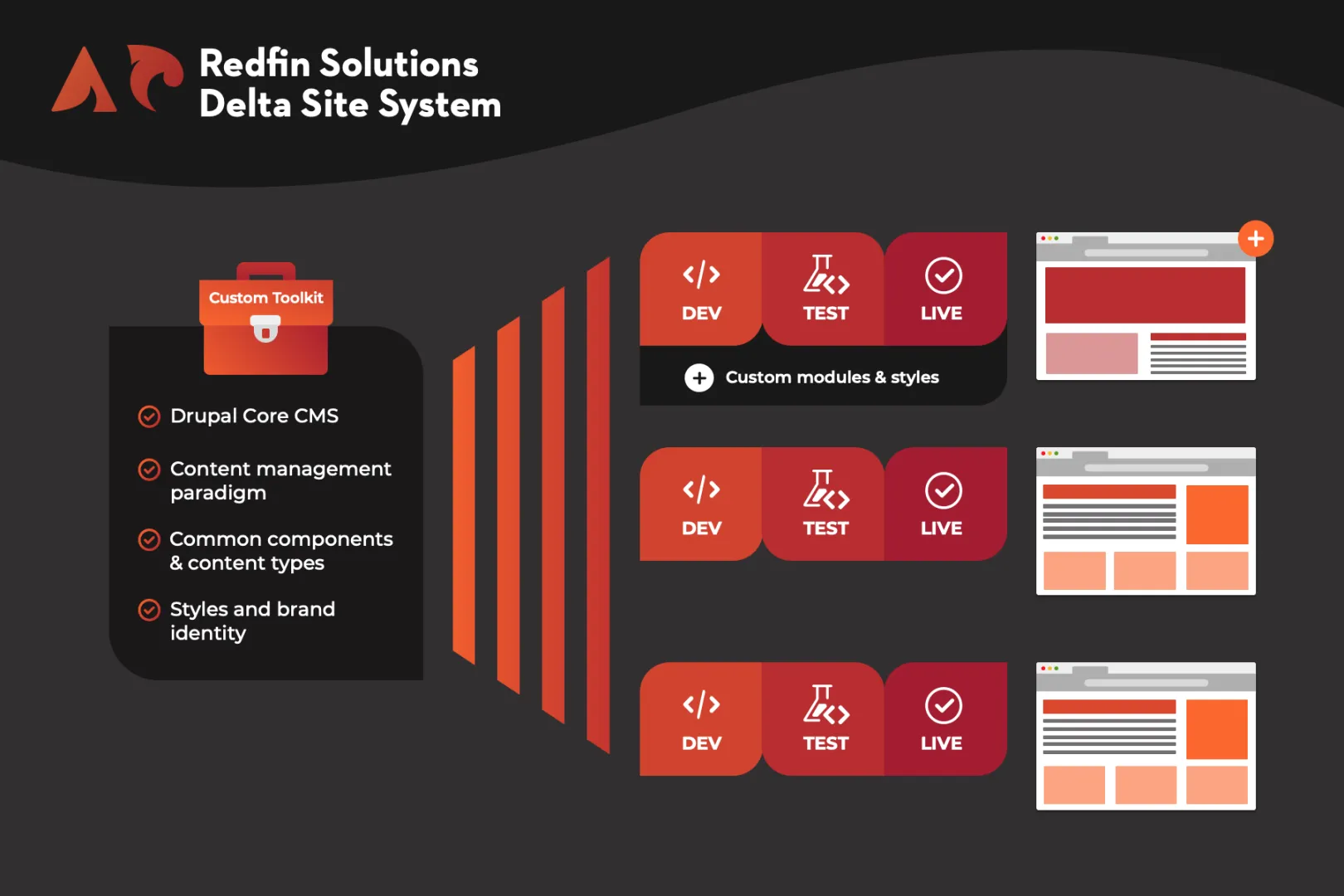
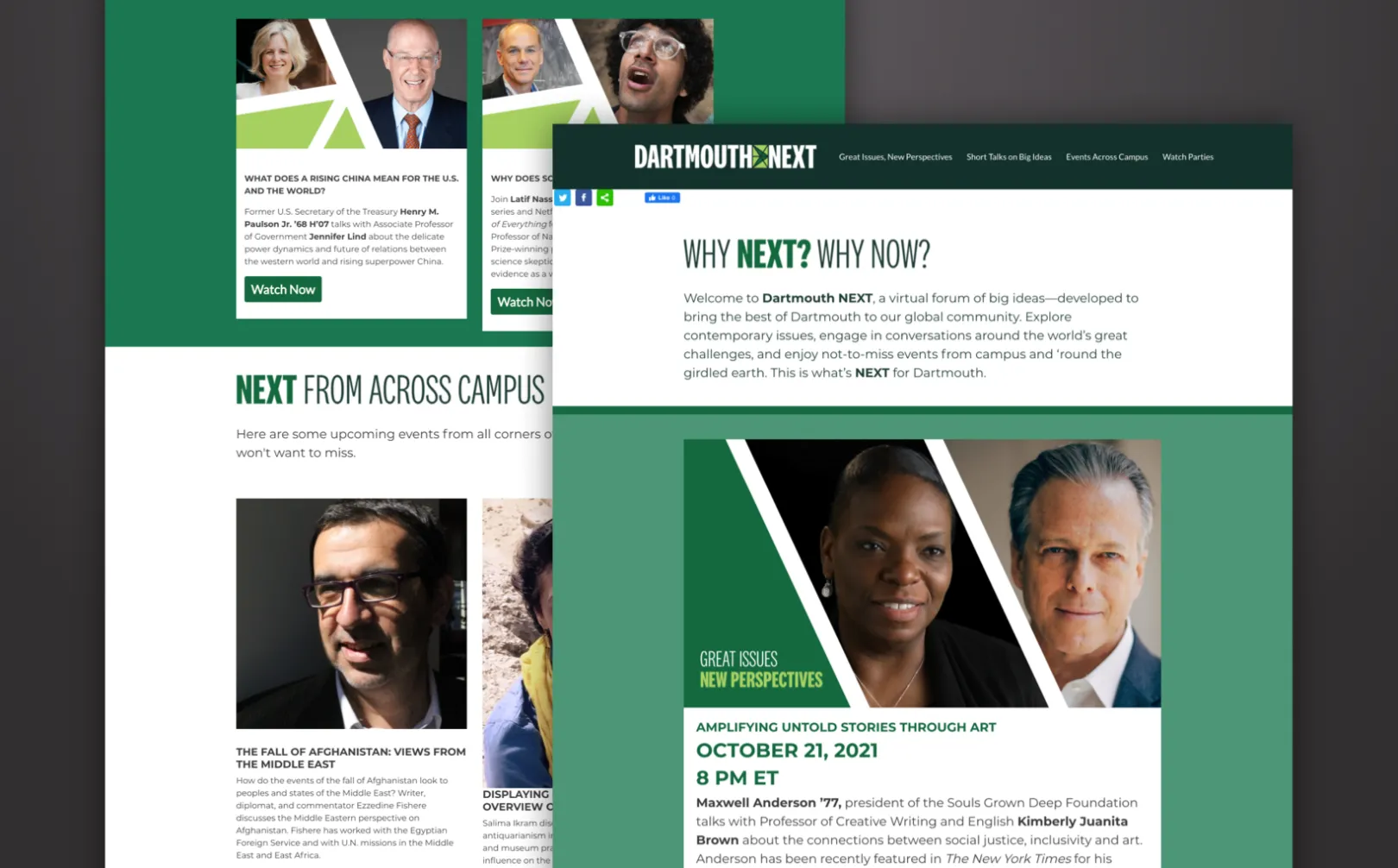
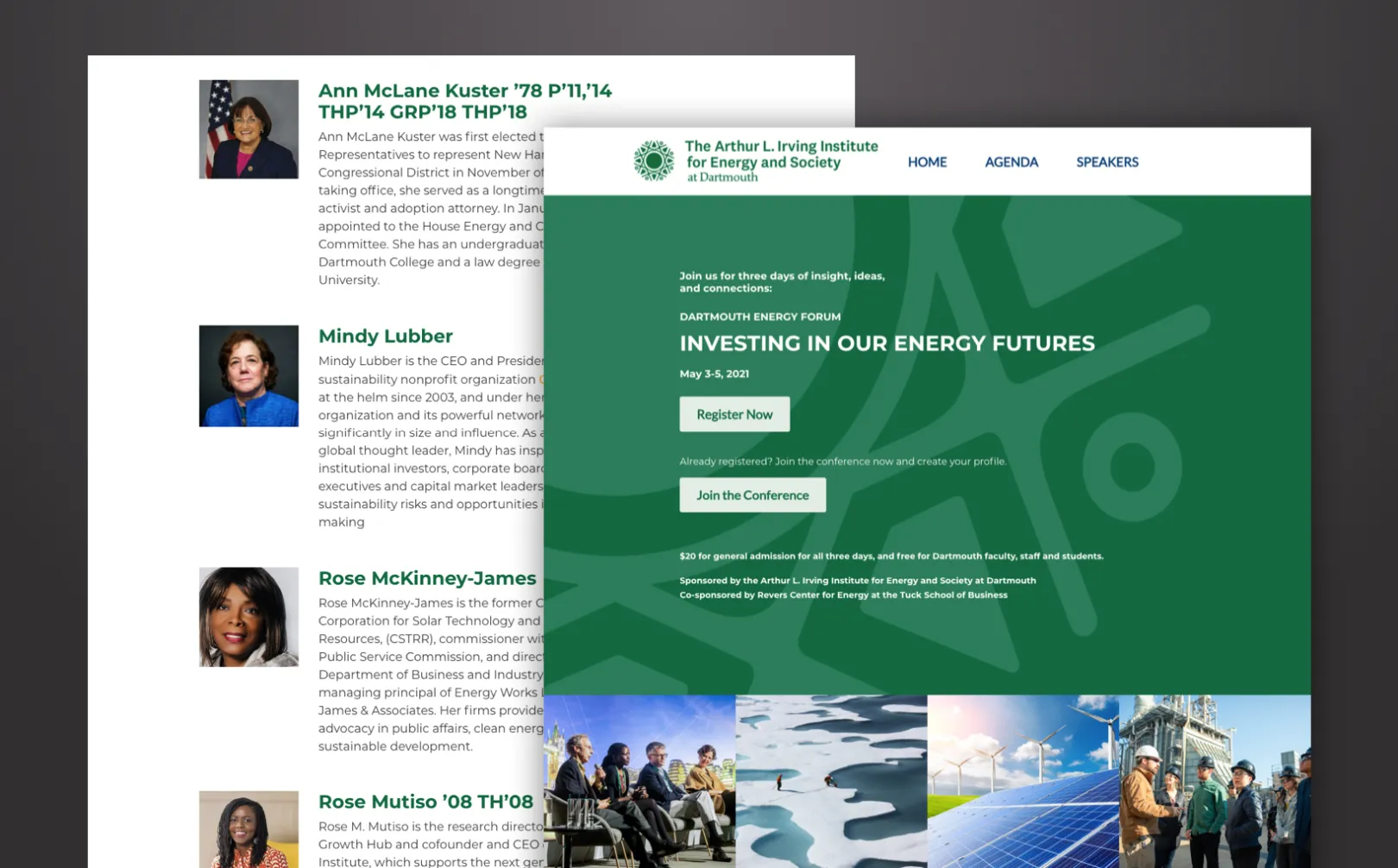
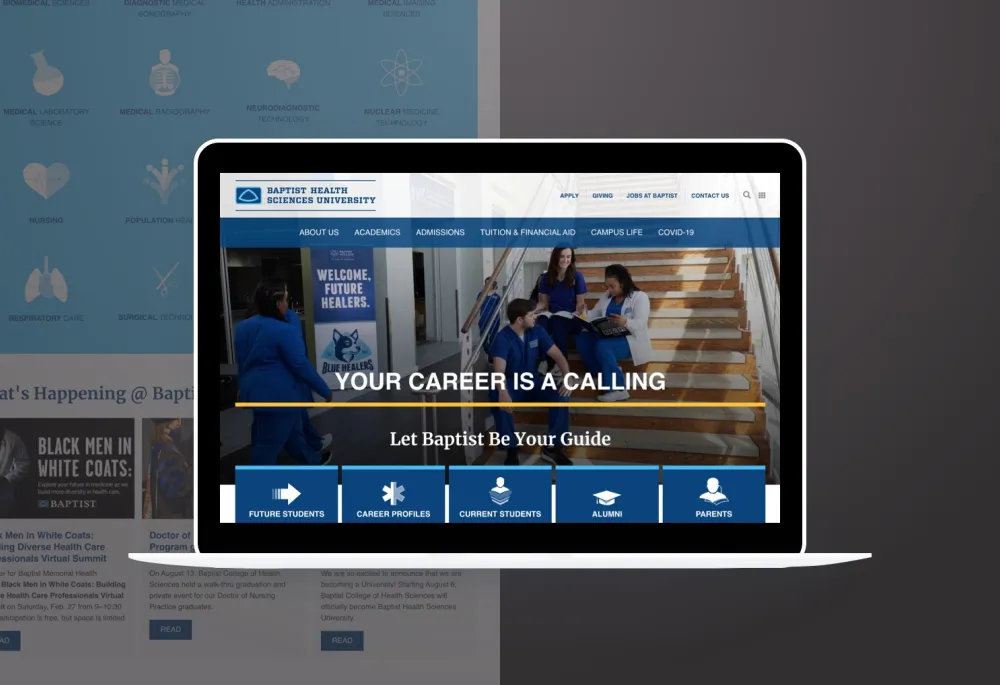
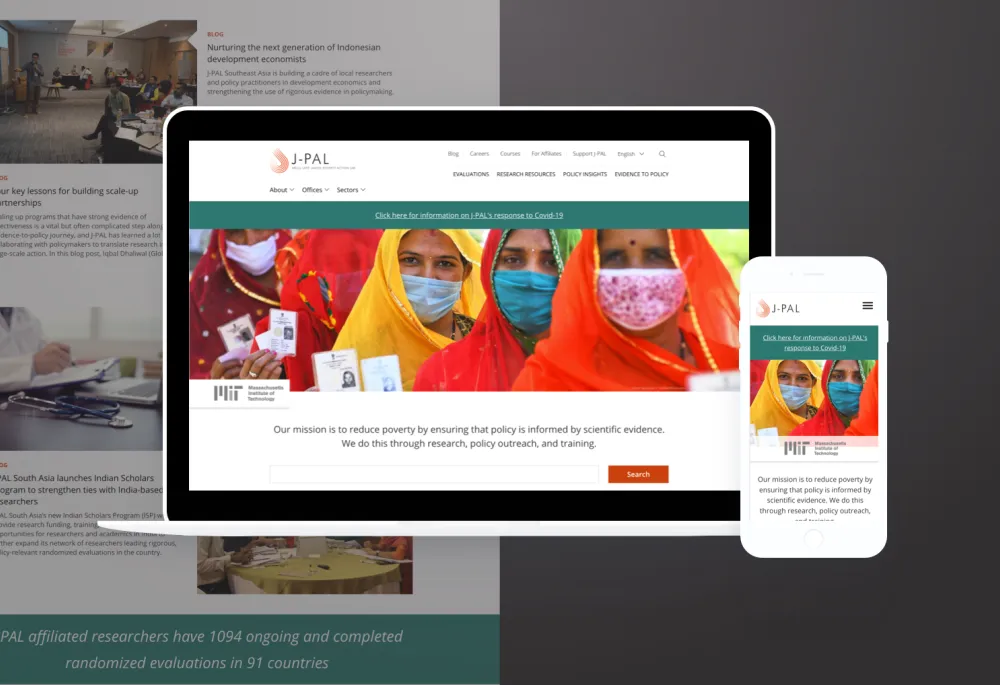
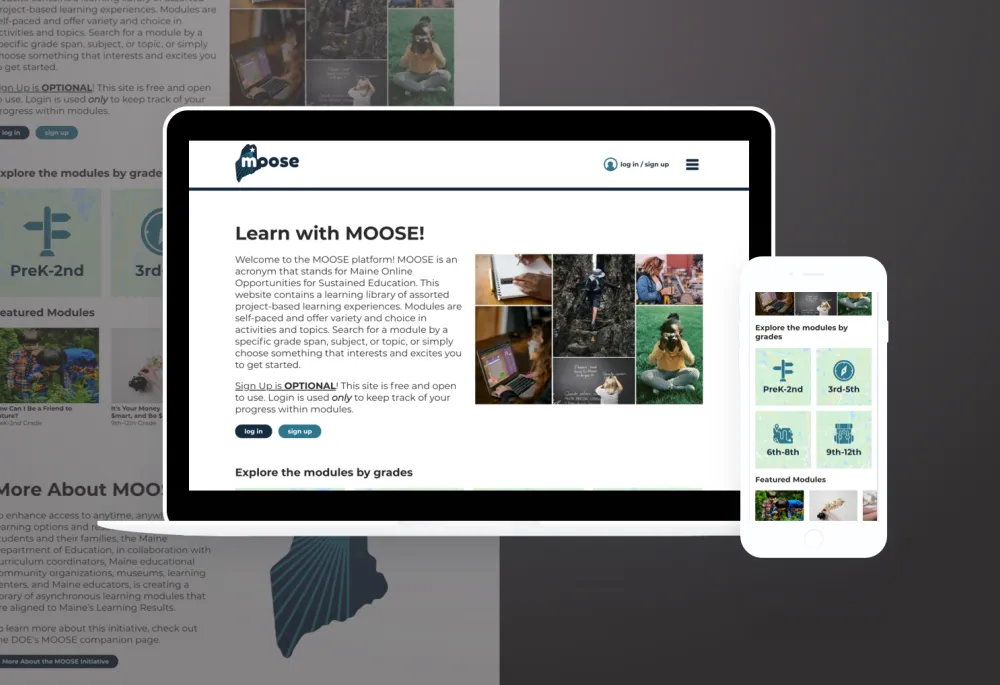
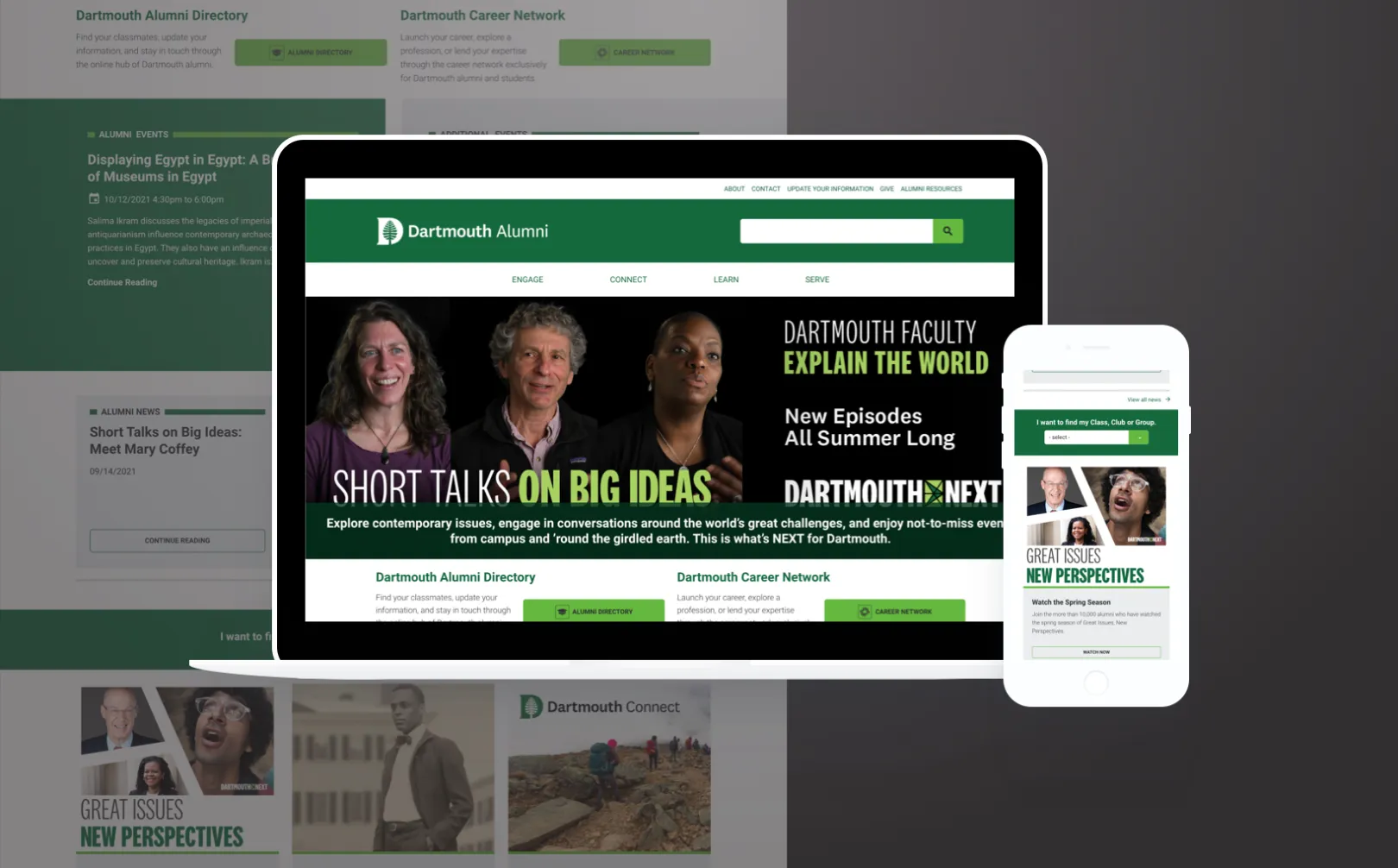
Redfin Solutions began partnering with Dartmouth in 2019, when our team was brought in to support a growing list of websites maintained by the Advancement Division. Redfin developed a custom Delta Site System that gives Dartmouth the ability to quickly and easily spin up new sites starting with a given set of elements that can be customized to meet diverse needs. With Redfin’s support, the Dartmouth Advancement Division now maintains dozens of unified websites for departments, campaigns, events, and conferences.
About the project
The challenge
Prior to working with Redfin, the Dartmouth Advancement Division maintained a handful of websites that had been pieced together over time using a number of different content management systems and frameworks. While several sites were already using Drupal, these also varied widely in modules and themes used as well as content entry paradigms. The team was having difficulty maintaining these sites and delivering a cohesive web presence.
The primary goal of this project was to create a unified content management paradigm for more efficient website maintenance and to make it easier for Dartmouth to quickly spin up new brand-aligned websites. At the same time, Dartmouth wanted to ensure that individual sites could be customized to cater to specific audiences and ultimately inspire alumni engagement.
The solution: a scalable Drupal site system
To deliver scalability and flexibility, Redfin set Dartmouth up with a custom Delta Site System, a Redfin-powered product leveraging Pantheon’s Custom Upstream technology that gives Dartmouth a “toolkit” from which new websites can quickly be deployed. These new websites can use the same styles and components, modules, and configuration, while also allowing for customization at the site level.
Unified components and flexible layouts
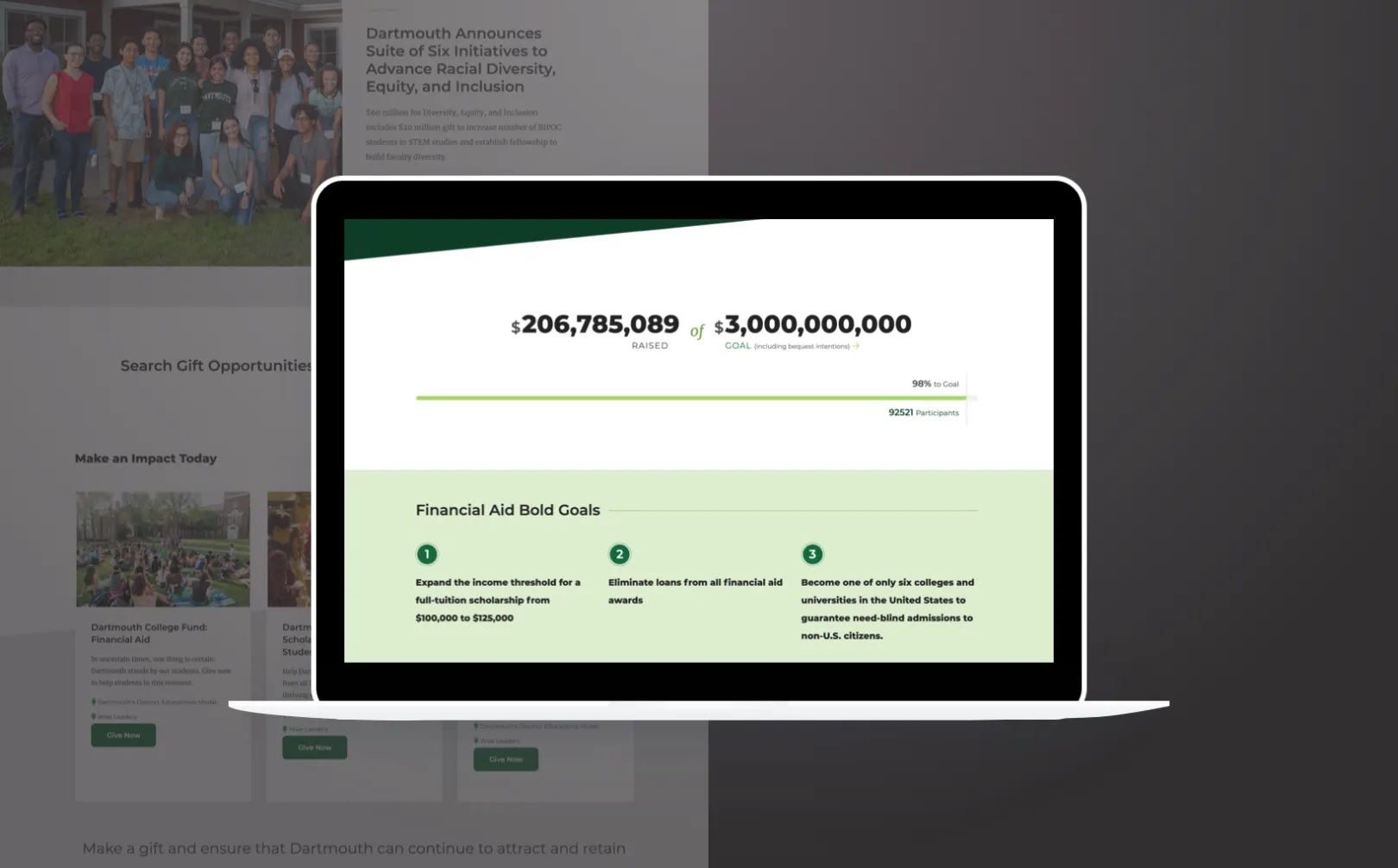
Dartmouth Advancement websites use the Paragraphs module to populate the majority of front-end content. Paragraphs are website components in which content can be entered similar to a standard field. For Dartmouth, Paragraphs range in complexity from simple text and image elements to interactive progress bars that calculate the percentage of funds raised. While Paragraphs are pre-defined to maintain some consistency across websites, Dartmouth’s Paragraphs are custom-built to accept Bootstrap CSS classes, giving site editors with some technical skills the ability to create near-infinite flexible layouts.
Spinning up sites in minutes
With the Delta Site System in place, the Dartmouth team is able to launch websites on their own in a matter of minutes! These sites can be further customized with additional modules or designs with the help of the Redfin developers as needed, or Dartmouth content editors can use a mix of Paragraphs and flexible style options to create unique content and layouts on their own. This flexibility—combined with the peace of mind that comes from unified security and feature updates with the Delta Site system—has allowed Dartmouth to respond with agility to stakeholder priorities and user needs.
Custom site-level integrations
Several of Dartmouth Advancement’s websites are integrated with third party databases and software to ensure up-to-date information, reduce unnecessary replication, and save time. Campaign websites are synced up with constituent engagement management software, so that accurate information about funds raised can be dynamically displayed. Other websites are integrated with third-party database solutions like Airtable so that content can be updated in one place and published directly to the web.
Efficiency, ease, and engagement
Unifying and streamlining Dartmouth Advancement Division’s website ecosystem has freed up staff time to focus on new features, supported raising funds for a multi-billion dollar campaign, and increased opportunities for engagement with alumni. Dartmouth Advancement now easily maintains dozens of websites customized for specific audience groups and opportunities. The ability to respond quickly allows them to deliver value based on regular user feedback and analytics.
Why Drupal was chosen
Like many leading colleges and universities, Dartmouth uses Drupal for its open-source efficiency, scalability, and security. For the Advancement Division, Drupal offers a user-friendly and flexible content management paradigm for users with varying levels of technical expertise.
Technical Specifications
Drupal version:
Key modules/theme/distribution used:
In addition to evaluations for security and stability, Redfin chose the modules that best fit client needs.
Paragraphs: This module gave Dartmouth content editors flexibility using a component-based approach to design while maintaining consistency in design with predefined Paragraphs, such as featured images, progress bars, and calls to action.
Layout Builder: Combined with Paragraphs, Layout Builder gives Dartmouth the flexibility to create new landing page layouts to highlight campaign priority areas.
Configuration Update Manager: The Configuration Update Manager is an important part of Dartmouth’s website ecosystem because, after spinning up a new site in the upstream, it allows us to pull configuration from the base profile.