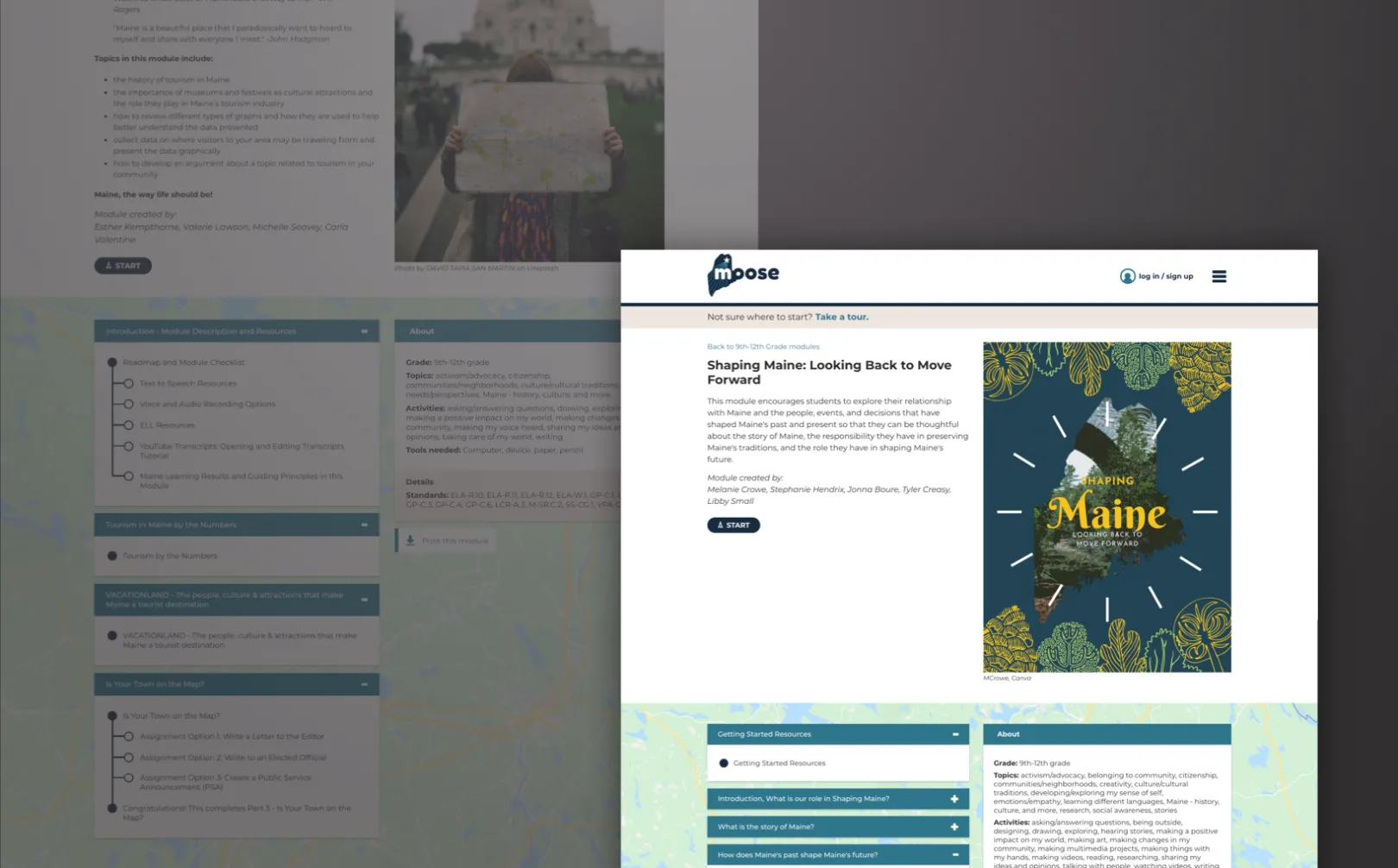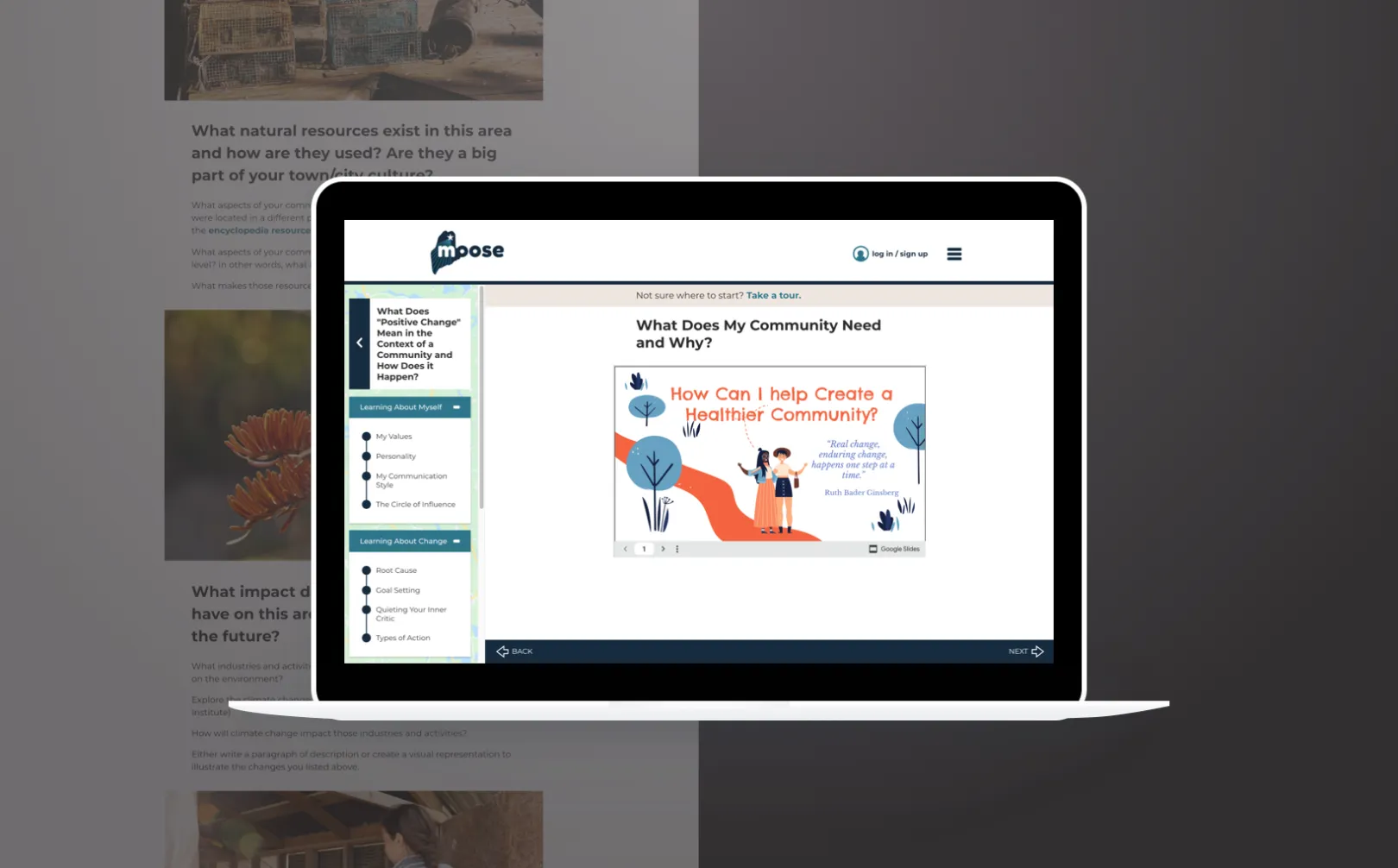
After the COVID-19 pandemic hit Maine, and students were forced to start learning at home, the Maine Department of Education (Maine DOE) contacted Redfin Solutions for help building an online learning platform for every student in the State of Maine. They needed to provide the Maine students an accessible, online home for project-based learning modules. At the time, the content and extent of the possible learning modules were still unknown, but they did know that they needed a live website within 3 months. Redfin performed several agile discovery, design, and development sprints to plan, build, and launch the site in time for students to start their online learning.
About the project
Discovering a Module
The ultimate goal was to provide anytime, anywhere learning options and resources for educators, students, and their families. These resources, or modules, were to be project-based and integrated across subject areas to ensure that student learning is active, engaging, and continuous. Modules could be utilized for enhancing lessons, remediation, enrichment, credit recovery, or for use during remote learning – whenever a student cannot access classroom instruction. On top of that, each module was required to be accessible for different ages and learning levels, backgrounds, physical abilities, and even different levels of internet access.
In short, the website was to provide Maine Online Opportunities in Sustained Education (MOOSE.)
Since this was a brand new website, Redfin’s first moves were to discover the different website users and how to best accommodate each group. We needed the structure and organization of the website to be easy enough for the youngest users who may not have adult help, but flexible enough to account for the complexity required for more advanced users and modules.
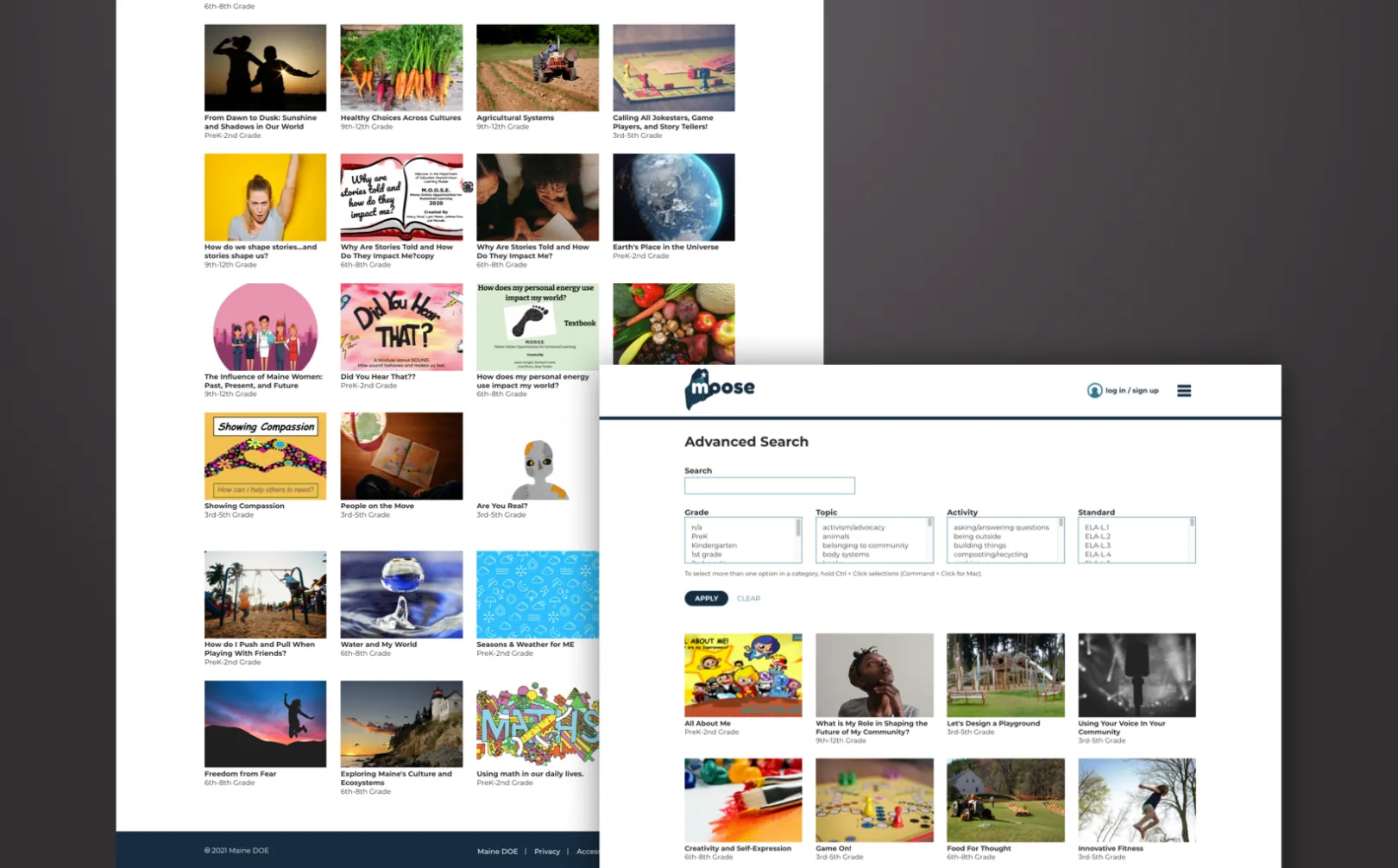
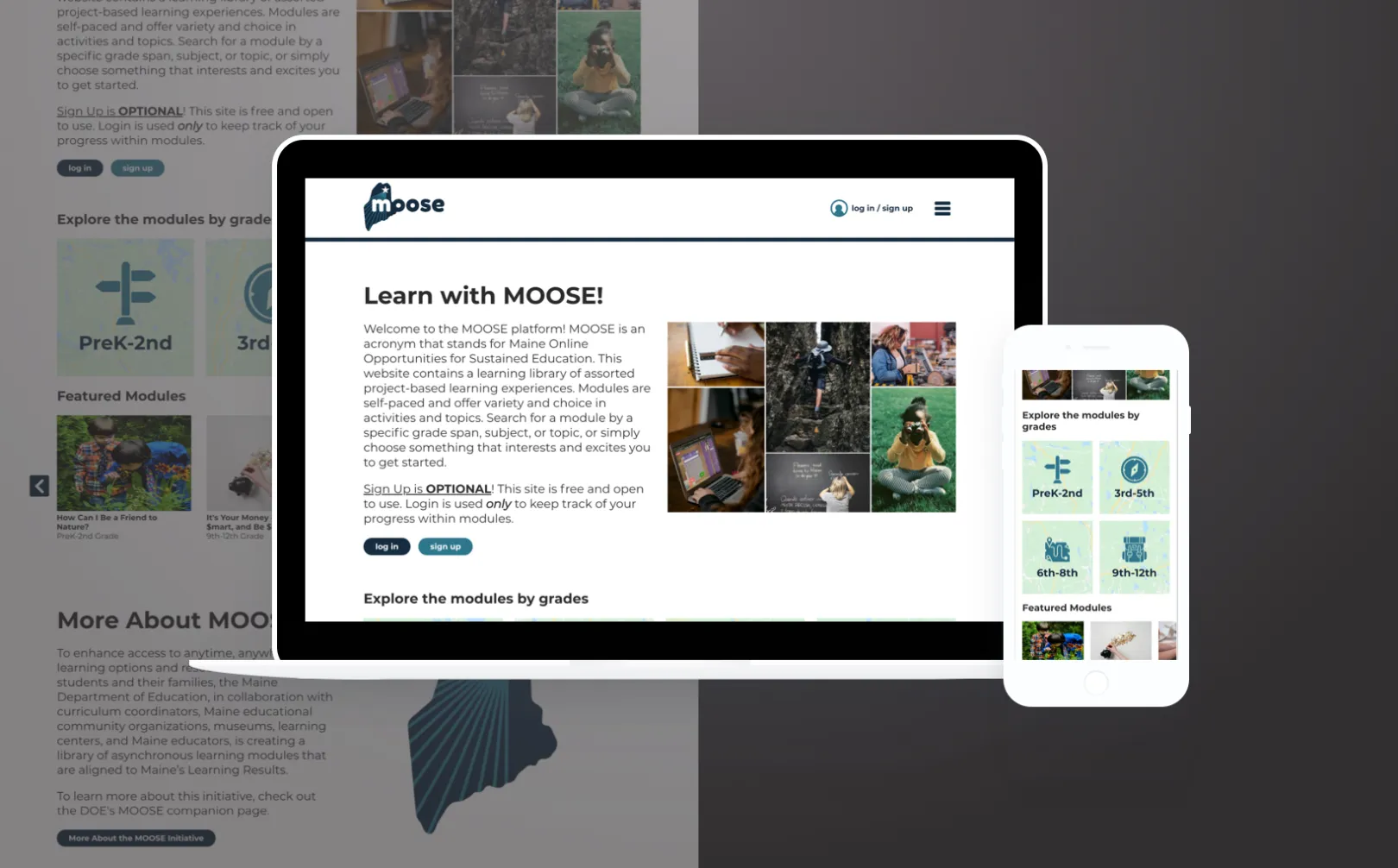
The first structure we provided was to organize the modules by grade spans: PreK-2nd grade, 3rd-5th grade, 6th-8th grade, and 9th-12th grade. This jump-started the user journey by allowing users to immediately sort themselves into the appropriate grade. From there, Redfin designed and created a dynamic search and filter function which assisted users through discovering specific modules based on the activities and topics they are interested in.
Meanwhile, Redfin Solutions worked with the Maine DOE team to create a visual brand for the website including a theme, color scheme, and logo. This, too, required a delicate balance to cater to the different user groups. For a theme, we decided on exploration in Maine. This aspect helped guide the designs for buttons and other navigation tools on the website. It also influenced the color scheme. We decided to keep it simple with blues and light greens, similar to the colors of an atlas. This combination added a touch of fun without becoming garish or childish.
As Redfin worked on designing and wireframing the website, we began to define the enigma of the learning module. Each module would be a unique combination of text, video, slideshow, audio, instructions, or articles. The steps in a module might be required or optional, so content editors needed the ability to select whether a module step must be completed before the user moved on. Modules were not strictly online. In fact, most were to be guided lessons in the real world. Each one must be able to fully convert to printed paper to allow users to complete a module whether they had access to a computer or not.
A module might be lengthy and require a user to save their progress partway through. This meant we needed to create a means for users to log in, find saved modules, and continue where they left off. While creating the user accounts, we were especially mindful of the younger users who may not have an adult’s help to remember a regular password and log in to the website. Because of this, we generated a password for the user. Each password is a combination of four simple words that are easy to remember. This allows the account to be easy to access while following child privacy laws.
Looking Back
Throughout the summer of 2020, we completed the website with enough time for the Maine DOE team to train content editors, and for content editors to create and upload the modules all before Tuesday, September 8th, 2020.
By using Drupal to complete learnwithmoose.maine.gov, Redfin Solutions was able to provide the Maine educators who created the modules with all the flexibility they required. The theme of Maine exploration and the coordinated color scheme gave the users a cohesive website experience as they moved between the various modules.
Now, there are over 30 activity types and over 40 topics for students to choose from. Whether they have an account or not, whether they have reliable internet access or not, whether they are a first-grade student or a high school student, any Maine learner can find a module that suits their interests and abilities. Together, Redfin Solutions and the Maine DOE worked to ensure that students can continue their education, whether they can attend class in person or not.
Why Drupal was chosen
Choosing Drupal
Since the project was starting from scratch, it was important to consider every assumption or possible given before moving forward. Did this project really require a website? Should that website be on Drupal?
Yes.
Maine students, teachers, and parents were scrambling to connect without the availability of in-person classes. Suddenly unable to get together or even to rely on a regular schedule for video classes, a website would allow for asynchronous learning that could work around the possible distractions of a student’s new at-home schedule.
The largest obstacle in the way of this project was the as yet unknown nature and content of the learning modules. The Maine DOE had gathered a group of teachers to collaborate and create the first of the project-based modules, while Redfin Solutions simultaneously created the new website. However, without a clear understanding of what the modules would be and require, creating a website to house them meant finding a balance between flexibility and structure.
And for that, the website required Drupal.
Technical Specifications
Drupal version:
Key modules/theme/distribution used:
Redfin Solutions used a React app to help create learnwithmoose.edu because we had more flexibility to build interactive and complex pages. We were able to create real time updates for the user, for example tracking the users' progress through the lesson module and automatically bookmarking where they left off. With React, it was faster to develop the forms which made up the majority of the learning modules. Because we mainly needed the React app for the learning modules, we embedded it within the Drupal website, rather than having a separate React website in order to avoid the extra overhead that comes with a fully decoupled React app. We used the GraphQL Module to provide an interface for the React app to access data from nodes and paragraphs, and update custom ECK entities. This allowed us to progressively decouple the React app. Using React made it possible to embed other React libraries, such as tutorials, ReactToPrint for PDFs, and React speech kit for built-in text readers.