Sector(s)
Team Members
The Diocese in Europe serves more than 250 congregations across over 30 countries. Its website is a shared point of contact for worshippers, visitors, clergy, church officers and volunteers who may be separated by considerable distances.
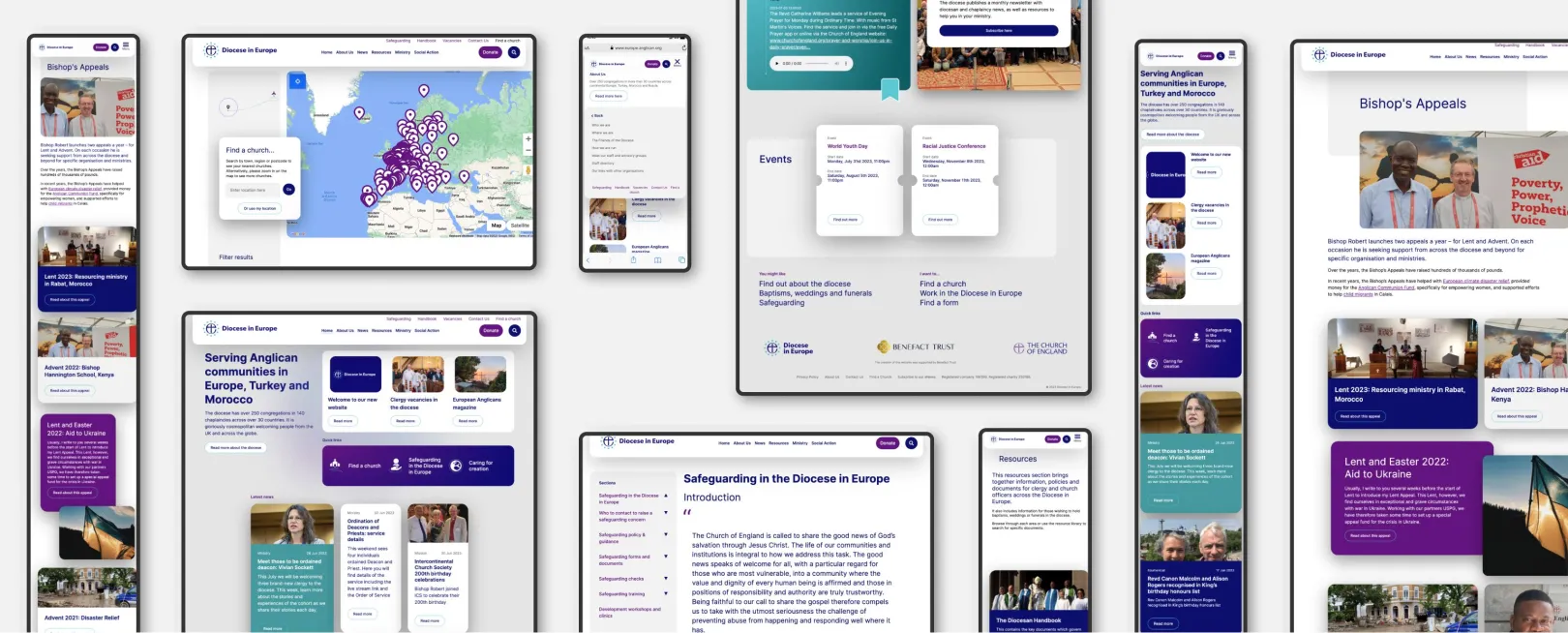
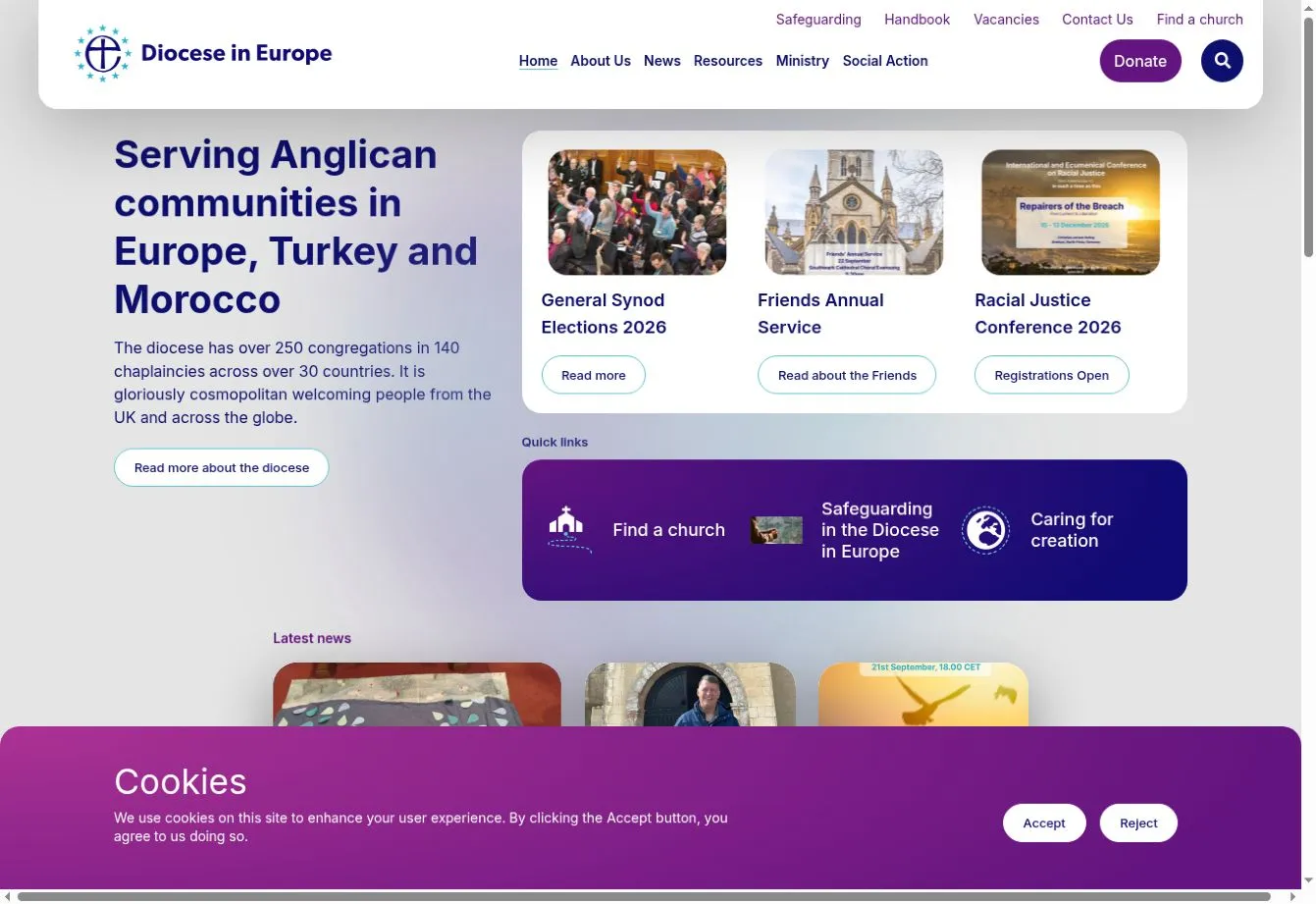
Big Blue Door worked with the Diocese to replace its existing website with a responsive Drupal platform. The engagement brought together discovery, information architecture, design and development, with particular attention to finding churches and navigating complex reference material. Website design developed alongside the Diocese’s rebranding work, translating its values into a welcoming digital experience.
Work began in 2022, followed by development, content preparation and testing ahead of the June 2023 launch. Big Blue Door continues to provide hosting, maintenance, support and further development.
Business case and background
For the Diocese in Europe, a website has to serve a community that extends across national boundaries. Someone visiting a new city needs a straightforward way to find an Anglican church. A church officer may need a particular policy or form. Clergy and volunteers need access to the documents that govern diocesan life, while other visitors want to understand its mission and social action.
The project therefore needed to combine a public-facing introduction with a practical working resource. Its business case centred on improving how people found information and giving the communications team a flexible publishing platform to maintain it.
The Diocese also needed to make effective use of existing church information. A Church Near You already held details about individual churches, creating an opportunity to reuse that information within the new website instead of establishing a separate directory to maintain manually.
Big Blue Door provided the research, design and Drupal development expertise, working closely with the Diocese’s project and communications teams. The resulting platform brings these different needs together within one coherent website, with distinct routes into church discovery, reference resources and community stories.
About the project
Understanding the people using the website
Big Blue Door began with discovery to understand the audiences and prioritise their needs. An in-person workshop used personas and card-sorting activities to challenge the existing organisation of information. Further online card sorting helped refine the proposed structure.
This work identified four important areas: finding a church, consulting the diocesan handbook, accessing safeguarding information and exploring the Diocese’s social action. Wireframes translated those priorities into page structures before detailed design and development.
Making churches easier to find
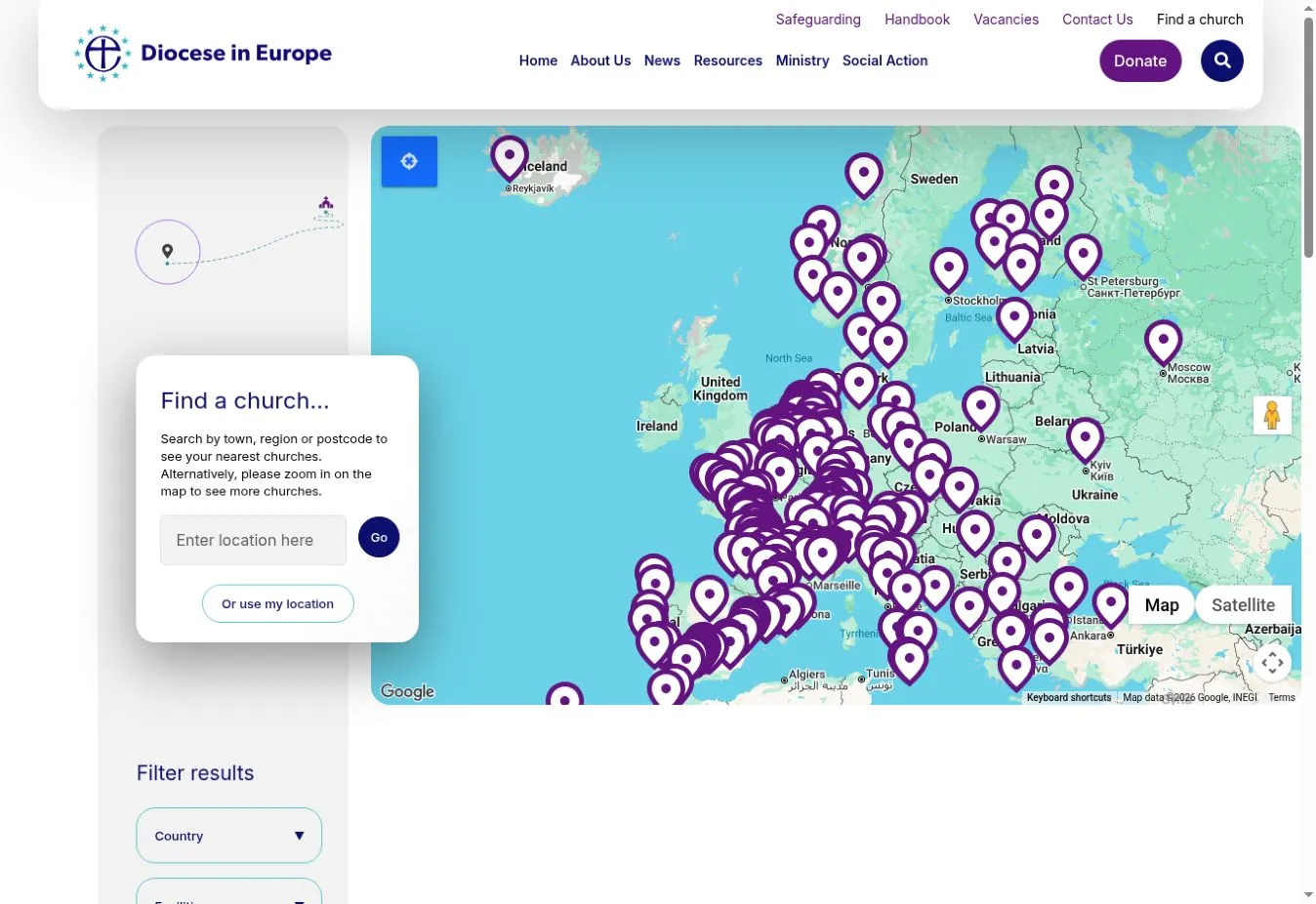
The church finder combines a map with location search and filtering. Visitors can search by town, region or postcode, explore the map and narrow results by country or facilities. It gives people a practical route from a broad geographical area to information about a particular church.
Big Blue Door developed the integration with A Church Near You to bring church records into Drupal. The agreed data model covered details such as names, descriptions, photographs, addresses, coordinates and contact information. Keeping the external directory as the source for those fields was intended to reduce duplicate maintenance and keep the two services aligned.
User testing also influenced the way facilities were presented. Ahead of launch, Big Blue Door simplified the visible filter categories while retaining more detailed terms underneath. A church could therefore match a broader facilities category through its more specific information, without exposing visitors to an unnecessarily long initial list.
Giving reference material a usable structure
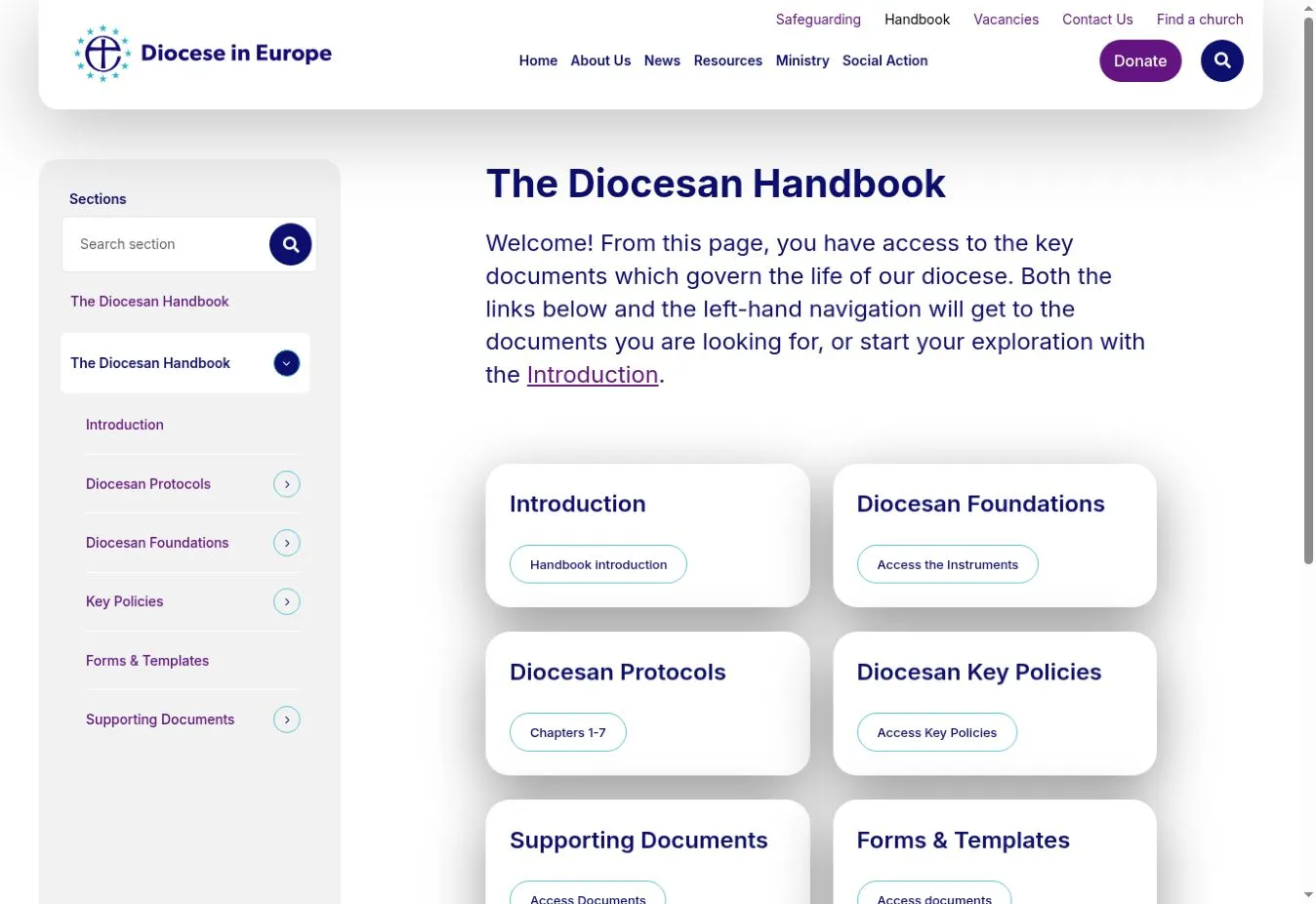
The handbook needed a different reading experience from a news article or landing page. Big Blue Door implemented a book-style structure with section navigation, helping users move between the documents governing diocesan life. The live handbook also provides a search within the section.
Safeguarding was treated as a prominent user journey, with a direct link in the site header and dedicated resources. The design had to support people looking for specific guidance as well as those exploring a subject for the first time. Responsive layouts and accessibility requirements were part of the specification from the outset.
Testing and iterative delivery
The project followed an iterative approach, with regular project calls, shared issue tracking and focused development sprints. Design and build work progressed alongside content preparation and feedback from the Diocese’s team.
The main milestones ran from project mobilisation in June 2022 and the functional specification in October, through the church-data integration specification in January 2023, to final testing and launch preparation in May. The website went live in June 2023.
Two rounds of moderated user testing informed delivery. The final round used realistic tasks involving the handbook, safeguarding information and church search. Findings fed into practical refinements, including the facilities filters, while the team also addressed presentation issues and prepared redirects before launch.
Outcome and continuing development
The completed Drupal website provides a shared digital home for a dispersed community. Visitors can locate churches, access essential resources and discover activity across the Diocese. Church information is connected to an existing directory, and substantial reference content has a dedicated navigational structure.
Big Blue Door’s involvement continued beyond launch. Account records from 2026 document ongoing maintenance, Drupal updates, editorial support and improvements to content formatting. Regular reviews provide a way to identify and prioritise further work as the Diocese’s requirements develop.
The project demonstrates how Drupal can support both a welcoming public website and a practical information service, with integration, structured content and iterative development serving the needs of the same organisation.
Why Drupal was chosen
Drupal suited a project with several different kinds of content and a need for more than a conventional set of marketing pages. The website had to accommodate church records, news, events and resources, including a handbook organised into connected sections.
Its structured content model allowed Big Blue Door to treat these as distinct content types, with relevant fields, categories and presentation. This provided the foundation for useful listings and filters, while reusable page components supported a consistent visual language across the site.
Drupal also provided a suitable platform for integration with A Church Near You. The integration specification defined how church information would populate Drupal records, with A Church Near You remaining the authoritative source. Bringing that information into Drupal connected the church directory to the Diocese’s own website experience, including location search and facilities information.
Editorial control was another requirement. The specification called for a shared media library, content previews, revision history and permissions-based editing. Drupal’s established content-management capabilities supported those needs alongside the flexibility required for varied page layouts and substantial reference material.
Finally, its open-source model supported a platform the Diocese could continue to develop over time. The subsequent programme of maintenance and incremental improvements demonstrates the value of that choice: the original website investment remains the foundation for ongoing work as content and user needs evolve.
Technical Specifications
Drupal version: