Sector(s)
Project Team
Design Partner: Bounce, an independent creative design agency handling visual design and branding
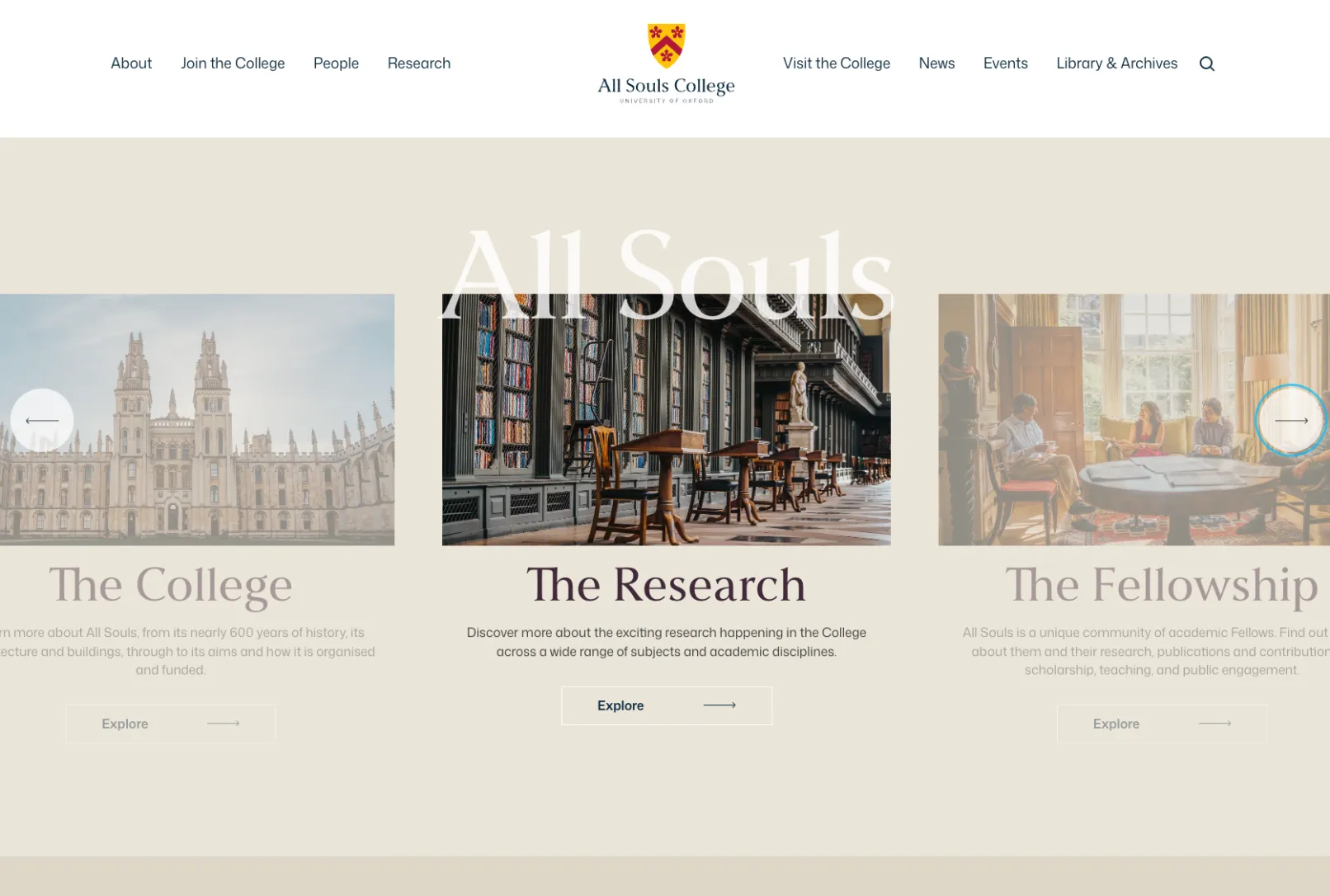
All Souls College is a constituent college of the University of Oxford, founded in 1438, and uniquely has no undergraduates and is made up of Fellows. It awards only a small number of Examination Fellowships each year, which are decided through one of the most competitive academic exams in the world.
The College supports research across the humanities and social sciences, backed by a historic library and archive holding around 200,000 volumes, including material dating back to the 12th century.
The College's previous website hadn't kept pace. People, Research, News and Events each ran on separate structures instead of one shared system. Fellows' research profiles had to be updated by hand. The library's digital resources sat on ageing infrastructure, managed manually by the College Librarian.
Open Imagination ran a full technical audit, rebuilt the platform, migrated the content, took over hosting, and continues to support All Souls College.
About the project
Goals
- Run a full technical and content audit before any redesign work began
- Content restructure that better represented the College and its activities
- Rebuild the site on an up-to-date, secure Drupal foundation
- Give People, Research, News and Events a consistent content structure
- Keep Fellows' research profiles current without manual data entry using Symplectic
- Move the College's library and archive material off outdated infrastructure
- Meet WCAG 2.1 AA accessibility standards
- Structure delivery so Fellows have clear points to review and approve progress
Requirements
- A phased, five-stage delivery model (Discovery & Audit, Visual Updates, Technical Build, Launch Preparation & Go-Live, Post-Launch).
- A structured content model consolidating Fellowship, Person, Publication, Research, News, Events, Building and Staff Vacancy records into one system
- Automated synchronisation of Fellows' research profiles with external academic databases via a Symplectic integration
- A dedicated, migrated home for the College's Library & Archives digital assets
- Role-based permissions separating Content Editor, Content Publisher and Events Admin responsibilities
- Full WCAG 2.1 AA accessibility compliance across the rebuilt site
- Dedicated, UK-based hosting for GDPR-compliant data residency
- Open Imagination, accountable for the audit, build, integrations and hosting, working alongside Bounce's independent design lead
Outcome
The Drupal 11 rebuild replaced the previous setup with a structured, maintainable CMS. Fellows' profiles, News, Events and the College's building pages now sit in the same system, managed the same way by College staff, with no developer needed for day-to-day updates.
Fellows' research profiles now update themselves, and decades of library and archive material now has a single, proper digital home alongside the rest of the site. We restructured navigation into a smaller number of clear sections and closed the accessibility gaps found.
Key Features
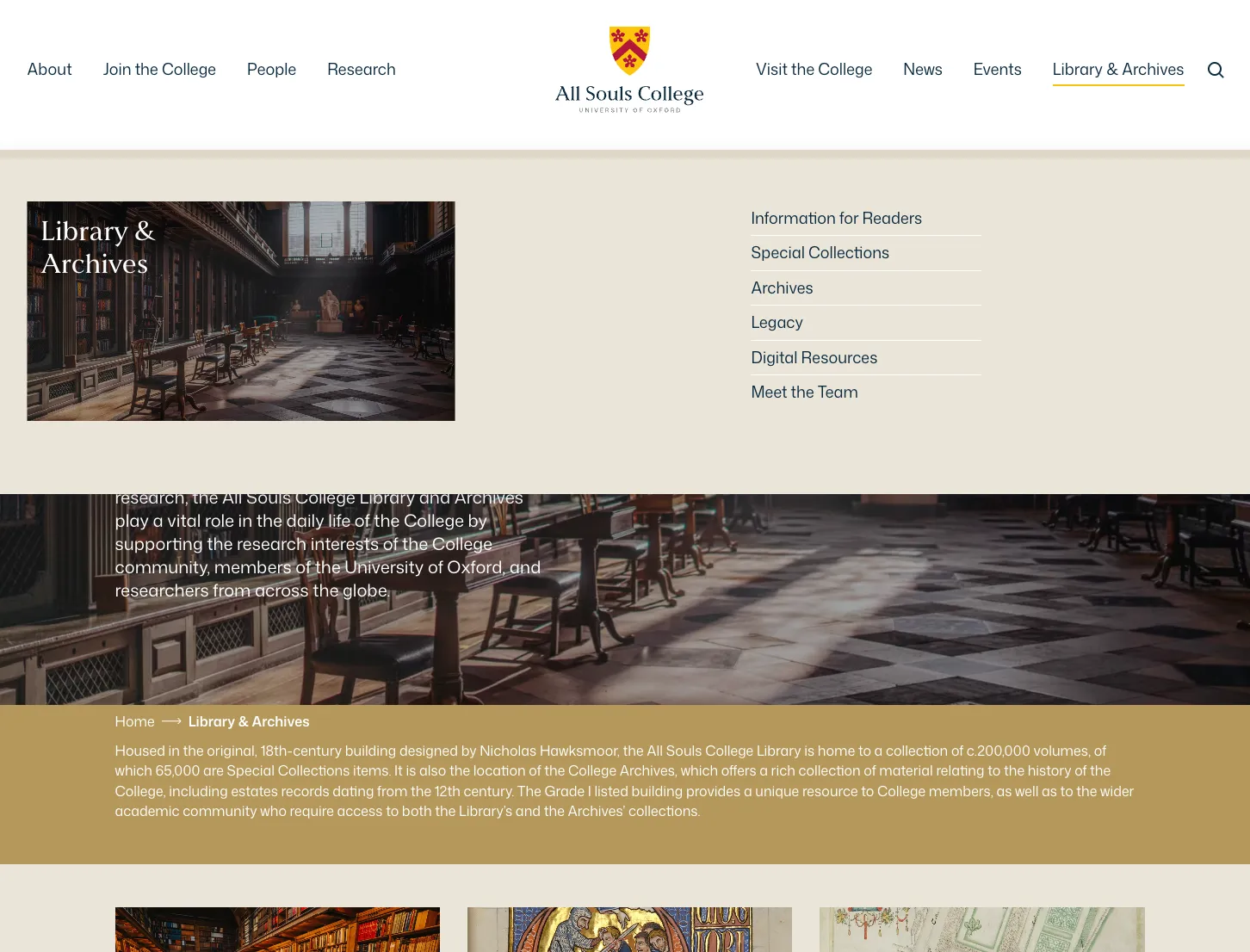
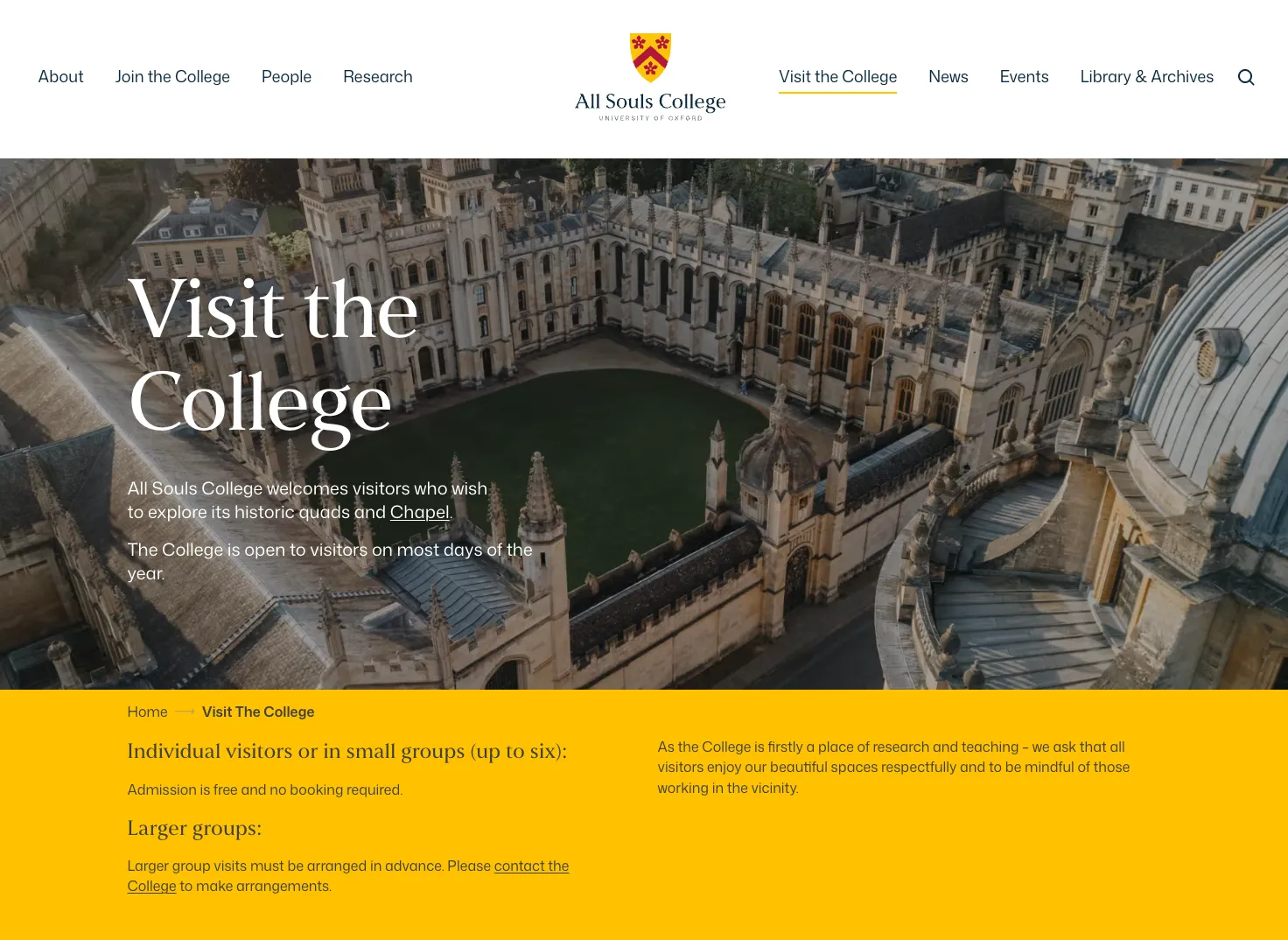
Simplified Navigation. Content spanning Fellowships, buildings and library services is grouped into a handful of clear sections with expandable menus, replacing the previous per-section structures.
Automatic Research Profiles (Symplectic Integration). Connects each Fellow's profile to external academic databases, including Scopus and ORCID, and pulls in publications and citations automatically, so profiles stay current without College office involvement.
Digital Library & Archives Platform. A dedicated home for the College's manuscripts, maps, architectural drawings and early printed books, bringing the Library and Archives collections into the same platform as the rest of the site.
Structured Content Types. Eight dedicated Drupal content types (Fellowship, Person, Publication, Research, News, Events, Building, Staff Vacancy), each with its own template, so publishing a News story or a vacancy follows the same process with no code required.
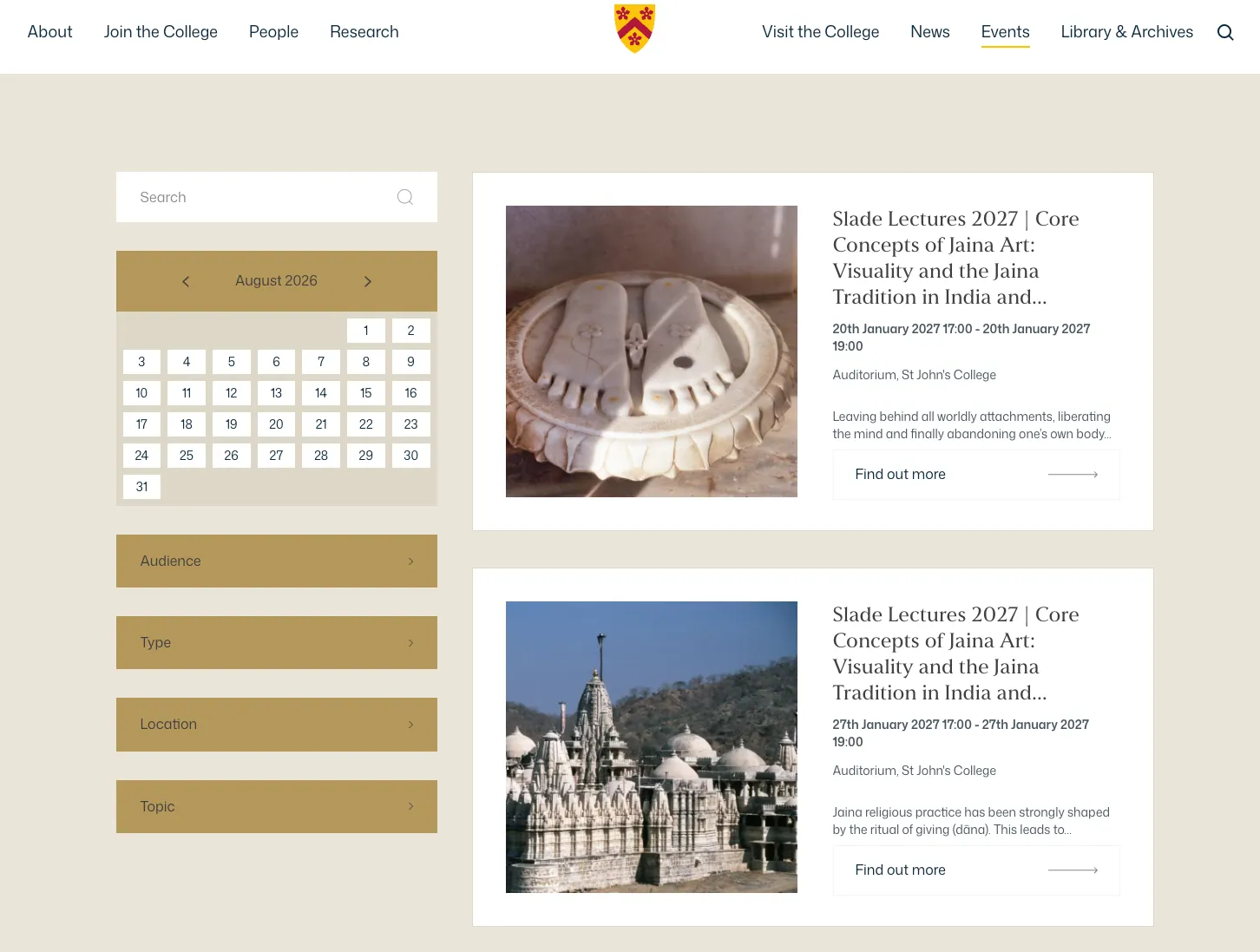
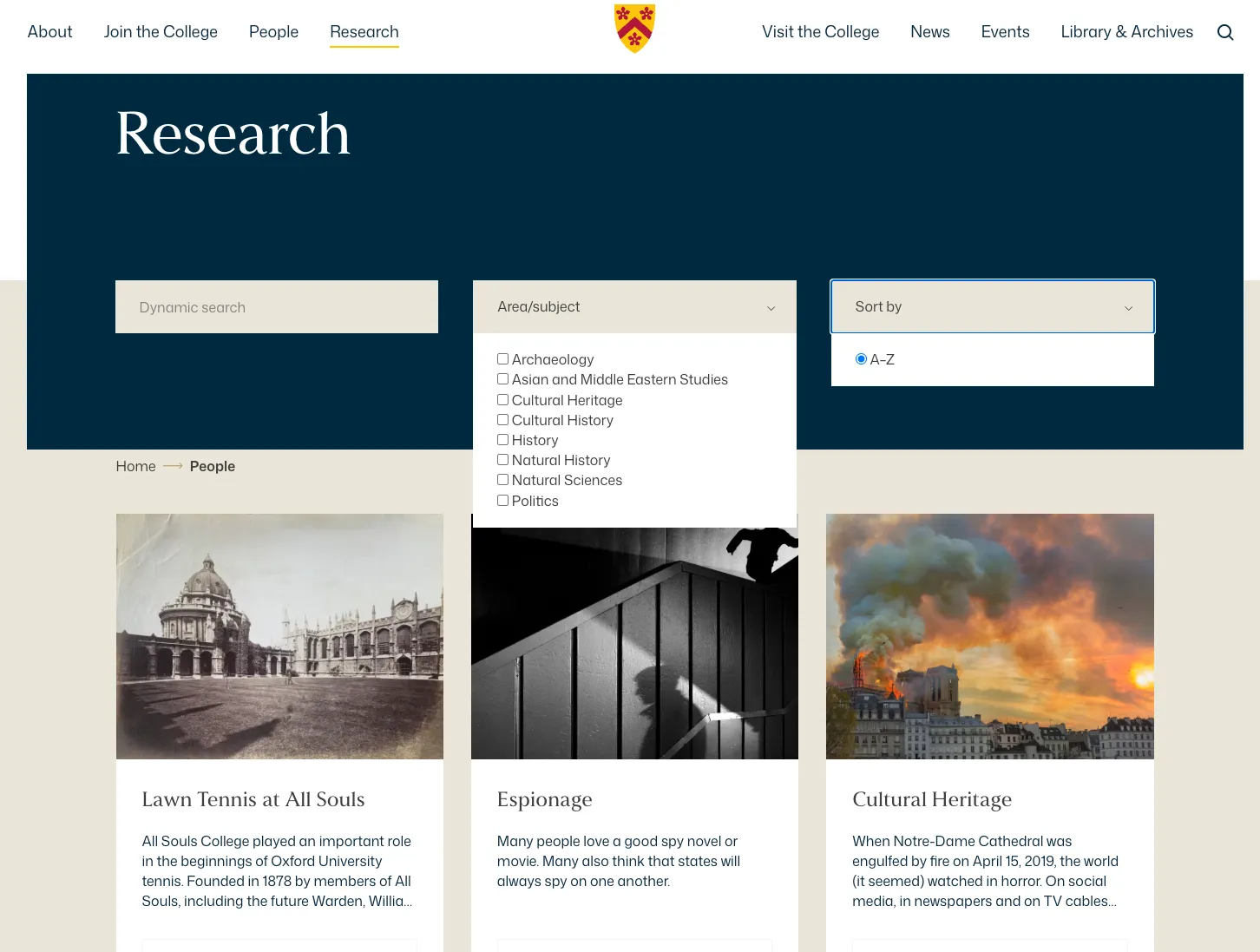
Faceted Search & Filtering. Solr-indexed, live search with filters on Research and Events pages, so visitors can narrow results by subject area or date.
Role-Based Access. Custom roles (Content Editor, Content Publisher, Events Admin) give College staff access to only the tools their job needs, not full administrator rights.
Dedicated UK Hosting. A dedicated server sized for the College's current needs and future growth, with data held in the UK for GDPR compliance.
Open Imagination provides Drupal development, hosting, and ongoing support for higher education, research, and membership organisations across the UK.
Why Drupal was chosen
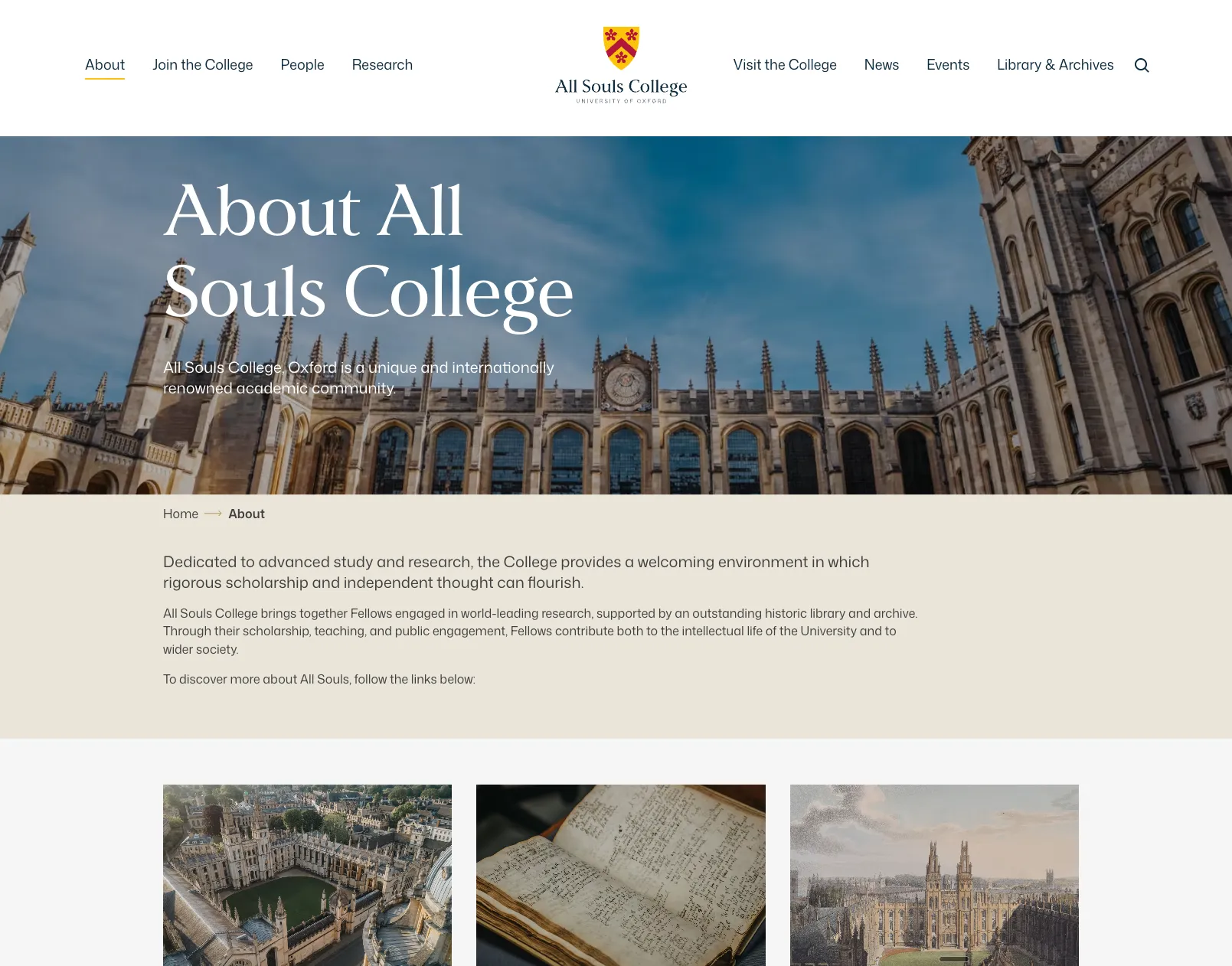
The previous site was on Drupal 9, and the technical audit assessed the existing framework, modules, hosting and content structure. After Bounce carried out consultations with each department and a core project team, they created a new website design that both improved UX and made the college activities much more prevalent and accessible.
The website content strategy and new architecture, combined with a fresh design, meant it was better for the team to start with a clean Drupal 11 rebuild over a full platform migration. Drupal was the right foundation to build on:
- Structured content across five primary sections (People, Research, News, Events, Buildings) into one content management system
- Mature accessibility tooling to meet WCAG 2.1 AA requirements
- Role-based permissions to support the content workflow so that users could review changes without every Fellow needing full editorial access
- A Solr-backed search stack (Search API, Facets) capable of filtered discovery across Research and Events content
- An open architecture for API-level integrations enabled us to pull through data from Symplectic and publish this against each Fellow’s so that their research can be centrally managed.
- A clear, supported upgrade path (to Drupal 11.3), important for a long-term institutional site with decades of accumulated content
Technical Specifications
Drupal version:
Key modules/theme/distribution used:
- Paragraphs
- Layout Paragraphs
- Canvas Builder
- Canvas Full HTML
- Field Group
- Inline Entity Form
- Entity Clone
- Media Entity Browser
- Image Widget Crop
- Geofield
- Search API
- Search API (8.x)
- Search API Autocomplete
- Facets
- Better Exposed Filters
- Selective Better Exposed Filters
- Tailwind CSS
- Easy Breadcrumb
- Pathauto
- meta
- Open graph
- XML sitemap
- Redirect
- Google Tag
- Ultimate Cron
- Admin Tools
- Module Filter
- Password Policy
- Auto Logout
- Honeypot
- Redis
- Varnish
- Webform
- Config Ignore
- Twig Tweak
- Composer Patch Manger
- Linkit
The custom content type structure, built with Paragraphs and Layout Paragraphs, unifies five previously separate sections under one editorial system, replacing the separate logic each section used to need.
Search API with Solr and Facets was chosen over core Search because the College needed faceted, filterable browsing across a growing Research and Events catalogue. Ultimate Cron handles the background jobs that keep scheduled tasks running reliably, with more visibility than Drupal's default cron.
Account security mattered more here than on a typical site: access is split across several editorial roles (Content Editor, Content Publisher, Events Admin), so the Password Policy suite and Autologout keep things consistent across a wider group of College staff. Redirect and XML Sitemap protected search visibility through the migration. Metatag and Schema Metatag gave the College structured, indexable pages that fit a research institution's public profile.