Sector(s)
Team Members
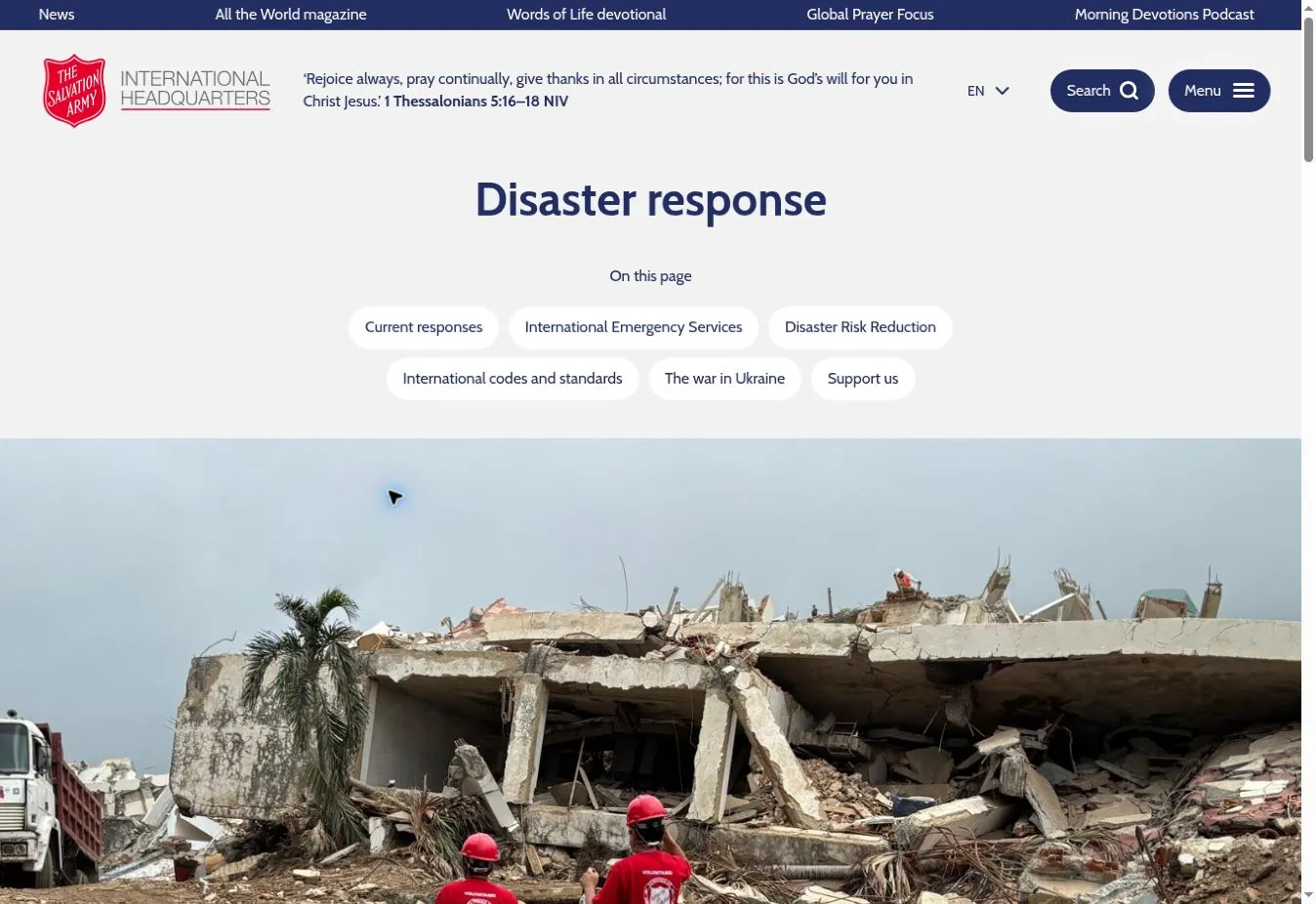
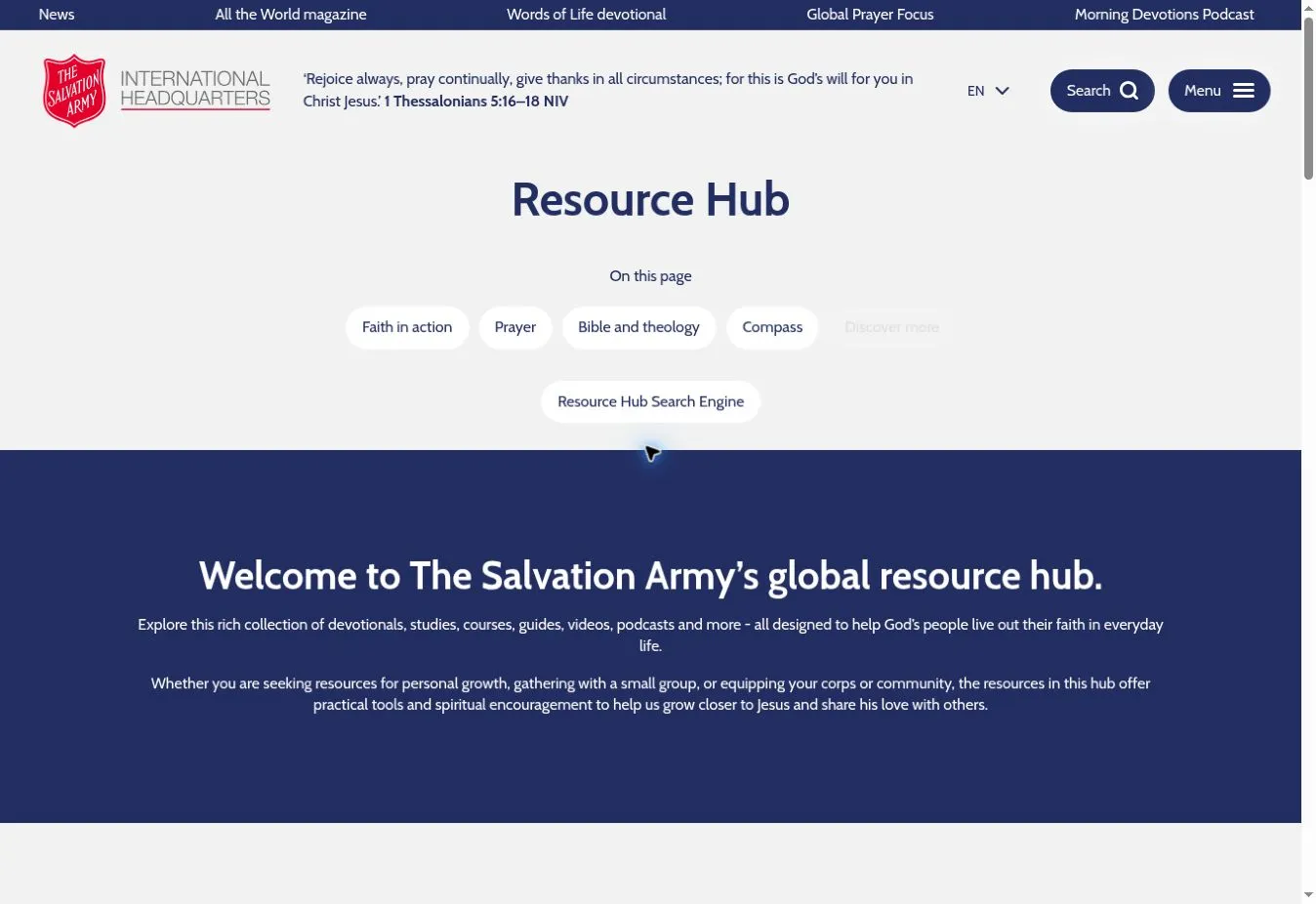
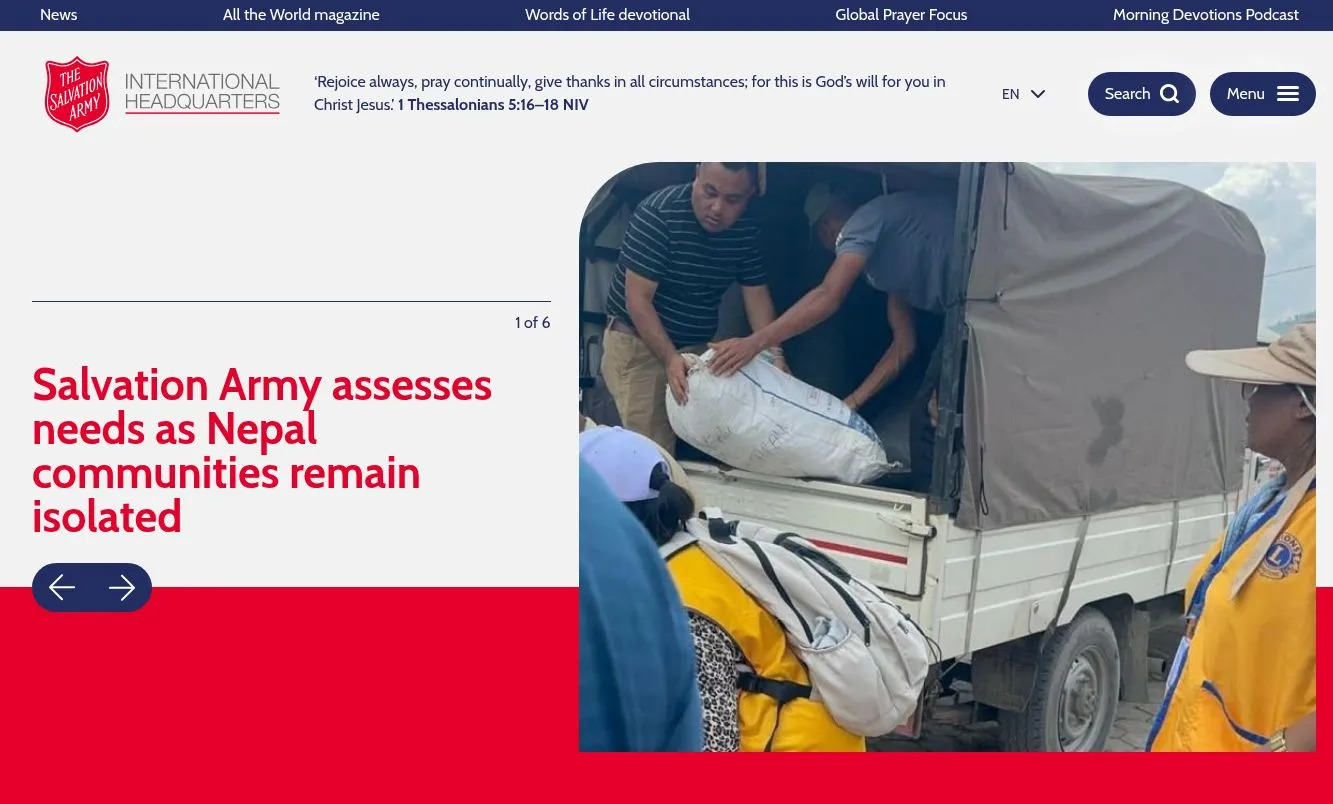
The Salvation Army appointed Big Blue Door to redesign and rebuild its International Headquarters website, creating a central digital home for its worldwide mission. The project combined discovery, information architecture, a bespoke Figma design system, Drupal development and preparation for launch.
Beginning in October 2024 and launching in July 2025, the work replaced a longstanding website with a responsive platform designed around the needs of international audiences. Drupal supports a broad range of content, from news and stories to territory information and resources, while reusable page components give editors flexibility within a consistent design. Big Blue Door also provides AWS hosting, ongoing support and maintenance.
Business case and background
The Salvation Army is a global Christian movement whose work spans worship, social justice, humanitarian assistance and community support. Its International Headquarters website needs to explain this breadth of activity, connect people with its work around the world and help visitors find the appropriate national or territorial organisation.
The previous website’s structure and design had been in place for more than a decade. As content accumulated, its organisation increasingly reflected internal departments rather than the needs of visitors. Ageing technology and a limited presentation of the organisation’s international story made a wider rethink necessary.
The 160th anniversary provided a clear deadline and a timely opportunity to renew the website. The business case centred on clearer navigation, stronger storytelling and a maintainable publishing platform that the communications team could use confidently. The new site also needed to express The Salvation Army’s Christian identity and humanitarian work together, for audiences with different levels of familiarity with the organisation.
Big Blue Door worked closely with the International Headquarters team, combining Drupal expertise with research, content and design input to translate these organisational needs into a practical digital service.
About the project
Goals and requirements
The central goal was to create a website that communicated the scale and purpose of The Salvation Army’s international mission and made its content easier to explore. Visitors needed clear routes to news, resources, information about its work and the Salvation Army presence in their own country.
For the communications team, the priority was a manageable publishing environment with the flexibility to create engaging pages. The requirements included structured content types, reusable page components, a shared media library and editorial controls. Responsive design and WCAG 2.2 AA accessibility requirements informed the work throughout.
Discovery and design
Big Blue Door began with stakeholder engagement, user interviews, analytics reviews and benchmarking against other international charity and faith organisations. This established the audiences and journeys the new website needed to support, with a particular emphasis on clarity, simplicity and storytelling.
Working with the communications team, Big Blue Door developed a bespoke design system in Figma. The visual approach retained the familiar red shield identity while creating a contemporary framework for imagery, navigation and content across different screen sizes.
Two rounds of prototype testing helped assess the design before launch. An initial unmoderated round was followed by moderated sessions exploring journeys such as finding local Salvation Army information, locating a resource and reading news. Feedback identified opportunities to improve content discovery, page navigation and readability, giving the team specific areas to refine as the design developed.
Drupal delivery and project management
Big Blue Door delivered the backend implementation and frontend theme in Drupal 10 and have since upgraded the site to Drupal 11. Structured content and reusable components supported the different ways the organisation needed to communicate, including image-led stories, resource pages and information about its worldwide work.
The project used an agile, phased approach with regular project meetings and feedback throughout discovery, design and development. Prototypes and specifications provided shared reference points, while development sprints translated the agreed requirements into the working platform. CMS training formed part of preparation for content publishing and handover.
Key milestones were project mobilisation in October 2024, prototype testing during early 2025, CMS training in April 2025 and the public launch on 2 July 2025. Delivery was coordinated around the fixed anniversary date, bringing the new digital presence into the movement’s 160-year celebrations.
Outcome and ongoing value
The new International Headquarters website launched on time and gives The Salvation Army a coherent digital home for its international mission. It brings news, resources and stories into a consistent experience, with clearer routes through content and signposting to its worldwide presence.
For editors, Drupal provides a structured foundation and reusable components that support ongoing publishing within the agreed design. For the organisation, the project replaced a longstanding website with a platform that can evolve as content and audience needs change.
Big Blue Door continues to support the website through AWS hosting, monitoring, maintenance and technical updates. The result is both a renewed public-facing website and an ongoing service supporting The Salvation Army’s international communications.
Why Drupal was chosen
Big Blue Door recommended Drupal 10 (now upgraded to Drupal 11) because the project required a flexible publishing platform with structured content, editorial control and scope to evolve. The website had to accommodate international news, resources, stories and territory information while presenting them through a coherent visual identity.
Drupal’s content types and fields provided a foundation for organising these different kinds of information. Views supported listings and discovery, while a component-based approach allowed editors to assemble rich pages using reusable elements. This combination suited an organisation needing both consistent presentation and flexibility in how it tells its story.
Editorial governance was another consideration. The requirements included roles and permissions, revisions, previews, media management and scheduled publishing. Drupal’s core capabilities and contributed ecosystem offered a foundation for configuring these features around the communications team’s work.
Drupal also allowed Big Blue Door to implement a bespoke responsive design against the project’s WCAG 2.2 AA accessibility requirements. The CMS supported the implementation, alongside the design, development and testing work needed to make the experience usable.
As an open-source platform without a CMS licence fee, Drupal offered a sustainable basis for ongoing development and freedom to change delivery partners. Its extensibility meant the website could grow with the organisation’s content and requirements. Big Blue Door’s experience delivering and supporting Drupal websites helped carry that approach through from implementation into ongoing operation.
Technical Specifications
Drupal version: