Sector(s)
About the project
The Client
The American Medical Association (AMA) empowers physicians, residents, and medical students throughout their careers, providing educational events, resources, and stakeholder engagement to address systemic health disparities.
- 175+ years of service
- 271K+ members
The Situation
AMA’s campaign ecosystem had grown across 10+ WordPress and Drupal sites, each with its own content structure and operational footprint.
To support public health communication reliably, AMA needed a platform that was secure, maintainable, and governed, with editorial workflows that could scale across stakeholders and campaigns.
The Challenge
AMA’s fragmented ecosystem created issues that threatened editorial speed and long-term maintainability.
Operational fragility and security risk
A plugin-heavy WordPress estate increased exposure through inconsistent update cycles, security vulnerabilities, and performance issues—while multiple CMS instances compounded technical debt and governance gaps.
Unstructured content and UX fragmentation
Informal, plugin-generated content models made it difficult to implement a unified editorial workflow, deliver accessible components, or maintain a coherent campaign experience.
Accessibility and SEO deficits
Sites lacked semantic markup, consistent metadata, and ARIA compliance, hurting accessibility and discoverability, and undermining trust in public health communications.
Multi-stakeholder alignment
Different internal stakeholders owned different parts of the ecosystem, so consolidation required interviews, governance design, and agreement on a unified content model before execution.
The Solution
Axelerant delivered a multi-phase engagement designed to build a governed, extensible platform for public health communication—going beyond migration to improve operational scalability and editorial safety.
Discovery and stakeholder alignment
- Inventoried 10 sites to map content structures, SEO metadata, and accessibility issues.
- Aligned teams on a shared UX model and governance principles.
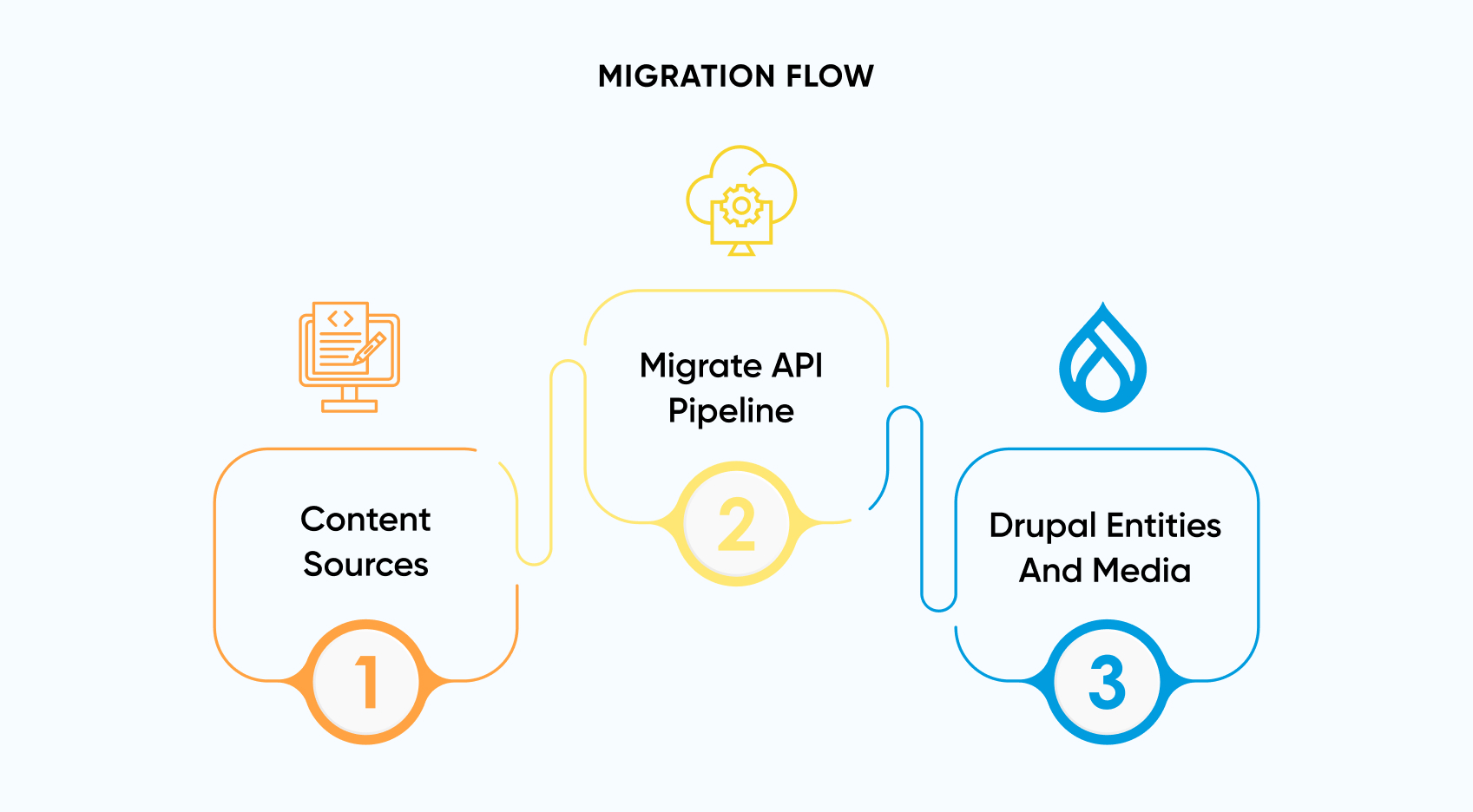
Structured migration to Drupal 11
- Used Drupal Migrate API and CSV transforms to convert WordPress posts into structured Drupal content types and media entities.
- Validated migrations with QA runs and parity checks to protect mission-critical content fidelity.
Accessibility-first component design
- Rebuilt templates with semantic markup, responsive images, ARIA support, and keyboard navigation.
- Improved SEO using Metatag and consistent schema.org annotations.
Editorial reusability and governance
- Introduced a reusable component library and structured content types for consistent, accessible layouts.
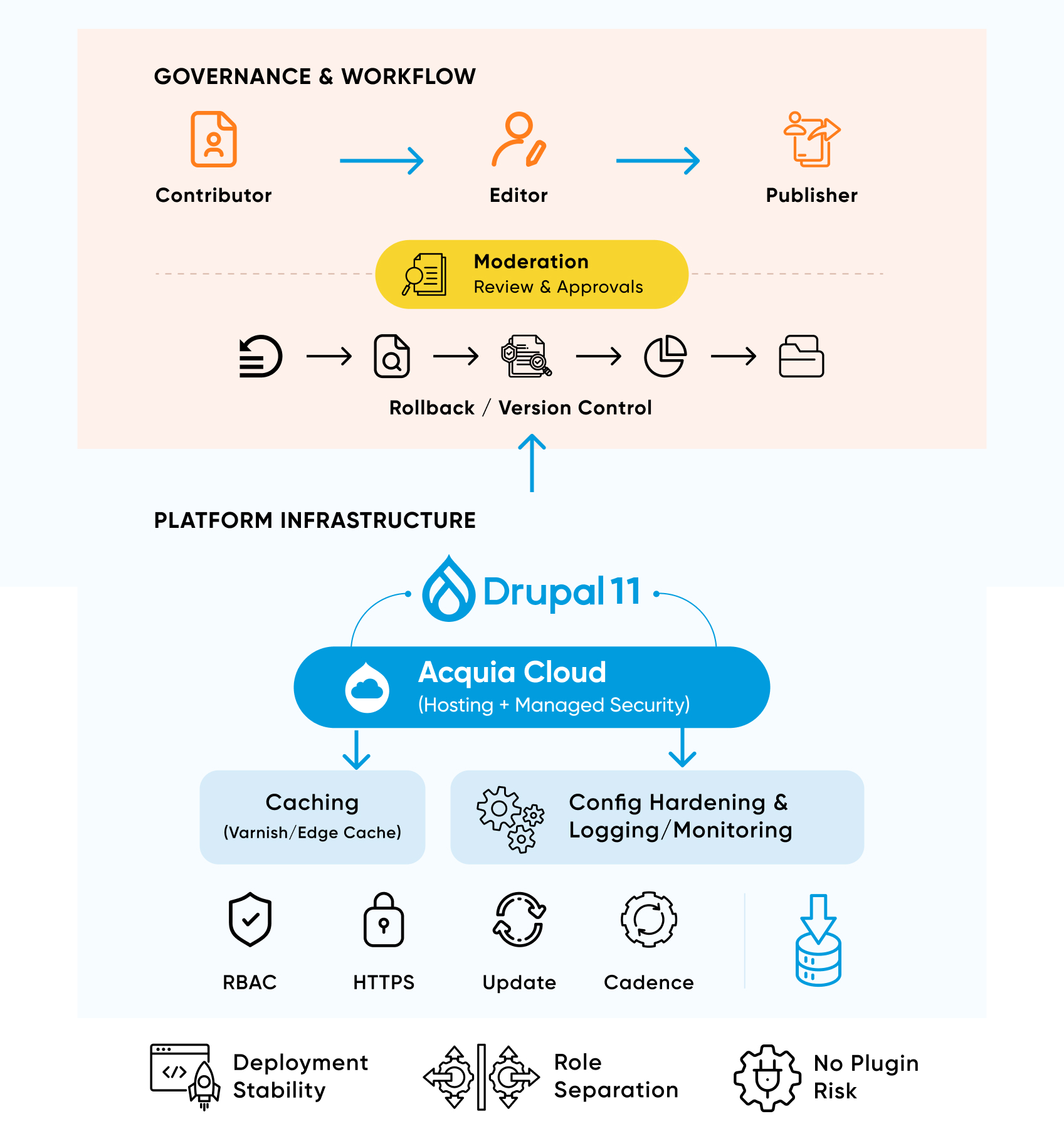
- Implemented role-based workflows and moderation for safe publishing and decentralized ownership.
Platform hardening on Acquia Cloud
- Implemented Acquia-recommended caching and performance configurations.
- Hardened access control, reduced module footprint, and deployed to Acquia Cloud for managed hosting and simplified updates.
Training, runbooks, and post-launch support
- Delivered editor training and documentation, plus handoff materials and hypercare.
The Results
AMA’s vulnerable collection of campaign microsites became a unified, governed platform built for safe, scalable communication.
Technical and UX improvements
- Lighthouse desktop performance improved from 24–54 → 98–100.
- Accessibility scores increased to 95–100 across sampled sites.
- Best Practices and SEO reached 92–100, with some campaigns hitting full scores.
Editorial efficiency
- Shared components and structured content types reduced page-building time and improved layout consistency across campaigns.
- The delivery scaled: 10 sites in Phase 1, with 5 more in the pipeline.
Cost and governance benefits
- Consolidated operations reduced long-term maintenance burden and security risk.
- Centralized governance replaced ad hoc plugin updates and multi-platform patching with predictable management.
Why Drupal was chosen
Drupal 11 enabled AMA to standardize unstructured content into structured content types and media entities, implement reusable components (via block-type composition), and enforce role-based workflows and moderation for safer publishing across stakeholders.

Technical Specifications
Drupal version: