Sector(s)
Team Members
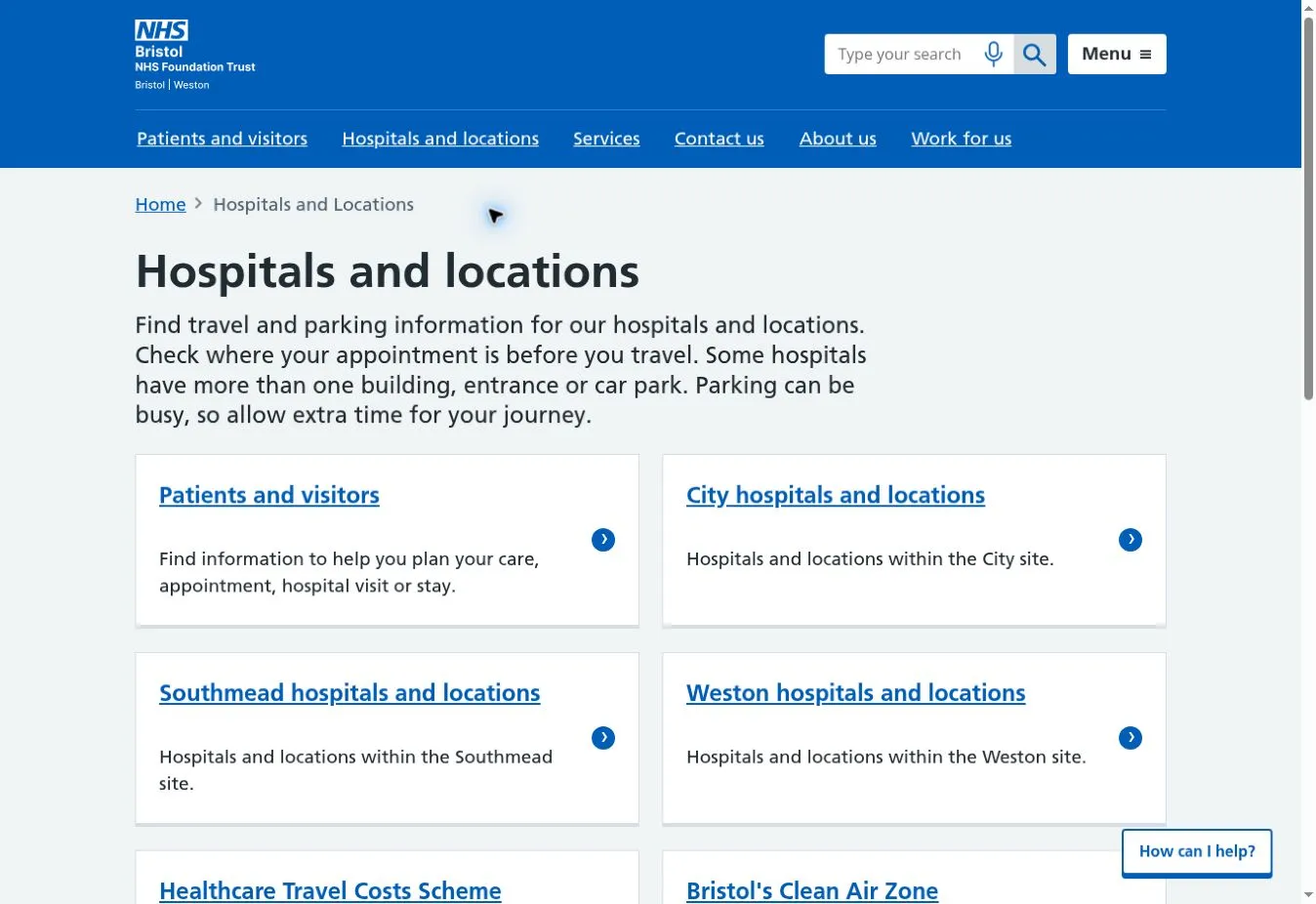
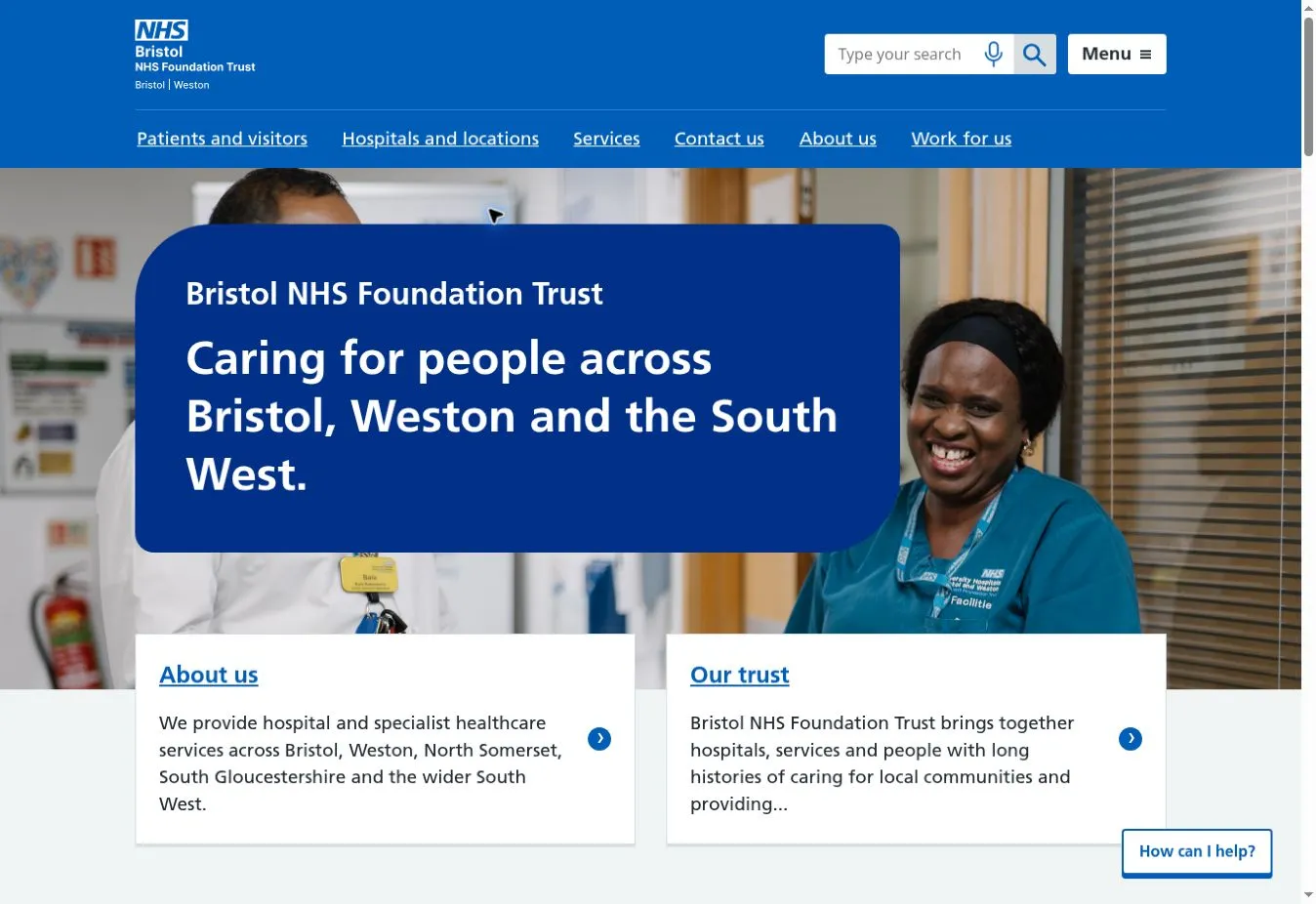
Bristol NHS Foundation Trust needed a new public website to coincide with its formation on 1 July 2026. Big Blue Door worked with the Trust on the design and development of a shared digital platform for patients, visitors, staff and healthcare professionals.
The project also established LocalNHS Drupal: an NHS-specific platform based on LocalGov Drupal’s collaborative approach. Big Blue Door’s work brought together user-focused design, information architecture, reusable page components, content preparation, editor training and search integration. The initial launch prioritised essential information and clear routes to services, with further content migration continuing in phases. It provided both an immediate website for the new organisation and a first implementation of a platform intended to support wider NHS collaboration.
Business case and background
Bristol NHS Foundation Trust was formed through the merger of North Bristol NHS Trust and University Hospitals Bristol and Weston NHS Foundation Trust. The organisation serves communities across Bristol, North Somerset and South Gloucestershire, alongside specialist services for the wider South West and beyond.
The merger created a clear digital requirement: people needed a coherent starting point for finding information about the new Trust, its hospitals and its services. Existing information was distributed across predecessor websites, while patients and visitors continued to rely on established links and information routes. The launch therefore needed to balance a unified identity with continuity of access.
There was also an opportunity to reconsider how NHS websites are developed. Organisations repeatedly need similar publishing tools, service information and patient journeys. Big Blue Door and the Trust developed LocalNHS Drupal around the potential to share this work, rather than requiring every organisation to commission each capability independently. Bristol’s website became the first practical application of that approach, delivered against the fixed milestone of the Trust’s creation.
About the project
A new digital front door for a new Trust
The immediate goal was to establish a usable, recognisable website when Bristol NHS Foundation Trust came into being. The site needed to help people find hospitals, services, visiting information and organisational information, while giving the new Trust a consistent public identity.
Big Blue Door and the Trust also wanted to demonstrate a different way of delivering NHS websites. Developing LocalNHS Drupal meant thinking beyond Bristol’s individual pages: which elements could form a repeatable foundation, and how could future organisations benefit from shared development?
Prioritising content and user journeys
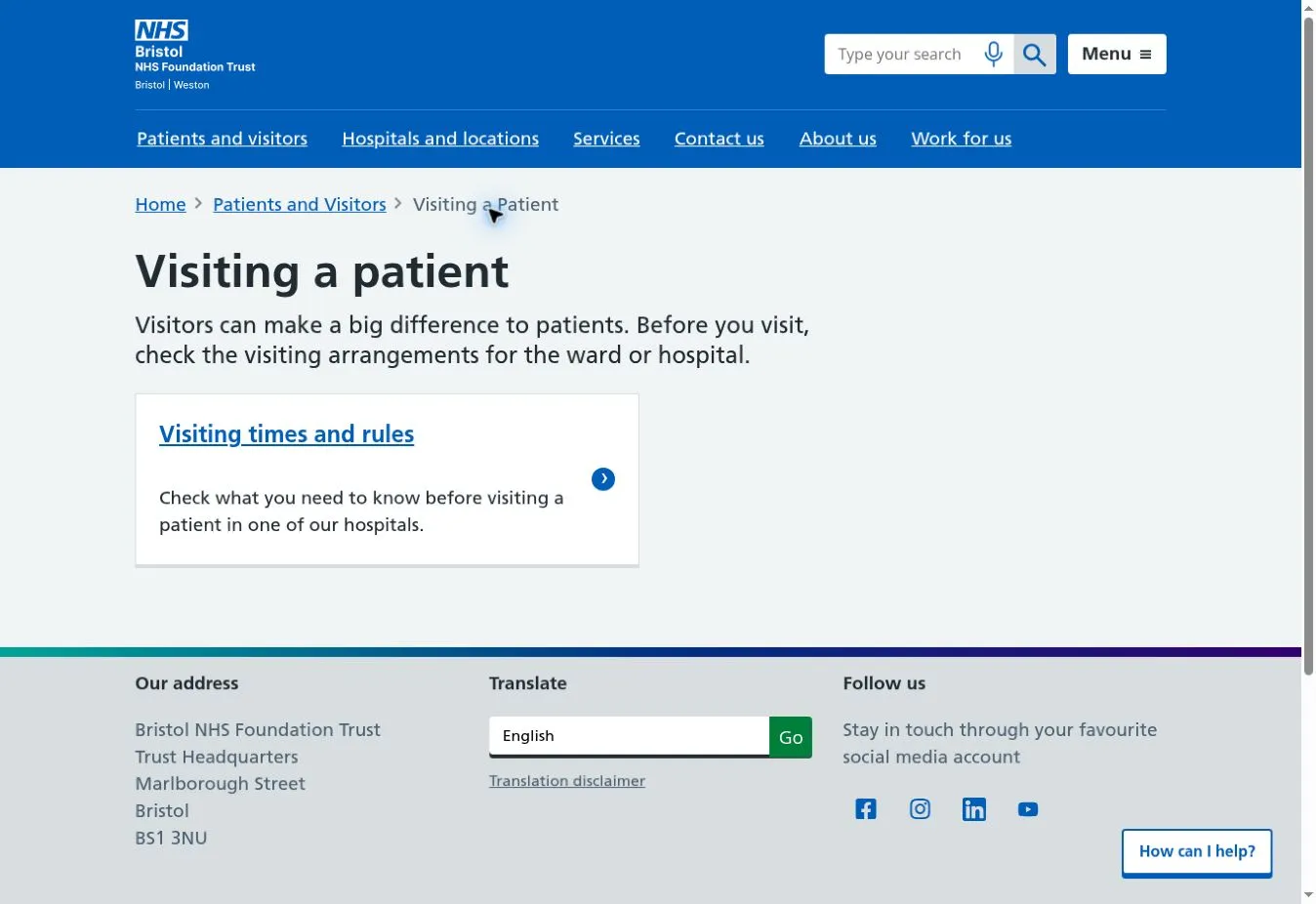
Early planning focused on the minimum viable website required for the July launch. Information architecture and content preparation were developed alongside design, with attention to patients’ and visitors’ practical tasks. The resulting site provides prominent routes to patient information, hospitals and locations, services, contact details and employment information.
Content consolidation was deliberately phased. The new site gives users a shared starting point while retaining routes to information on predecessor websites during migration. Planning also considered continuity for existing links, including URLs used in patient letters and QR codes. This was an important requirement for a merger project, where replacing the website must not leave existing information routes unconsidered.
Developing the platform together
Big Blue Door worked closely with the Trust through regular project meetings, design-system reviews, information-architecture discussions and an evolving functional specification. Stakeholder engagement informed the work, and delivery records show plans to bring engagement-group participants back into testing and feedback.
The programme used iterative delivery, with development progress and issues reviewed in Trello and supporting collaboration through Basecamp. Design, content and technical work progressed together. Editor training was incorporated into the delivery programme so the Trust’s team could contribute content within the new CMS.
Search, presentation and quality assurance
Big Blue Door integrated Cludo search into the website, with project records confirming it was working in both demonstration and live environments by early June. The team reviewed the presentation of AI summaries and search pagination alongside the wider interface.
Accessibility and responsive design were project priorities. WCAG 2.2 AA was specified as a requirement, and the delivery process included cross-device checks and interface refinements. The scope also brought together reusable page components, embedding, alerts and feedback routes to support ongoing publishing. Accessibility conformance should be reported separately from these design and delivery activities.
Milestones and outcomes
Planning records from December 2025 established the July 2026 launch target. During spring 2026, the teams refined the design, information architecture and content approach. May and June brought page building, training preparation, search integration and quality assurance. The website launched on 1 July 2026, coinciding with the formation of the new Trust.
The delivered outcome was a live, shared website and the first NHS deployment of LocalNHS Drupal. Patients and visitors gained a common entry point to the new organisation, while the Trust gained a consistent publishing platform for continued consolidation.
For Big Blue Door, the project demonstrates how Drupal can support both an organisation’s immediate needs and a broader collaborative ambition. Bristol supplied the first real-world implementation; packaging the platform for wider community use and expanding adoption are the next stages of that ambition, rather than outcomes already claimed here.
Client testimonial
“By becoming the first NHS organisation to launch a website built on LocalNHS Drupal, we’re not only improving the experience for our patients, visitors and staff, but also helping to pioneer a collaborative approach that has the potential to benefit NHS organisations across the country.”
Elliot Nichols, Chief Communications and Engagement Officer, Bristol NHS Foundation Trust.
Why Drupal was chosen
Drupal provided a flexible foundation for a public-sector website that needed to serve several audiences, support structured information and evolve through a phased programme. Its content-management capabilities suited an organisation publishing a broad range of hospital, patient, service and corporate information, with different people contributing to its upkeep.
The project’s distinctive choice was to build on LocalGov Drupal through an NHS-specific platform. LocalGov Drupal offered an established approach to shared public-service publishing: common requirements could be addressed through reusable functionality, with improvements capable of benefiting more than one organisation. LocalNHS Drupal applies that principle to healthcare, combining a Drupal foundation with NHS-oriented presentation and information needs.
For Bristol, this supported both the immediate launch and the longer-term ambition. Reusable components and templates allowed a coherent website to be assembled while retaining flexibility for different content. Drupal also supported integration with a specialist search service, so discovery could be developed alongside the publishing experience.
The open-source CMS gives the Trust a basis for continued development without tying the core platform to a proprietary CMS licence. The wider value of LocalNHS Drupal lies in the potential for NHS organisations to share future improvements and reduce duplicated effort. The separately procured search service should be distinguished from that open-source CMS foundation.
Technical Specifications
Drupal version:
Key modules/theme/distribution used:
LocalNHS Drupal was central to the project because it allowed Big Blue Door and the Trust to adapt LocalGov Drupal’s collaborative model to NHS requirements. The aim was to establish reusable healthcare website functionality and presentation, beginning with Bristol’s live implementation. This made the project an investment in a shared approach as well as a website for one organisation.
The NHS-specific theme and design system provided a recognisable visual language for the new Trust. Big Blue Door refined the design with the Trust’s feedback, applying consistent navigation, typography and page treatments across different information types.
Reusable paragraph components supported flexible page building within that design system. Delivery records describe homepage components, column layouts, embeds and alert banners, allowing different content needs to be addressed without designing every page from scratch.
Cludo was integrated to support search, including AI-assisted discovery. It complemented Drupal’s publishing tools with a dedicated search experience; the project team also identified search data as a useful input to future content improvements. Cludo is a separate service, not an open-source Drupal module or an included LocalNHS licence entitlement.