Sector(s)
Team Members
Known as “the world’s only true Travel Commerce Platform,” Travelport provides distribution, technology, payment and other solutions for the $8 trillion global travel and tourism industry.
Travelport needed a website that could perform at the enterprise level and evolve to meet their future-ready business objectives. They teamed with Mediacurrent to replace their proprietary, license-based Content Management System (CMS) with a brand new site on a dynamic, open source platform: Drupal.
About the project
With timing of the project as a major consideration, Travelport needed a web development and digital strategy agency that could scale up quickly to launch the new website in just six months.
With Mediacurrent’s support, Travelport launched a new Drupal-based website delivering a stable platform to support future growth, a more fluid user experience to satisfy their customer base, and a digital strategy roadmap to expand the Travelport brand.
Project Goals:
Create a Targeted Content Plan: One of Travelport’s overarching goals was to present clear and effective articulation of their brand, products, and services on the site. Their unique value proposition centered around their Travel Commerce Platform, a B2B travel marketplace that is “redefining the way we search, share, buy and sell travel.” The Mediacurrent team helped to develop and guide Travelport’s content strategy throughout the wireframing, design, and build phases of the project.
Refocus Digital Strategy: In order to stand out from the competition and raise brand awareness among their core audiences, Travelport needed an impactful way to tell their story. "We wanted to take our site from being a broadcast website to one that we could listen, talk, and engage with our customers," Nardini said. A clear window into their site analytics was crucial to gauge customer interaction and demonstrate the ROI of their content marketing efforts. Mediacurrent’s Digital Strategy team helped to streamline analytics reporting with goal tracking and custom dashboards.
Establish Clear “Calls to Action” and Conversion Paths: Another objective was to increase form conversions. To achieve this goal, Mediacurrent set up pathways to connect different site visitors to the most relevant information and directed the placement of CTA buttons. Travelport conducted extensive user testing to support these assumptions.
Previously, Travelport had multiple versions of contact forms embedded throughout their site. Mediacurrent consolidated these forms into one global “contact us” form and used a custom script to set up an email routing system that directs inbound forms to the appropriate internal department.
Empower Drupal Users Across the Organization: Mediacurrent’s Digital Strategy team conducted weekly one-hour training sessions to introduce the Travelport team to the power of Drupal. The goals for training were threefold: to empower users to navigate the functional aspects of the site, to provide a deeper understanding of what each page is meant to achieve, and to reduce the risk of content stagnation. The 8-week training phase was timed to coincide with the latter half of the development phase in Travelport’s flagship corporate site redesign. As editors learned how to enter content that was required for the redesign, they were empowered to effectively create and edit content post-launch, reducing the risk of content stagnation that would have otherwise occurred if training were delayed until after launch.
Challenges and Solutions
SEO Optimization: One of Travelport’s challenges was maintaining a website that is easily searchable and understood. Mediacurrent ensured SEO best practices were implemented to achieve a higher search engine ranking. The approach involved researching keywords and building a sitemap to direct search engines to crawl the site more quickly. Mediacurrent also crafted effective page titles and meta descriptions.
Content Mapping to Support Buyer Goals: It was critical for Travelport to be able to communicate effectively in a digital medium and appeal to all three segments of their audience base: potential customers, actual customers, and non-customers such as future investors. To meet this challenge, Mediacurrent provided consultation to help guide a content strategy that would resonate with their audience. Mediacurrent consulted on the development of user personas, which was critical to the foundation of Travelport’s marketing strategy. These user personas provide greater depth and context to Travelport’s target audience segmentation by focusing on one character who embodies the predominant qualities of the larger group.
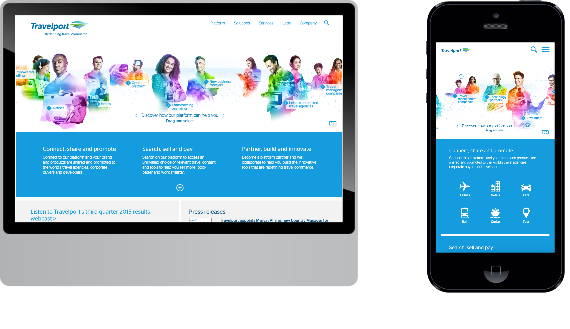
Responsive Design: The legacy Travelport site was not responsive on mobile—a stumbling block for customers and prospects. Their SEO ranking was also at stake, as the latest Google Algorithm weighs heavily in favor of mobile friendly design. Now, when editors enter the content for a page on the new Travelport website, the Drupal system automatically displays the appropriate layout based on the user’s device (desktop, tablet, mobile, etc.)
Information Architecture: Prior to the redesign, Travelport’s content structure needed improvement to help users navigate through the site and reach an appropriate destination. Mediacurrent helped cut redundant pages to create more streamlined click paths. To further enhance user experience, Mediacurrent modified Travelport’s information architecture to improve navigation and search options.
Analytics Tracking: Travelport had unique folders and views for every site page which made it difficult to navigate their Google Analytics. Mediacurrent customized and improved Travelport’s analytics view by implementing goal tracking to help pull meaningful information from their website. Now, Travelport can monitor the ROI of their content efforts with a comprehensive dashboard of their brand and customer interactions.
Theming
Living Style Guide: The living style guide was generated using Knyle Style Sheets (KSS), a method of documentation for CSS. It’s human-readable and machine-parsable, which is where the automated style guide comes in. It scans the files and pulls out these comments formatted in KSS documentation syntax. It uses those to build a style guide that stays current with your site. The benefit of a tool like this is that the style guide stays up to date. Since it uses the documentation you provide directly in the code, it’s easier to keep it up to date and therefore keep your style guide up to date too. The style guide was an invaluable resource for developers, themers, designers, content editors and marketers.
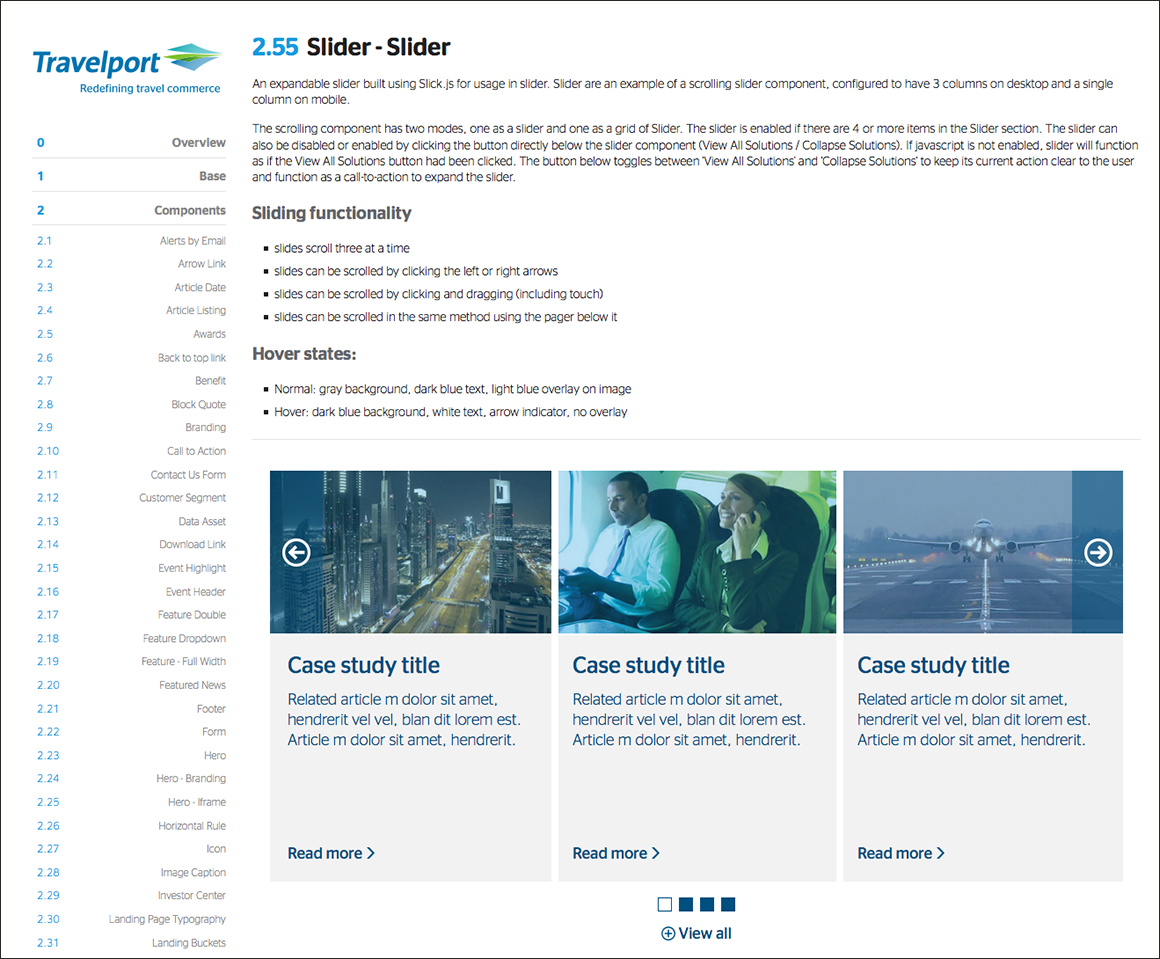
Styleguide-Driven Development: Mediacurrent used a styleguide-driven development methodology, first establishing the markup and theme for pages so it can be seen earlier in the project, and Drupal can be made to output content into the established markup formats. Thus, the KSS Style Guide pages were tested for browser compatibility, accessibility, etc while the development of the CMS was still in progress rather than at the end of the development cycle.
Final Thoughts
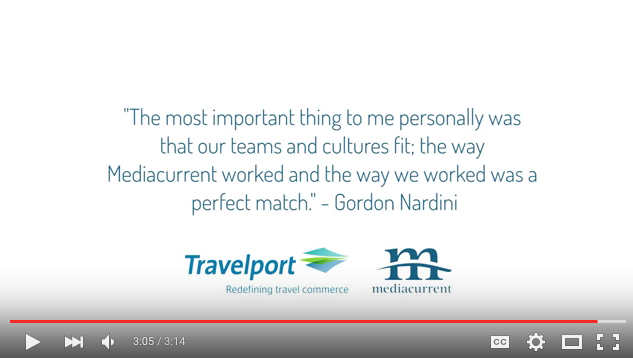
This project was truly a team effort, as Mediacurrent and Travelport engaged in deep collaboration to meet the challenges of an evolving digital landscape head on. “The most important thing to me personally was that our teams and cultures fit; the way Mediacurrent worked and the way we worked was a perfect match,” Nardini said.
Travelport embraced Drupal’s highly customizable platform and freedom from the initial and ongoing license fees of their legacy proprietary software. The end result is a website that stands out from the competition by combining the flexibility of Drupal with a forward thinking digital strategy.
Other Resources
Video Interview with Travelport
Why Drupal was chosen
In the search for a new CMS, Travelport wanted a platform with superb flexibility and scalability. “Our team realized that Drupal could meet our needs, not just in our dot-com solution but also as we extend to other projects in the future,” said Noel Holmes, VP of Customer Experience at Travelport.
Additional considerations that drove Travelport to choose Drupal were:
- Proven success at the enterprise-level
- Search engine optimization capabilities
- No software costs or licensing fees
- Ease of use for non-technical content editors
Technical Specifications
Drupal version:
Key modules/theme/distribution used:
Mediacurrent constructed the site primarily with Drupal community contributed modules in order to minimize the amount of custom code and promote ease of maintenance and support for the life of the site.
Panels with Fieldable Panels Panes: These modules provide content administrators with the ability to assemble landing pages with flexible layout options by mixing-and-matching collections of components found in the living style guide. For example, a single “Media Pane” with fields for title, description and links was created and reused throughout the site for a variety of displays. The approach allows for editors to easily make changes to image and video components on the site without editing the entire page. This flexibility allows Travelport to highlight its solutions to a wide range of audience segments visiting the site.
Featured Modules
- Administration menu
- Chaos tools
- Date
- Entity API
- Entity Reference
- Features
- Fieldable Panels Panes
- File Entity
- Global Redirect
- Inline Entity Form
- Internationalization
- Link
- Linkit
- Media
- Media: YouTube
- Metatag
- Module filter
- Panels
- Pathauto
- Redirect
- Views
- Webform
- Wysiwyg
- XML sitemap
Configuration Management: Mediacurrent organized the site’s configuration into Drupal Features, allowing for daily code releases in a git workflow to take place in parallel with content entry during the project. The site’s content types, panels layouts, views, permissions and other settings are all stored into code via Features, helping to prevent regressions when updates are pushed to production.