Sector(s)
Team Members
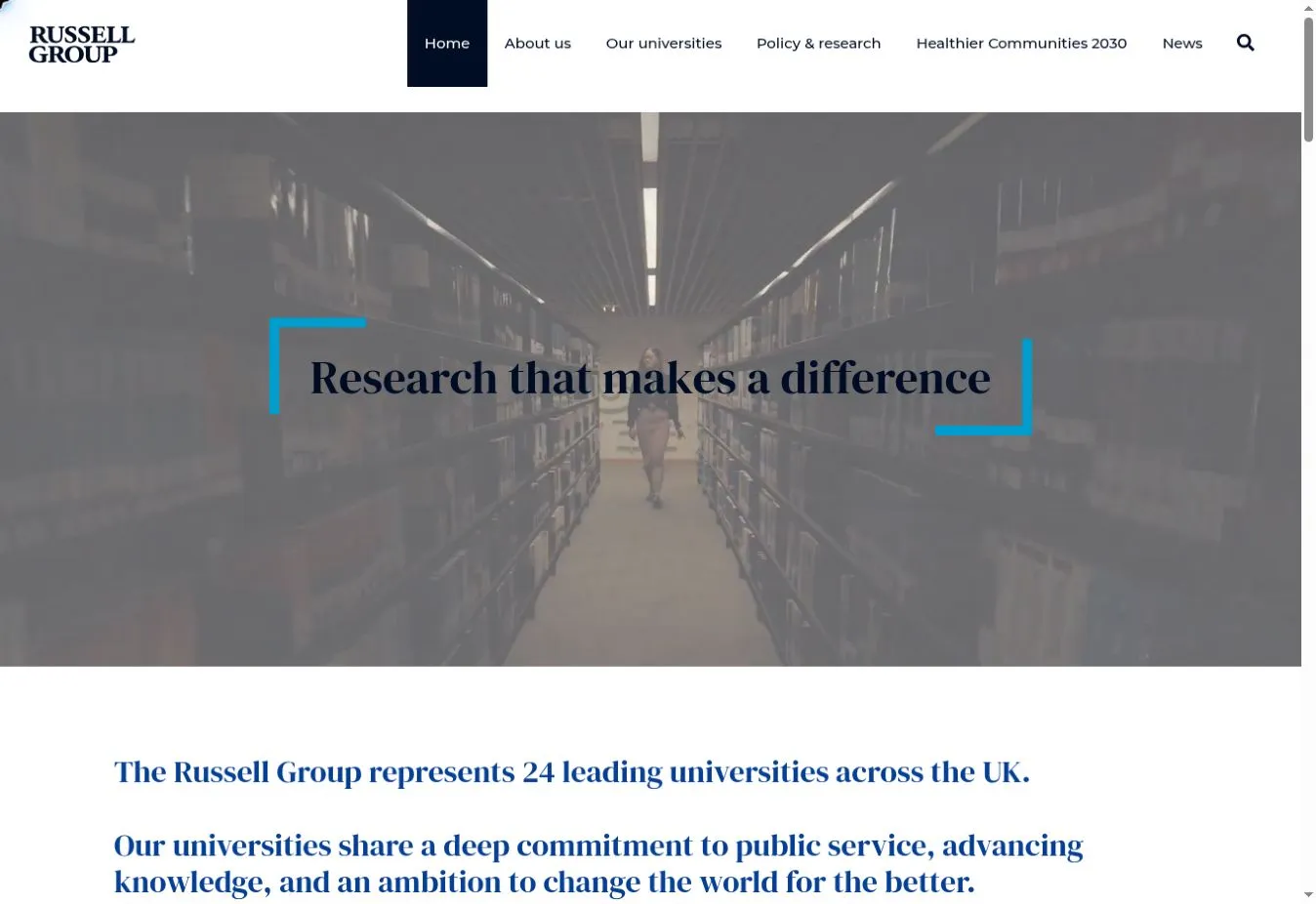
The Russell Group needed a corporate website that could serve policy professionals, journalists, university stakeholders and wider public audiences. Big Blue Door delivered discovery, user research, content planning, a Figma design system and a Drupal 10 rebuild, alongside migration support and editor training.
The project kicked off in July 2024 and launched on 27 February 2025. Design, development and content work progressed through a collaborative delivery process, with regular client reviews and priorities agreed around launch. The website combines policy briefings, publications, news and university profiles within a consistent design and content structure. Ongoing hosting and maintenance have kept the platform supported, with the corporate website upgraded to Drupal 11 in August 2026.
Business case and background
The Russell Group represents 24 research-intensive universities across the UK. Its website plays an important role in communicating policy positions, sharing evidence and explaining the contribution of universities to education, research, innovation and public life.
The previous website no longer provided the clarity or flexibility the organisation needed. Dense content, ageing navigation and an inconsistent presentation made it harder to connect audiences with relevant information. The communications team needed more adaptable publishing tools and a visual approach that could accommodate substantial policy material while remaining recognisably part of the Russell Group brand.
A central requirement was to help visitors reach useful information efficiently. The project team described the website as a resource: success meant supporting focused tasks, such as locating a briefing or finding university information. This shaped the emphasis on content organisation, search and thematic browsing.
Big Blue Door brought together its experience of Drupal publishing platforms and the Russell Group team’s knowledge of its audiences. The business case connected a renewed public-facing presence with practical improvements to content structure, editorial control and long-term maintainability.
About the project
Goals and requirements
The project aimed to make the Russell Group’s policy work and collective university contribution easier to find and understand. The website needed to serve visitors with different levels of familiarity, from professional audiences seeking a specific briefing to people exploring the organisation for the first time.
Key requirements included clearer navigation, responsive page layouts, structured policy and publication content, university profiles and more flexible editorial tools. WCAG 2.2 AA was set as the accessibility requirement. The design also needed to extend the existing brand into a coherent digital system, balancing visual interest with readable, useful information.
Research-led design
Big Blue Door’s discovery work included eight user interviews and three stakeholder workshops, alongside brand and content design activities. Research highlighted the importance of efficient navigation, relevant search results and thematic organisation. It also showed the need to balance a more engaging presentation with the practical reading and reference tasks of professional audiences.
The team translated these findings into personas, user journeys and a revised information architecture. Wireframes and interactive Figma prototypes allowed the layout and navigation to be explored before final implementation. Moderated remote testing and stakeholder feedback informed successive refinements.
A reusable design system connected typography, colour, imagery and components across the website. This gave the development and content teams a shared framework for creating consistent pages with enough flexibility for different kinds of material.
Drupal implementation and content transition
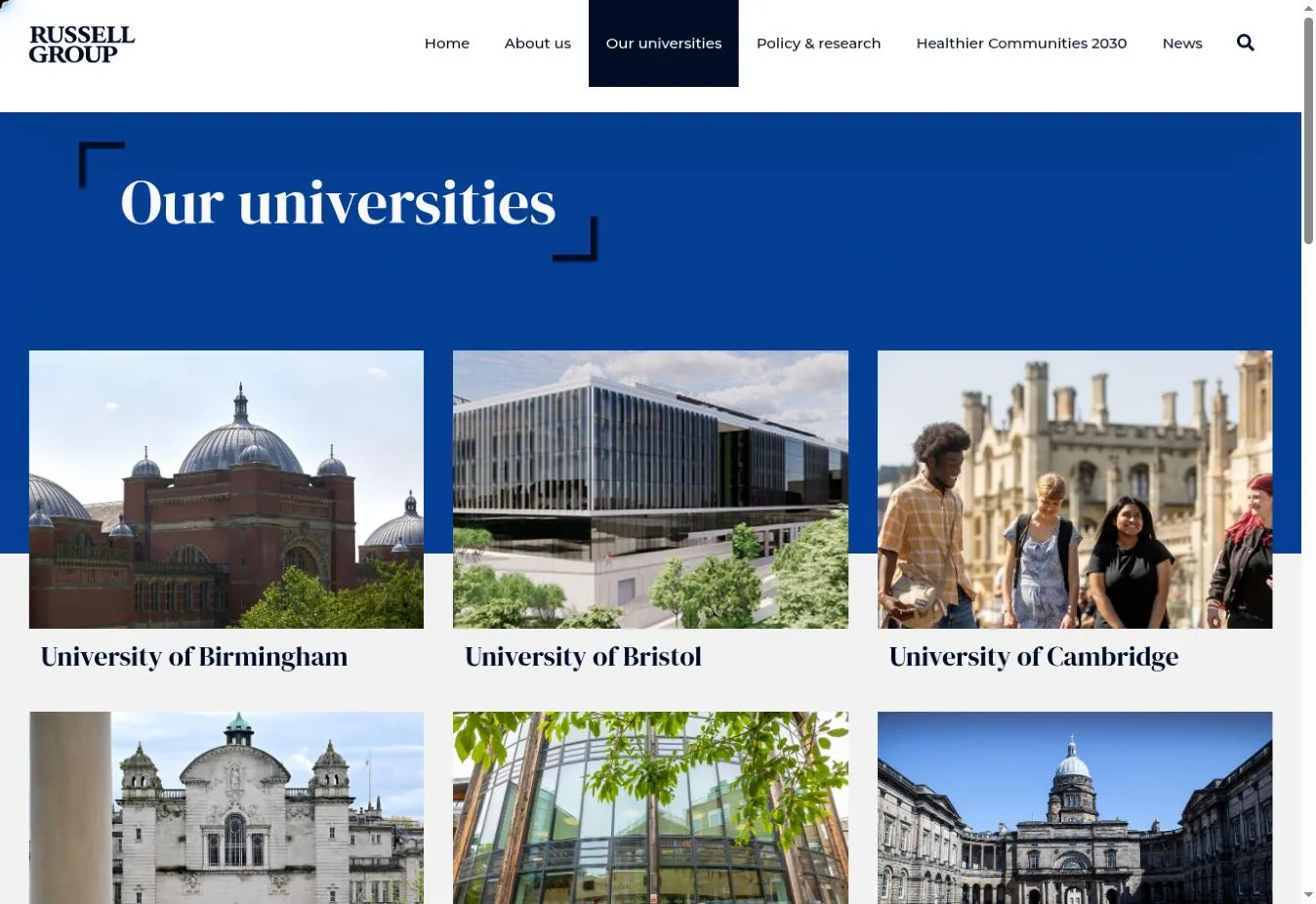
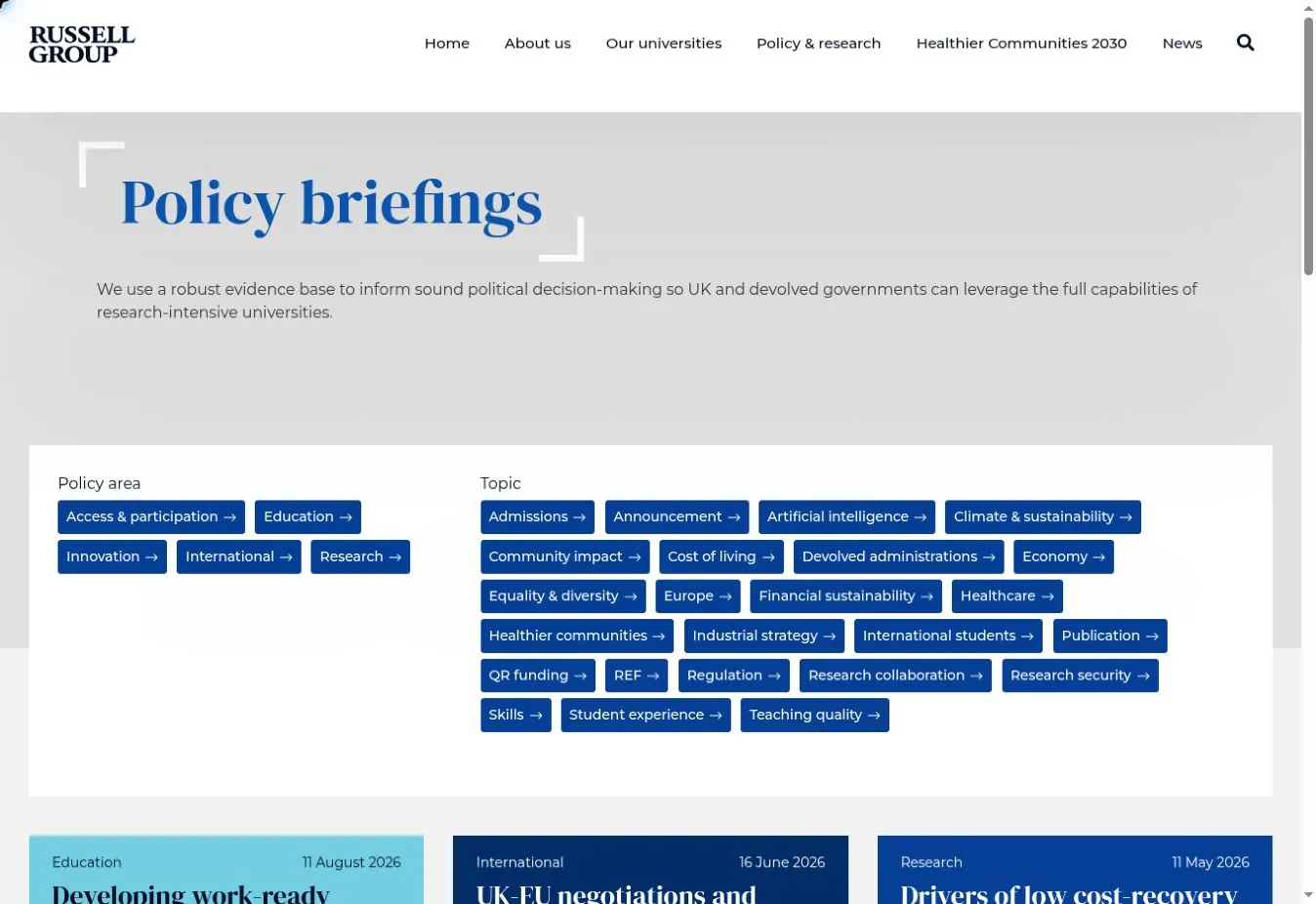
Big Blue Door built the website in Drupal 10, with dedicated content types and listings for its main publishing needs. Policy-area and topic tagging provide routes through related material, while university profiles bring the membership together in a clear directory.
Reusable Paragraphs components support a varied reading experience, including text, media, downloads, featured content and multi-column layouts. This is particularly useful for a policy-focused organisation: substantial information can be broken into readable sections and presented alongside supporting resources.
The transition combined a news-archive migration workstream with client-led content transfer and Big Blue Door’s support. CMS training helped the team prepare and maintain content in Drupal. Launch support included redirect work and checks on missing legacy URLs, while a snapshot of the old website was taken to support continuity of reference.
Delivery and milestones
The July 2024 kickoff established weekly check-ins, shared project documentation and clear communication routes. Discovery and design progressed through summer and autumn, with the functional specification developed in August and September. Design, development and content activity ran in parallel, with staged reviews and priorities refined as the launch approached.
The website went live on 27 February 2025, followed by further fixes and content refinements. Big Blue Door continued to provide managed hosting, maintenance and account support. On 17 August 2026, the corporate website’s upgrade to Drupal 11 was deployed to production.
Outcome
The project delivered a refreshed corporate website with clearer routes into policy material, a consistent presentation of member universities and a flexible editorial foundation. The new content structure gives the Russell Group a practical way to connect briefings, news and research themes, while reusable components support continued publishing without redesigning each page.
The ongoing service also has a recorded operational measure: the June 2026 account review reported 99.95% availability over the preceding quarter. This is a time-bounded service result, rather than a claim of improvement against the previous website.
Big Blue Door’s continuing involvement keeps the website maintained and provides capacity for further enhancements as the Russell Group’s communication priorities evolve.
Why Drupal was chosen
Big Blue Door recommended Drupal because the Russell Group needed a flexible publishing platform for several related types of information. News, publications, policy briefings, impact stories and university profiles each have distinct purposes, but also need to connect through shared themes and a consistent user experience.
Drupal’s structured content model gave the team a way to manage those differences without losing coherence. Taxonomy supports categorisation by subject and policy area, while Drupal Views provides reusable listings. This supports practical journeys through a growing body of material, including browsing policy briefings by topic and exploring the member universities.
Paragraphs supports a component-based approach to page building. Editors can combine text, imagery, documents, video and other designed elements to suit the content, rather than relying on a single rigid page layout. This was particularly valuable for presenting longer publications and giving important information appropriate visual emphasis.
Drupal also provides a foundation for editorial governance through user permissions and content revisions. These capabilities support a communications team that needs to maintain accuracy while keeping information current.
The open-source model was another part of the recommendation: the Russell Group could retain ownership of the delivered code and avoid proprietary CMS licensing or dependence on a single supplier. Big Blue Door’s continuing support, including the later Drupal 11 upgrade, provides a route for maintaining and extending the platform as requirements change.
Technical Specifications
Drupal version: