Sector(s)
Team Members
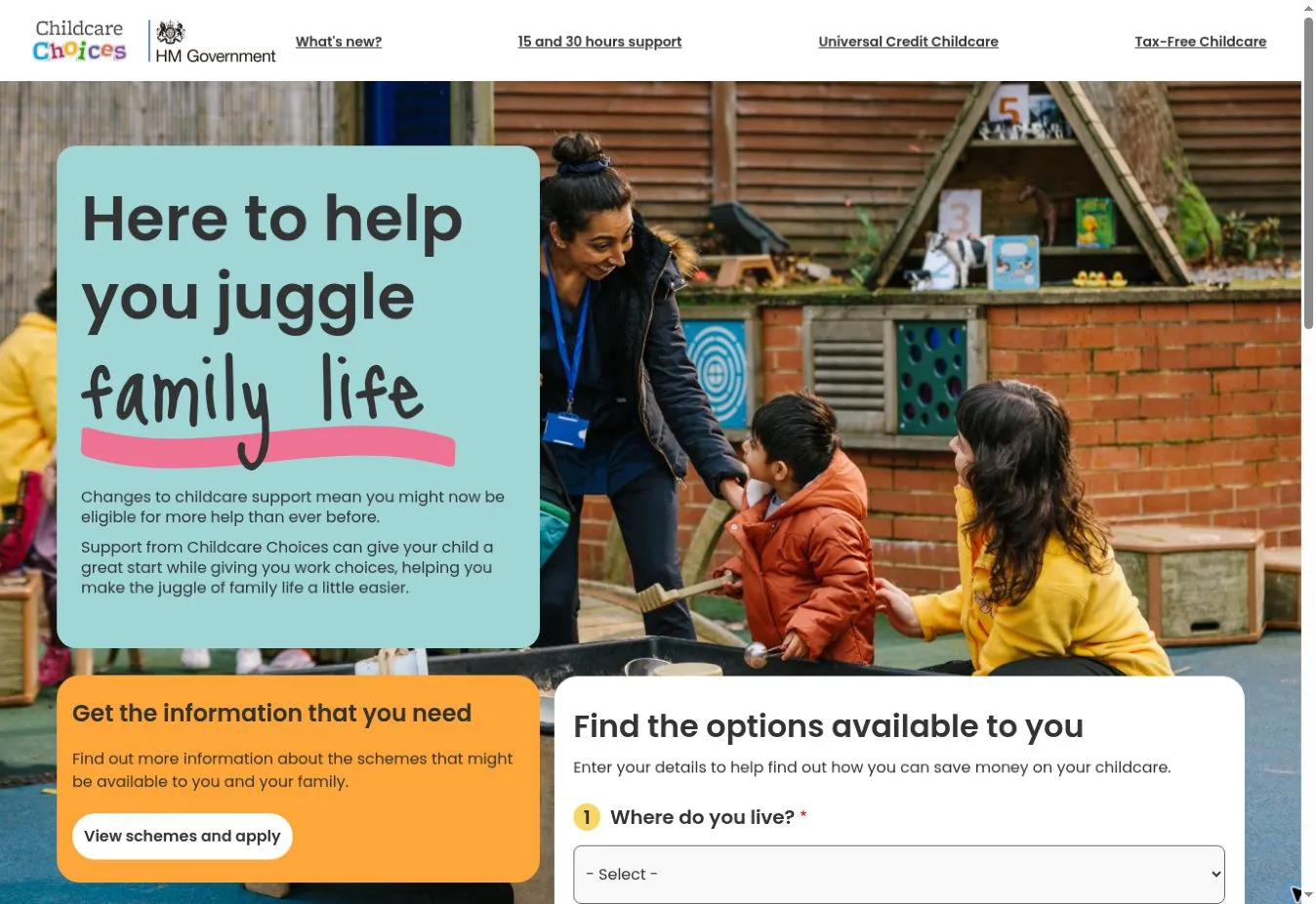
Childcare Choices brought government childcare support information together in one place. Big Blue Door’s brief was to rebuild the website and its lookup tool so families could find relevant information quickly, and government teams could maintain it as schemes evolved.
The project began with a cross-government kickoff in December 2023 and launched on 9 May 2024. Big Blue Door delivered user experience and visual design, Drupal development, content migration, testing, training and hosting. Government teams supplied and reviewed policy logic and content. The collaboration continued after launch through content and functionality updates, CMS training and technical support, enabling the website to respond to new campaign requirements and changes to childcare support.
Business case and background
Childcare support can be difficult to navigate. The relevant schemes depend on factors such as where a family lives, their working circumstances, benefits and the ages of their children. Parents may also need to understand when support will become available, rather than only what applies today.
Changes being introduced across 2023, 2024 and 2025 increased the need for a clear, adaptable source of information. Childcare Choices needed to explain options for residents of England, Scotland, Wales and Northern Ireland while accommodating differences between schemes and national arrangements.
The website’s role was to provide a useful first step. It brought options together and directed visitors to detailed guidance and application services. It was not intended to replace the fuller government application processes or make a definitive entitlement decision.
For HMRC, the Department for Education and the Department for Work and Pensions, the business need also included maintaining accurate information across a shared service. Big Blue Door’s rebuild combined a simpler public journey with a manageable editorial platform. Policy and campaign teams could update scheme information through the CMS, supporting changes without treating every content adjustment as a new development project.
About the project
Making a complex subject easier to navigate
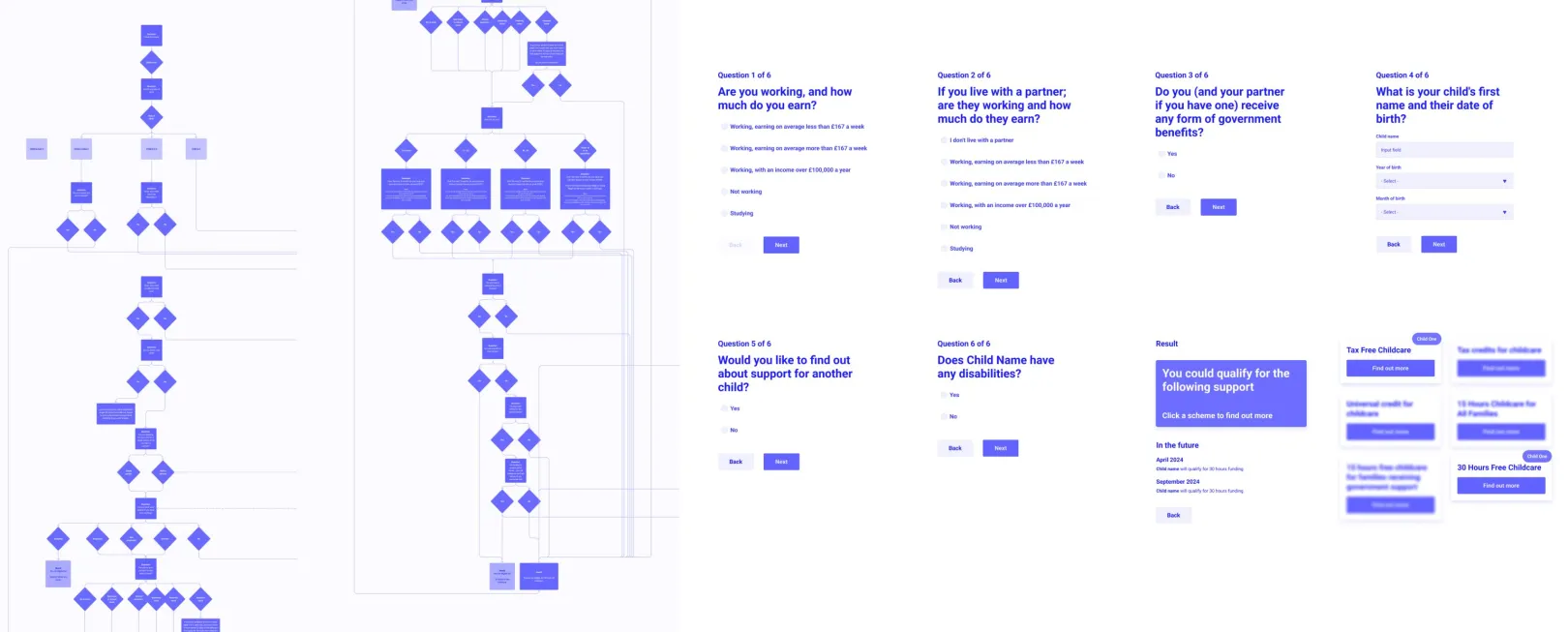
The central goal was to help busy parents identify relevant support with a short, understandable journey. Big Blue Door developed decision trees and explored alternative wireframes, while government teams reviewed the policy logic and rewrote content for clarity and accuracy.
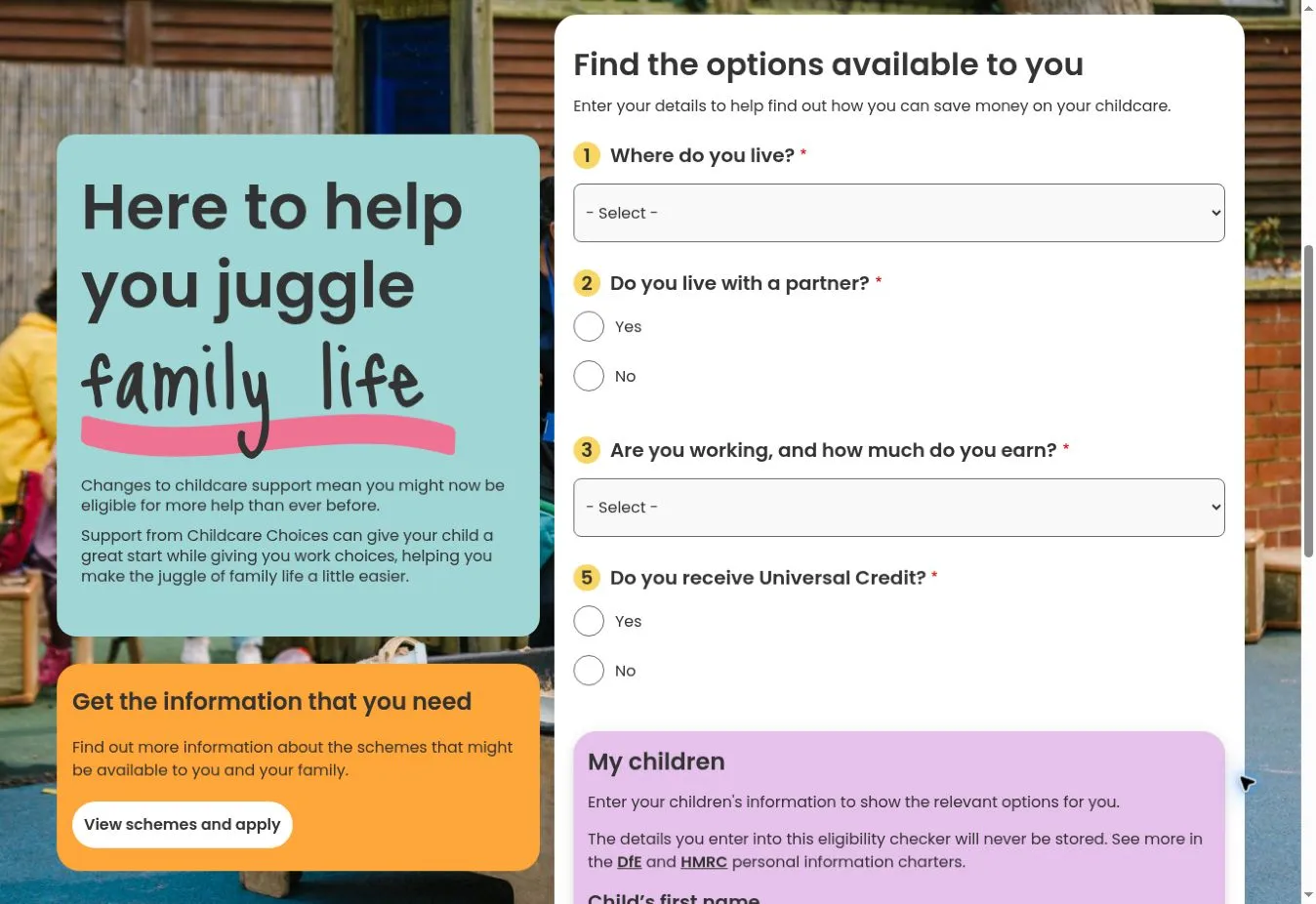
The resulting finder asked about the UK nation, household and working circumstances, benefits and children. Nation selection was incorporated into the form itself. Visitors could consider more than one child and revisit their answers as circumstances changed. Results linked to scheme information and onward application guidance, keeping the website focused on helping people understand their next step.
Designing for mobile use and clear decisions
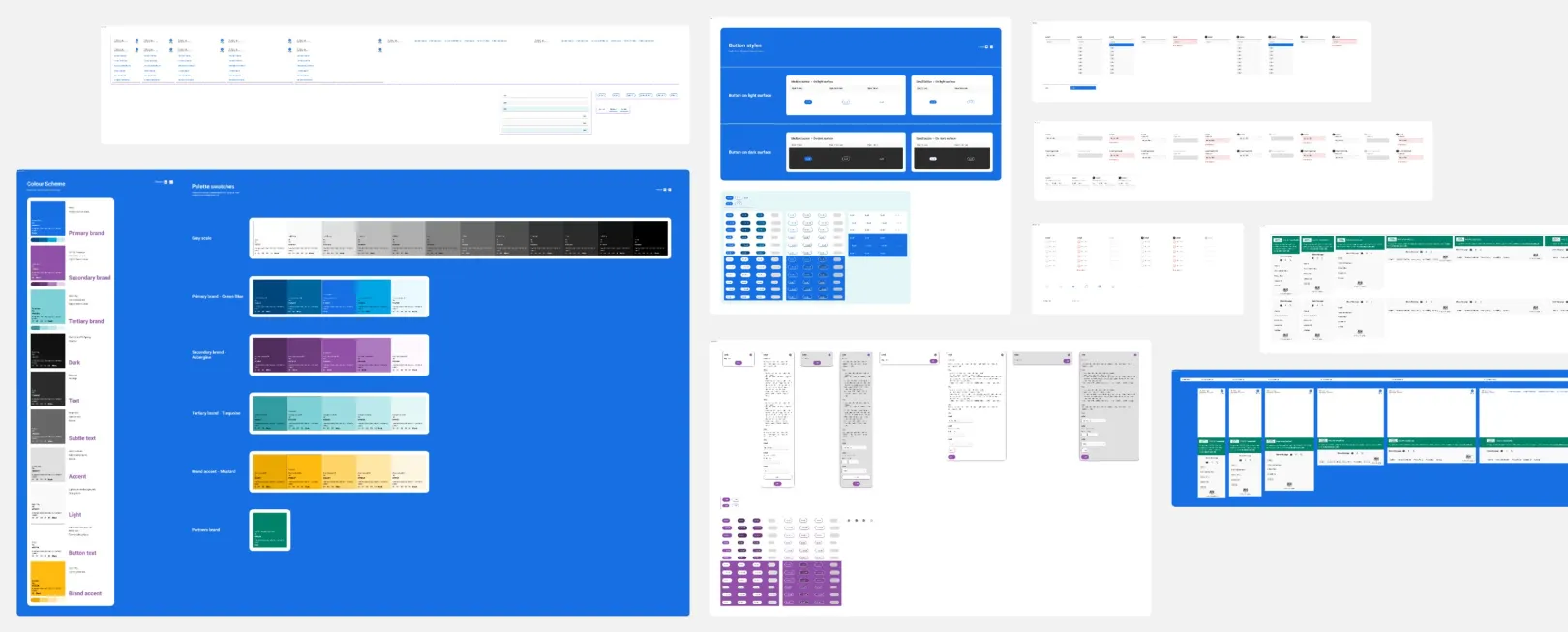
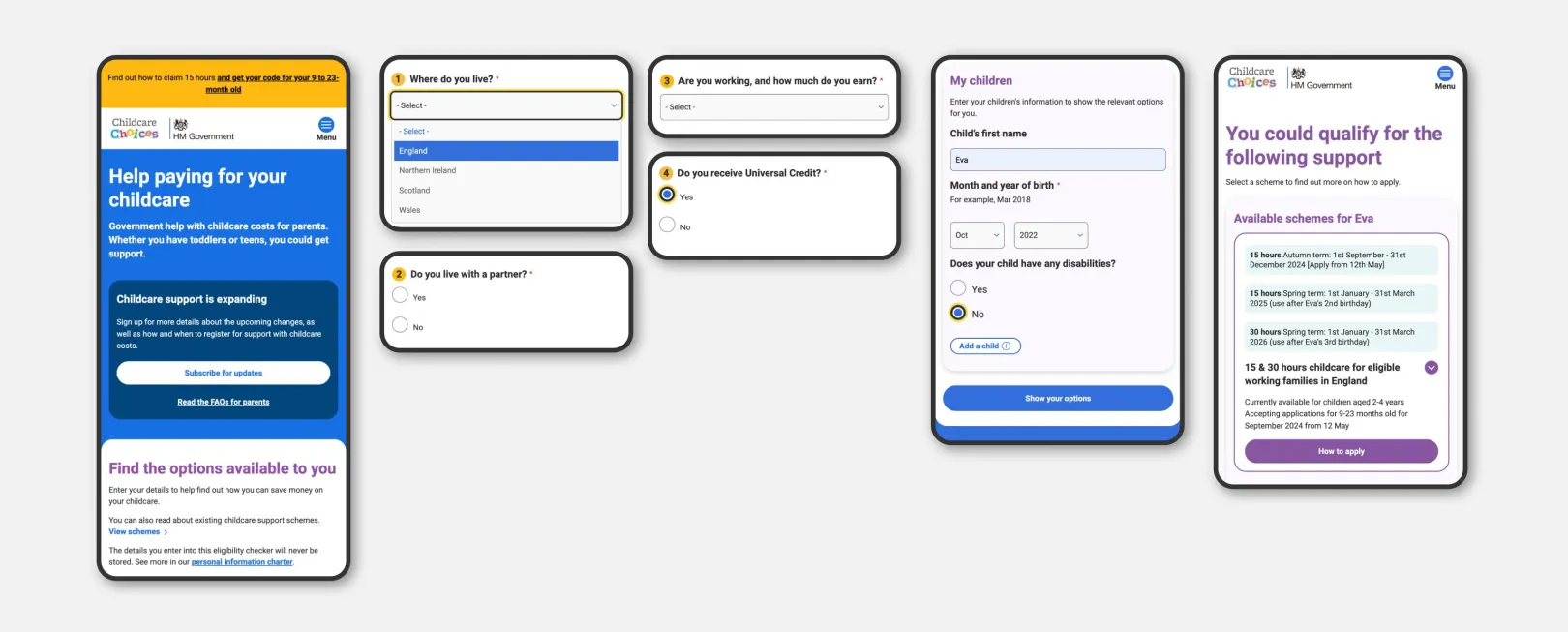
Big Blue Door adopted a mobile-first approach, using familiar public-service design patterns alongside Childcare Choices’ own typography and colours. Clear labels, descriptive calls to action and consistent components helped organise a potentially complicated set of choices.
The design included information about schemes outside a visitor’s current results, allowing families to explore other options and understand how a change in circumstances could affect them. It also distinguished current support from upcoming changes. The emphasis was on providing enough information to act confidently without reproducing the full application process.
Testing the built service
Technical development began early so the team could test the working tool. In March 2024, Big Blue Door conducted seven remote, unmoderated usability tests across desktop and mobile. Scenario-based tasks covered families in all four UK nations, changing child details, finding scheme information and locating supporting resources.
All seven participants completed each of the four national support-finding scenarios. The research also identified improvements, including mobile dropdown behaviour, the visibility of FAQs and clarity about combining schemes. These findings gave the team specific issues to address. Subsequent delivery records document work to make FAQ material available as web pages and provide clearer routes into it.
Coordinating delivery and launch
The project brought together policy and campaign colleagues from three government departments. Weekly meetings and shared Basecamp discussions supported decisions, content review and delivery tracking. Big Blue Door combined design iteration with technical development, client testing and preparation of the hosting environment.
Following development and review, the website launched on 9 May 2024. Big Blue Door coordinated the domain switch with the existing provider and government team and monitored availability and traffic during the transition. AWS hosting, maintenance and support formed part of the delivered service.
Early results and continued improvement
The project review on 22 May 2024 recorded more than 248,000 visits since launch, including a peak of 51,900 visitors on 13 May. Mobile devices accounted for 72.8% of traffic, demonstrating the importance of designing around mobile access. The available-schemes results page had recorded 106,000 page views by that review.
These figures show substantial early use of the service. Alongside the usability findings, they provide evidence that families were reaching the website and using its central results journey. They are usage measures, rather than a claimed increase in successful applications.
Big Blue Door continued to support content and functionality updates after launch. Tailored training videos were completed by June 2024, and later records show government editors preparing policy changes through the CMS. The delivered Drupal platform gave the teams a practical way to maintain a national campaign service while helping families find relevant childcare information.
Why Drupal was chosen
The procurement discussion considered two broad approaches: moving and improving the existing solution, or rebuilding it on a new platform. The agreed project proceeded with a Drupal rebuild, giving Big Blue Door the flexibility to address both the public-facing journey and the government teams’ content-management needs.
Drupal was particularly suited to a service whose main functionality and information needed to evolve together. Big Blue Door integrated the support finder into the CMS and used a modular approach to managing content. Scheme information and the form experience could therefore be maintained within the same platform, rather than being disconnected parts of the website.
The content model supported distinct schemes and reusable presentation patterns. This helped the team show relevant options clearly while retaining access to information about schemes that did not match a visitor’s current circumstances. It also supported the communication of future changes alongside existing support.
For the editorial teams, Drupal offered control over routine content changes. Training and tailored guidance helped them work directly in the CMS, and post-launch records show government colleagues making their own copy updates. A separate demonstration environment supported review before changes reached the public website.
Drupal’s flexibility also allowed the campaign identity and interface to develop without abandoning the underlying support-finder functionality. That combination of tailored functionality, structured content and editorial control made it a strong fit for an information service operating within a changing policy landscape.
Technical Specifications
Drupal version: