Sector(s)
Team Members
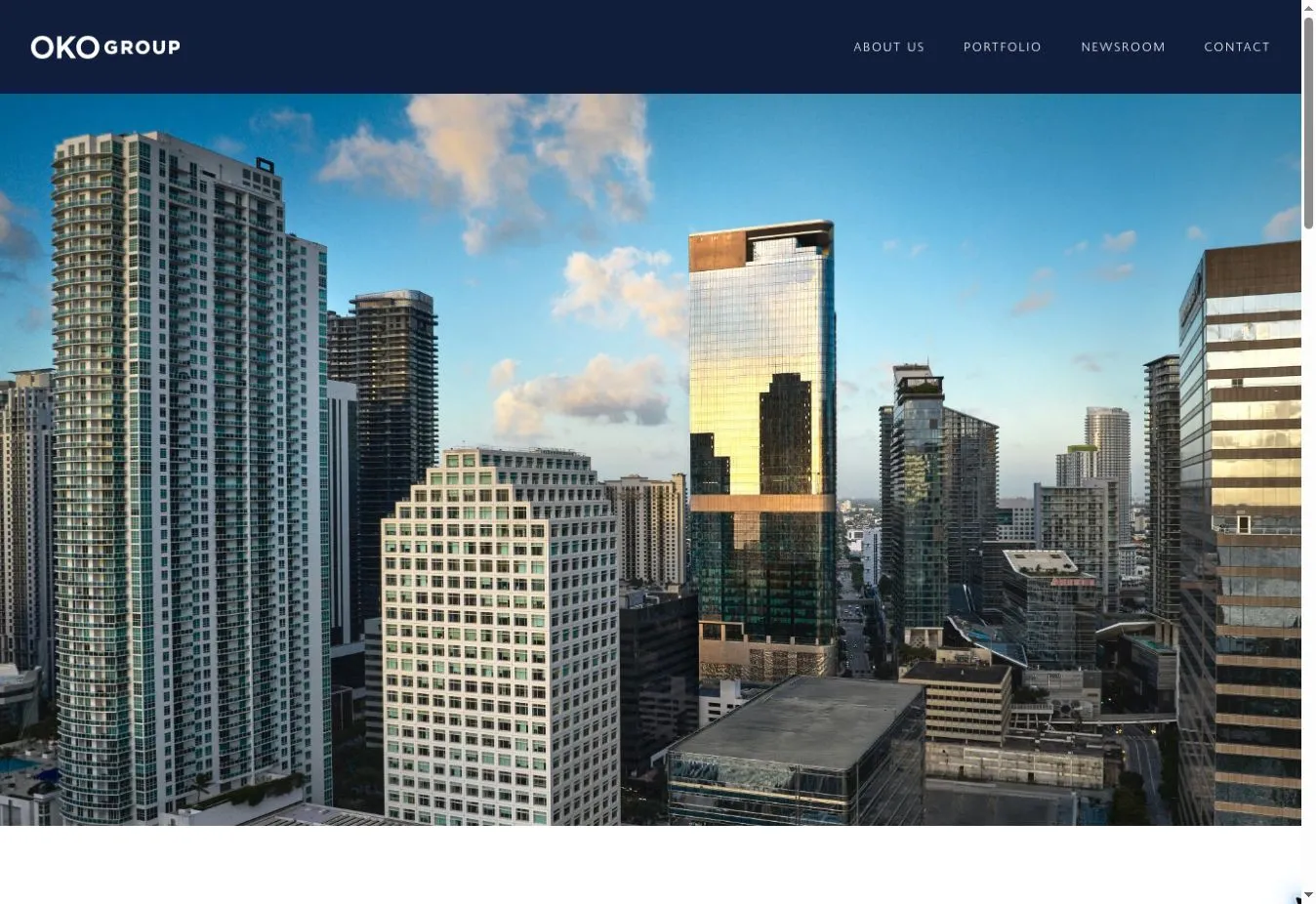
OKO Group needed a website that reflected the quality of its developments and communicated a consistent story to investors, partners and the media. Big Blue Door’s work brought together content planning, user experience, visual design, Drupal development, migration support and ongoing maintenance.
The wider engagement began in 2023. A renewed design brief in autumn 2024 led to a focused redesign, with the website launching on 27 November 2024. The resulting platform pairs an image-led presentation with structured project information, category filtering and flexible page components. Initially delivered on Drupal 10, the website has continued to evolve: by June 2026, Big Blue Door had completed an upgrade to Drupal 11 and secured client sign-off.
Business case and background
OKO Group is an international real estate development and investment business headquartered in Miami. Its portfolio spans commercial, hospitality and residential developments, with projects including 830 Brickell, Aman New York and Missoni Baia. The corporate website needs to bring these distinct projects together under a recognisable group identity, while providing useful information for several audiences.
The previous website’s dated design, inconsistent messaging and inflexible content presentation made that task harder. OKO wanted a cleaner visual approach, with fewer distractions and a stronger emphasis on its architecture, locations and development expertise. Its team also needed a practical way to keep project information and news current as the business developed.
Big Blue Door translated those ambitions into a website brief that connected brand presentation with day-to-day publishing. Content workshops helped align stakeholders around the narrative and audience journeys. The aim was to make the group’s story easier to understand, create consistent routes into the portfolio and give editors a reusable framework for maintaining content without rebuilding individual pages each time requirements changed.
About the project
Goals and requirements
The central goal was to give OKO Group a coherent corporate website that matched the standard of its developments. It needed to combine a strong visual identity with clear navigation and useful information for investors, partners and journalists.
The requirements included a prominent photographic homepage, a structured portfolio, category filtering, project detail pages and a newsroom. The CMS also needed to accommodate flexible editorial content, manage a substantial role for imagery and support updates by the client’s team. Responsive layouts and WCAG 2.2 AA were specified as design and development requirements.
Collaborative planning and design
Big Blue Door used content workshops to bring together stakeholders and agree the story the website should tell. This work helped shape the relationship between the group’s corporate narrative, individual developments and audience journeys.
An iterative design process explored two visual directions before refining the preferred approach. Clickable Figma prototypes used real content, allowing stakeholders to review navigation, page composition and interactions in context. Feedback informed decisions such as reducing copy on portfolio cards, strengthening the role of photography and introducing more flexible component layouts.
This combination of workshops, prototypes and staged reviews gave the project a practical basis for agreeing changes and moving towards launch as the brief evolved.
A portfolio built around structured content
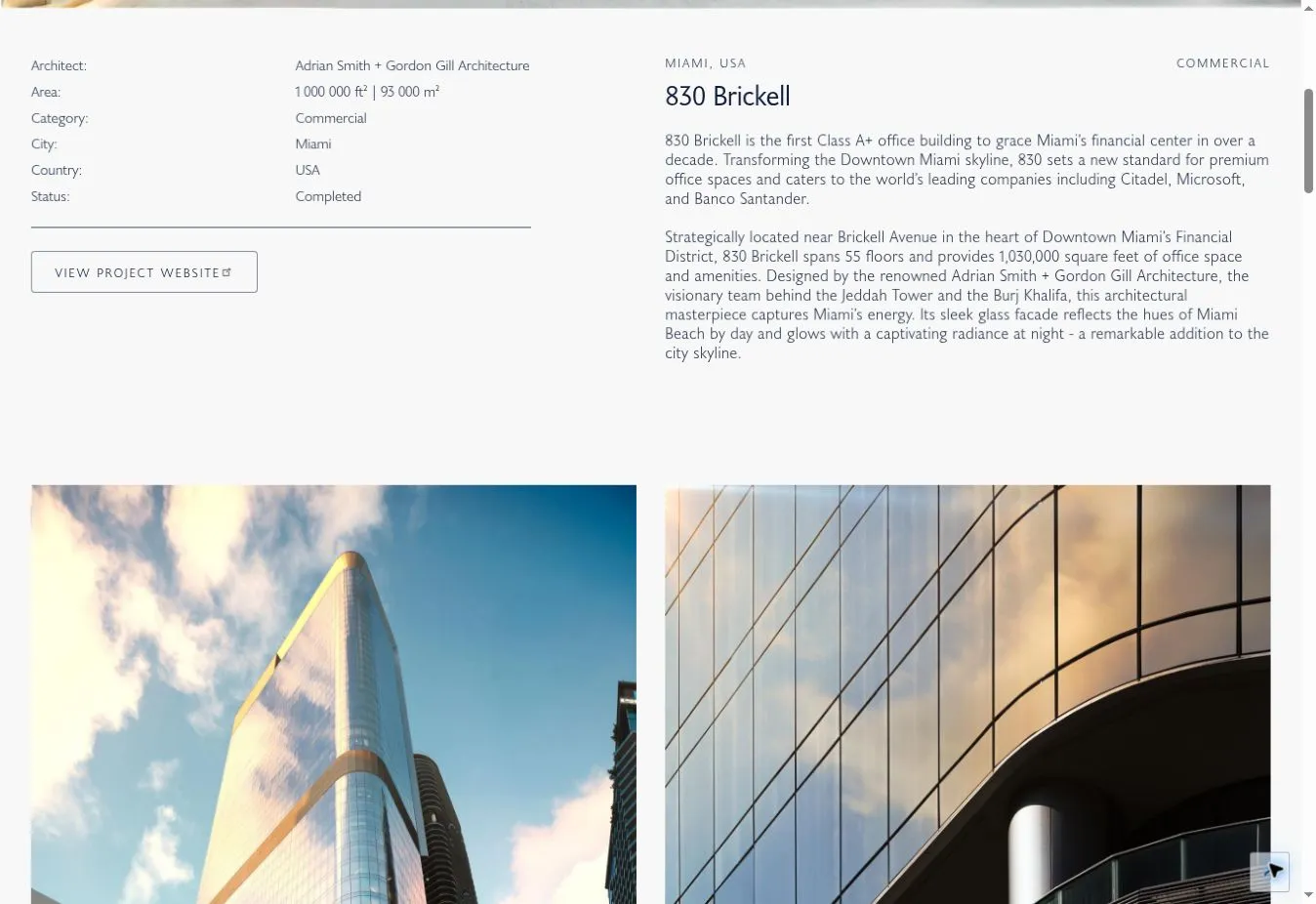
Big Blue Door developed reusable project pages that combine architectural imagery with consistent information about each development. Visitors can identify a project’s location and category, read its story, review key facts and follow a link to its dedicated website where appropriate. Related projects provide further routes through the portfolio.
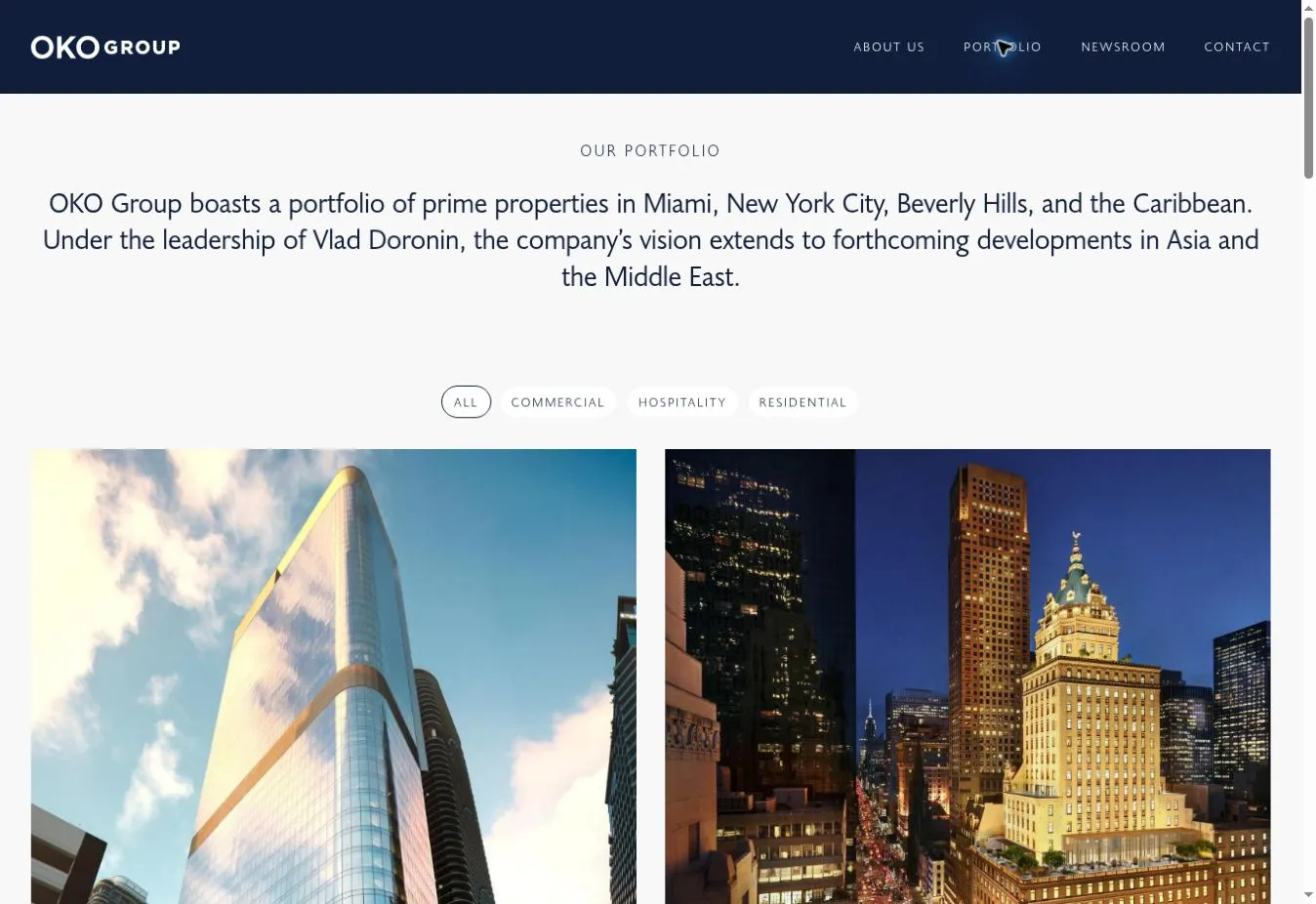
Drupal Views and taxonomy underpin the portfolio listing and its category filter. This connects the visual experience to maintained content records: editors can update project information within an established structure, and visitors can explore developments by sector.
The newsroom provides a complementary route into OKO’s activity and press coverage. Flexible page components support the wider corporate content, and Big Blue Door helped migrate existing articles and photography into Drupal. Media management and focal-point controls give editors tools to work with imagery across different layouts.
Timeline and delivery
The wider engagement started in 2023, with the final redesign taking shape during autumn 2024. Design reviews in September informed an October functional specification. November focused on completing the build, checking content and preparing for launch, including final imagery and the transition to the live domain.
The website launched on 27 November 2024. Big Blue Door continued to support it through managed hosting and maintenance, and the Drupal 11 upgrade had been completed and signed off by June 2026.
Outcome and ongoing development
The project delivered a consistent corporate presentation, a clearer structure for exploring developments and a more flexible publishing foundation. It addressed the earlier content constraints by giving OKO a set of reusable components and structured project records, supporting ongoing changes to its portfolio and news.
For Big Blue Door, the distinctive challenge was connecting the visual character of a high-end property brand with the practical demands of maintaining detailed, varied content. Drupal provided the structure behind that experience, while the design kept photography and concise project information prominent.
The relationship continues through hosting, maintenance, account reviews and further development. Together, the website and its publishing tools provide a maintained foundation for presenting new developments, updating existing projects and communicating the group’s activity.
Why Drupal was chosen
Big Blue Door recommended Drupal because OKO’s website needed both a distinctive visual design and a dependable structure for managing a varied property portfolio. Drupal allowed the team to model projects as structured content, bringing together fields such as location, category, architect, area and development status. Those records support consistent project pages and portfolio listings, while retaining space for each development’s own photography and story.
Drupal’s Views and taxonomy capabilities supported category-based portfolio browsing. Visitors can explore commercial, hospitality and residential projects through a common interface, while editors maintain the underlying information within the CMS.
Reusable components built with Paragraphs give the editorial team flexibility within the agreed design. Text, images, calls to action, statistics and other page elements can be assembled to suit different content needs. A shared media library and focal-point controls support the image-led presentation, while editorial tools such as previews and revisions help the team manage updates.
Drupal also offered an open-source foundation that could be maintained and extended over time, without a proprietary CMS licence tying the website to a single vendor. This suited a corporate platform expected to evolve alongside its content and portfolio. The subsequent upgrade from Drupal 10 to Drupal 11 demonstrates that continuing investment in the platform.
Technical Specifications
Drupal version: