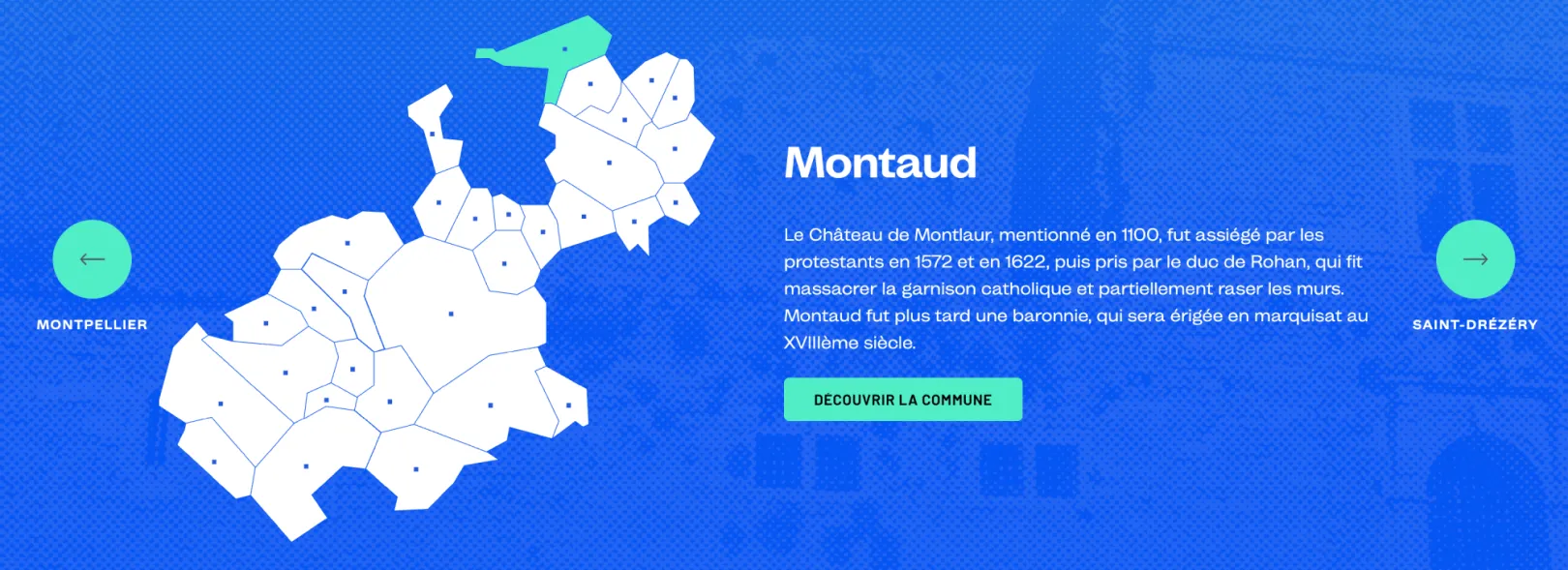
Montpellier Méditerranée Métropole is a major French public authority bringing together 31 municipalities around the city of Montpellier, serving over 500,000 residents. It plays a key role in urban planning, mobility, culture, digital services, and sustainable development.
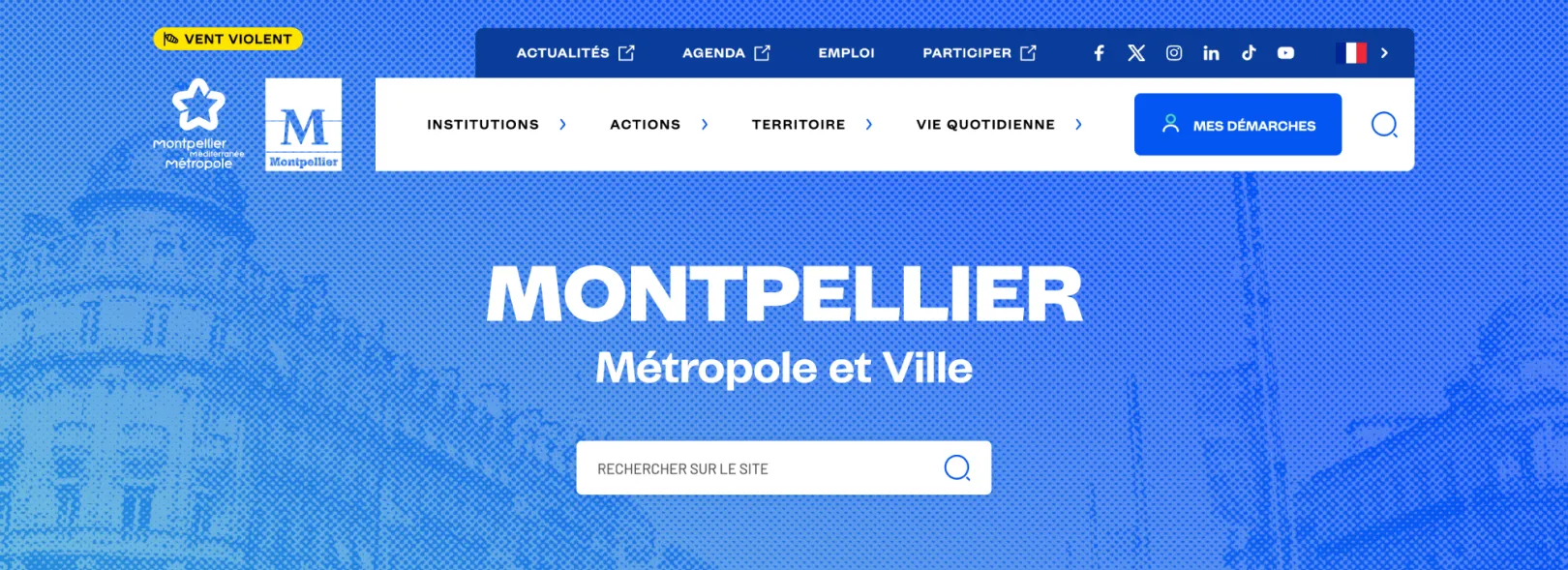
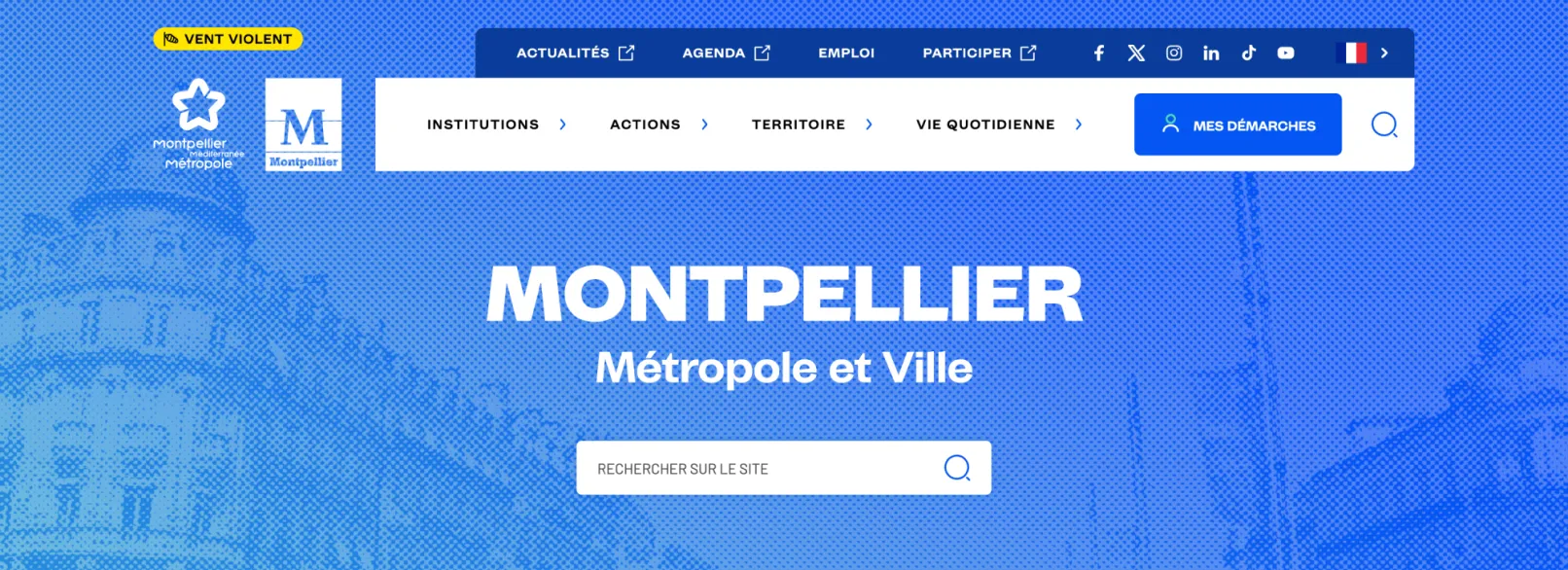
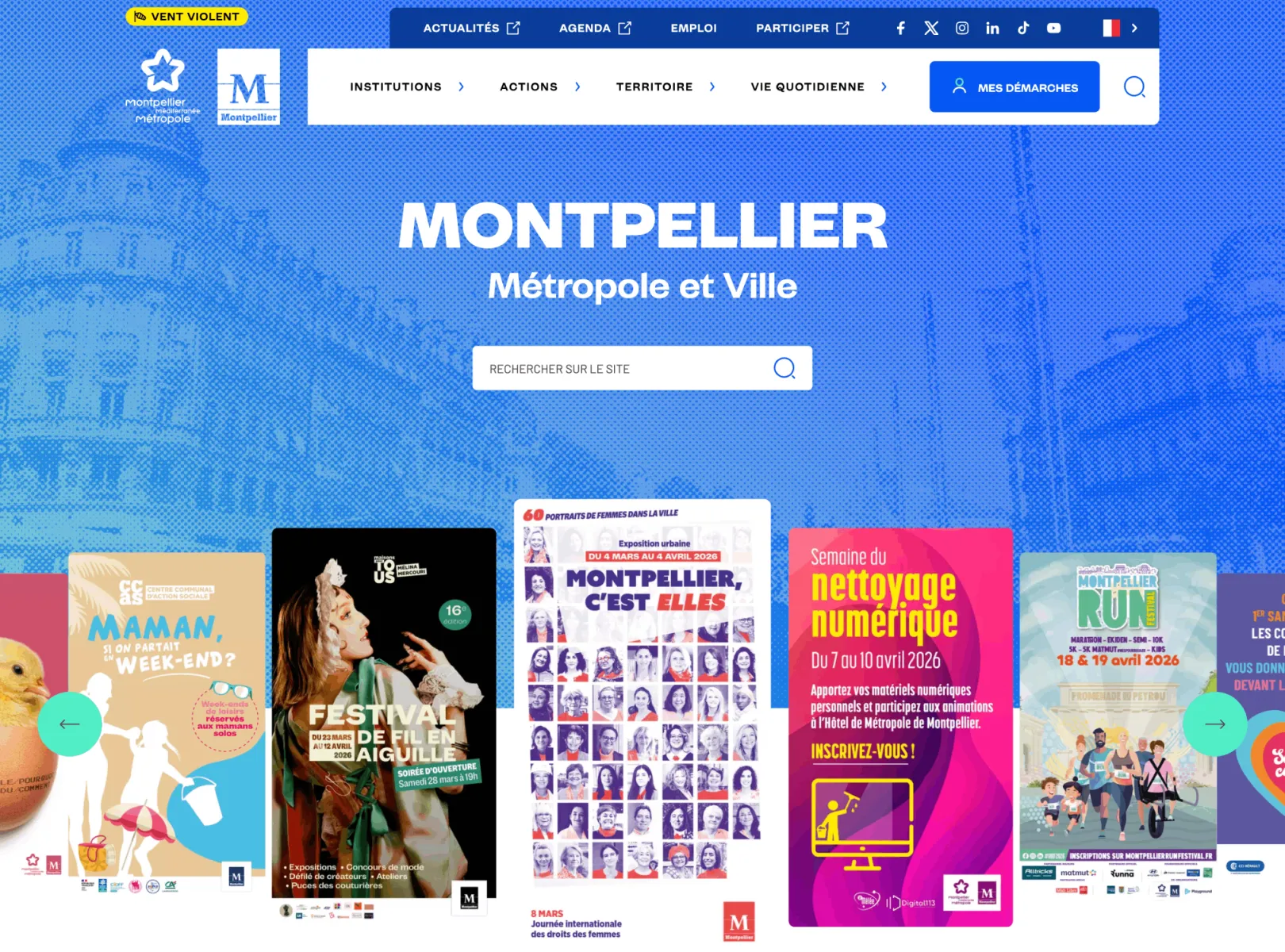
Faced with a fragmented and costly web ecosystem — more than 10 separate citizen-facing websites — the Métropole launched an ambitious industrialization initiative to rationalize its digital presence. The redesign of montpellier.fr, which went live in Q1 2025, became the cornerstone of this strategy: consolidating multiple sites into a single unified portal while establishing a reusable, scalable technical foundation for future deployments.
About the project
The primary objective was to eliminate the fragmentation of the Métropole's web presence by merging 10+ citizen-facing websites into a single, centralized portal. Key goals included:
- Simplify the citizen experience with unified navigation and a consistent design language.
- Eliminate accumulated technical debt from years of maintaining disparate platforms.
- Create a shared technical foundation (a "common base") that could be reused for future site deployments across the Métropole's ecosystem.
- Streamline internal workflows by standardizing the back-office editorial experience.
Why Drupal was chosen
The Métropole evaluated several CMS options and chose Drupal for the following reasons:
- Component-based architecture: Drupal's Paragraphs ecosystem and its compatibility with front-end design systems (specifically UI Suite) made it the ideal choice for a component-based design approach. This allowed the team to build a library of reusable graphical components that can be shared across future sites.
- Scalability and multisite readiness: Drupal's architecture supports the Métropole's long-term goal of deploying a standardized platform across all 31 municipalities and thematic portals, dramatically reducing maintenance costs and technical debt.
- Open-source and community-driven: As a public institution, the Métropole values open-source principles. Drupal's active community and the availability of contributed modules aligned perfectly with their commitment to transparency and collaborative innovation.
- Proven track record in government: Drupal is widely adopted by public-sector organizations worldwide, offering the maturity, security, and accessibility standards required for government websites.
- Flexible content modeling: The ability to define rich, structured content types was essential for accommodating diverse citizen-facing services — from event listings and urban planning documents to mobility information and cultural programming.
Technical Specifications
Drupal version:
Key modules/theme/distribution used:
- Adopt a component-based design (composable architecture) to ensure visual and functional consistency.
- Integrate the UI Suite design system for front-end pattern mapping.
- Migrate existing content from multiple legacy sources, including CSV data migrations.
- Customize the Drupal back office to meet the editorial team's specific needs.
- Follow Agile project management methodology with iterative delivery cycles.