Sector(s)
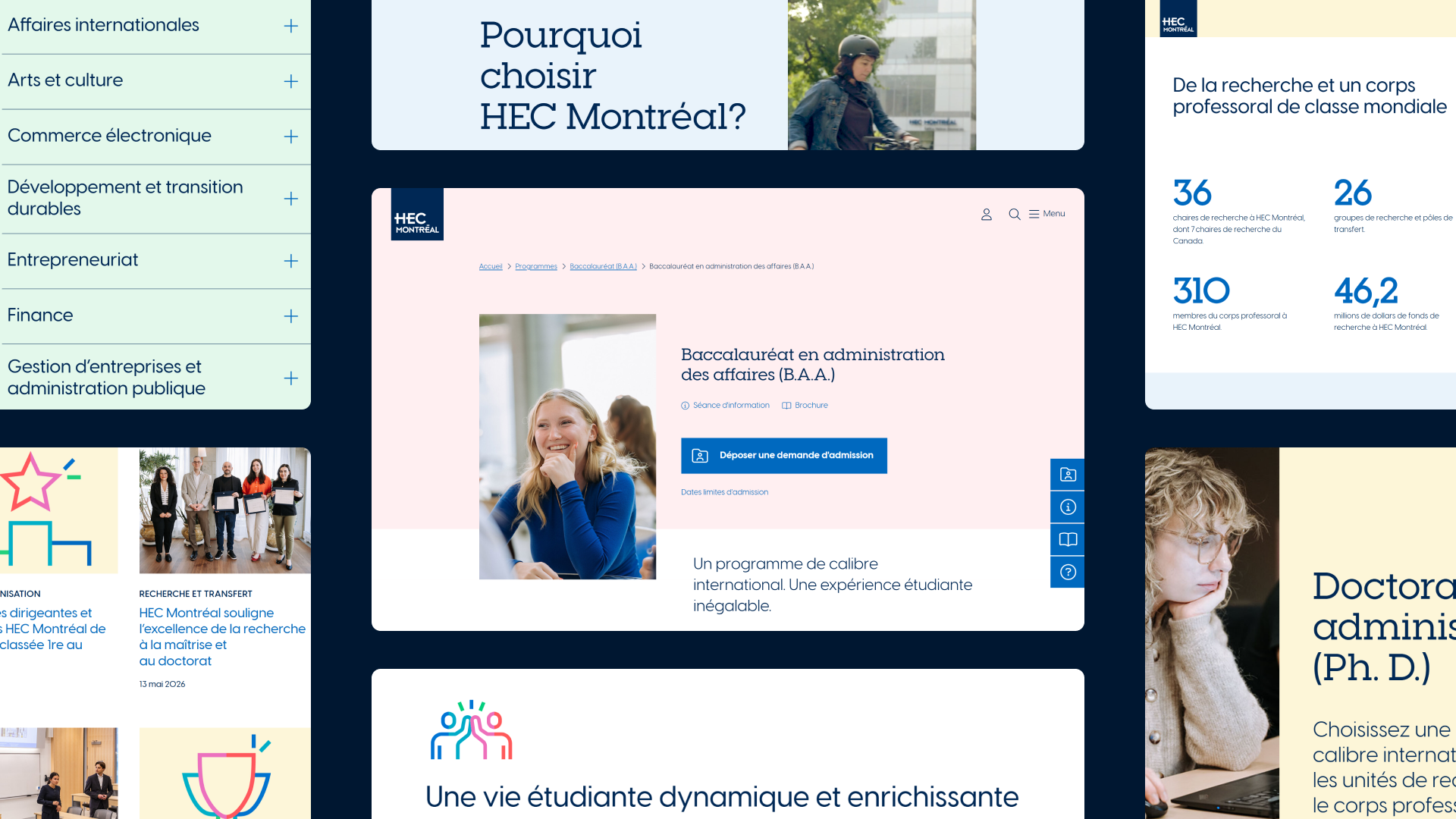
Drupal provides the foundation for HEC Montréal’s modern, scalable website, that supports over 150 academic programs, thousands of interlinked courses, and a vast array of news, events, and student resources. The platform’s flexibility allows the school to unify content, streamline workflows, and comply with accessibility and language requirements in Quebec.
Evolving Web partnered with HEC Montréal to bring this vision to life. We guided the transition from a legacy CMS to Drupal, supported the design of reusable components, and delivered a progressive training program for developers, communications staff, and quality assurance. Today, HEC Montréal’s internal teams are equipped with the knowledge and tools to build, manage, and evolve their own platform with confidence.
About the project
Goals
HEC Montréal’s previous CMS was no longer viable, and the complexity of their content—spanning 10,000+ pages, multiple subsites, and highly interlinked program and course information—required a more flexible content management platform. There was a desire for the internal team to be self-sufficient on a new CMS and a sustainable design system. Close coordination between Evolving Web and HEC Montréal’s dedicated project management and leadership teams was essential to align goals, manage scope, and ensure visibility throughout the project.
Solutions
Evolving Web partnered with HEC Montréal to build a future-ready Drupal platform while embedding training and collaboration at every stage. Our goal was not just to deliver a new website, but to enable HEC Montréal’s teams to take ownership of the platform.
This included:
- Progressive training and collaboration: a 9-week training program covering Drupal site building, workflows, theming, and module development through bilingual live sessions. From there, HEC Montréal’s developers became fully embedded in the build process, gaining hands-on experience to prepare for long-term autonomy.
- Custom integrations with HEC Montréal’s internal API to automatically pull in course descriptions regularly, avoiding manual content entry and duplicated content.
- Implementing editoria11y, an accessibility testing tool to help content editors to validate content before publishing.
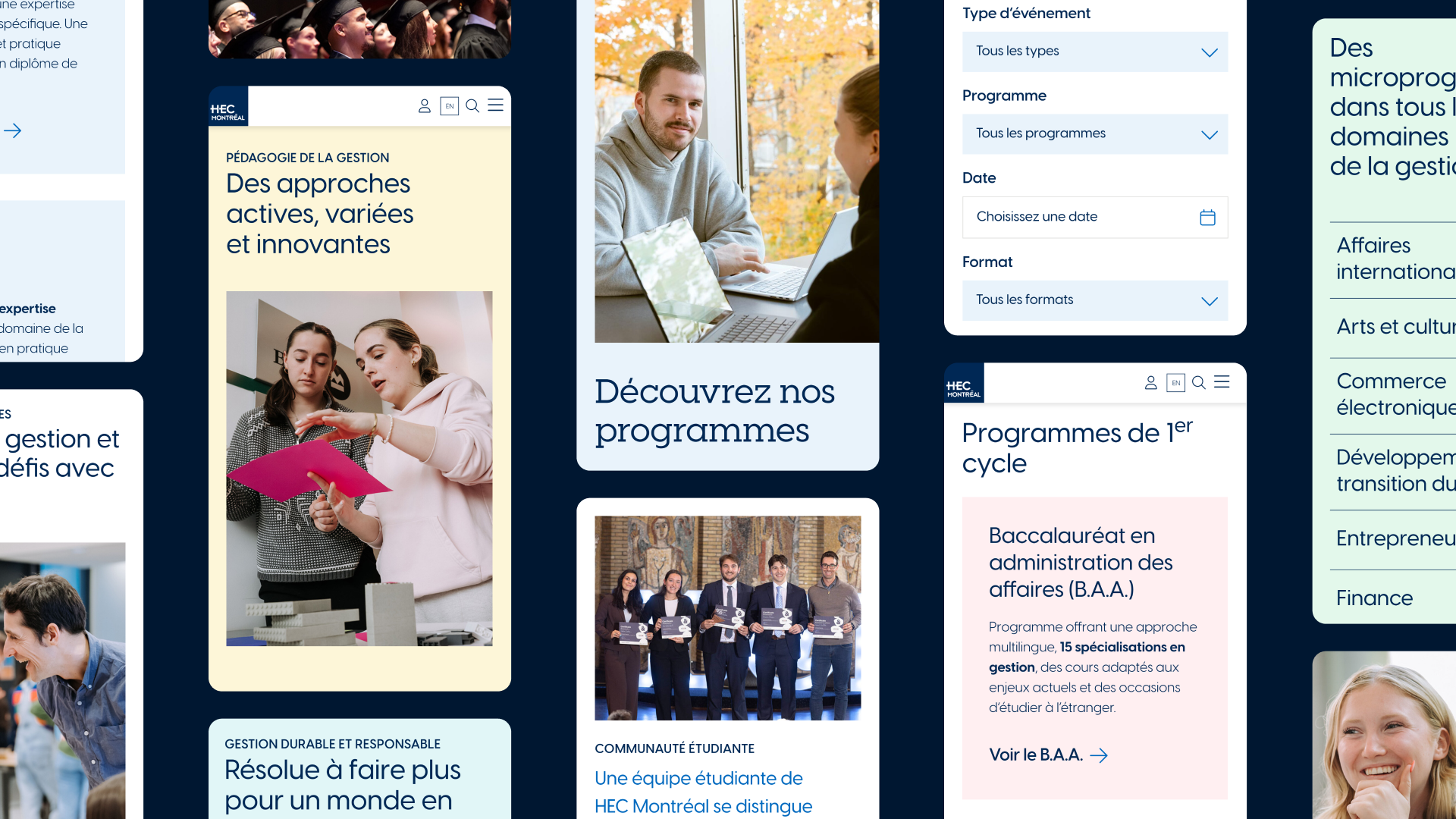
- Component-based design review, working closely with HEC Montréal’s design team to orient designs around reusable, CMS-ready components and established a living style guide in Figma.
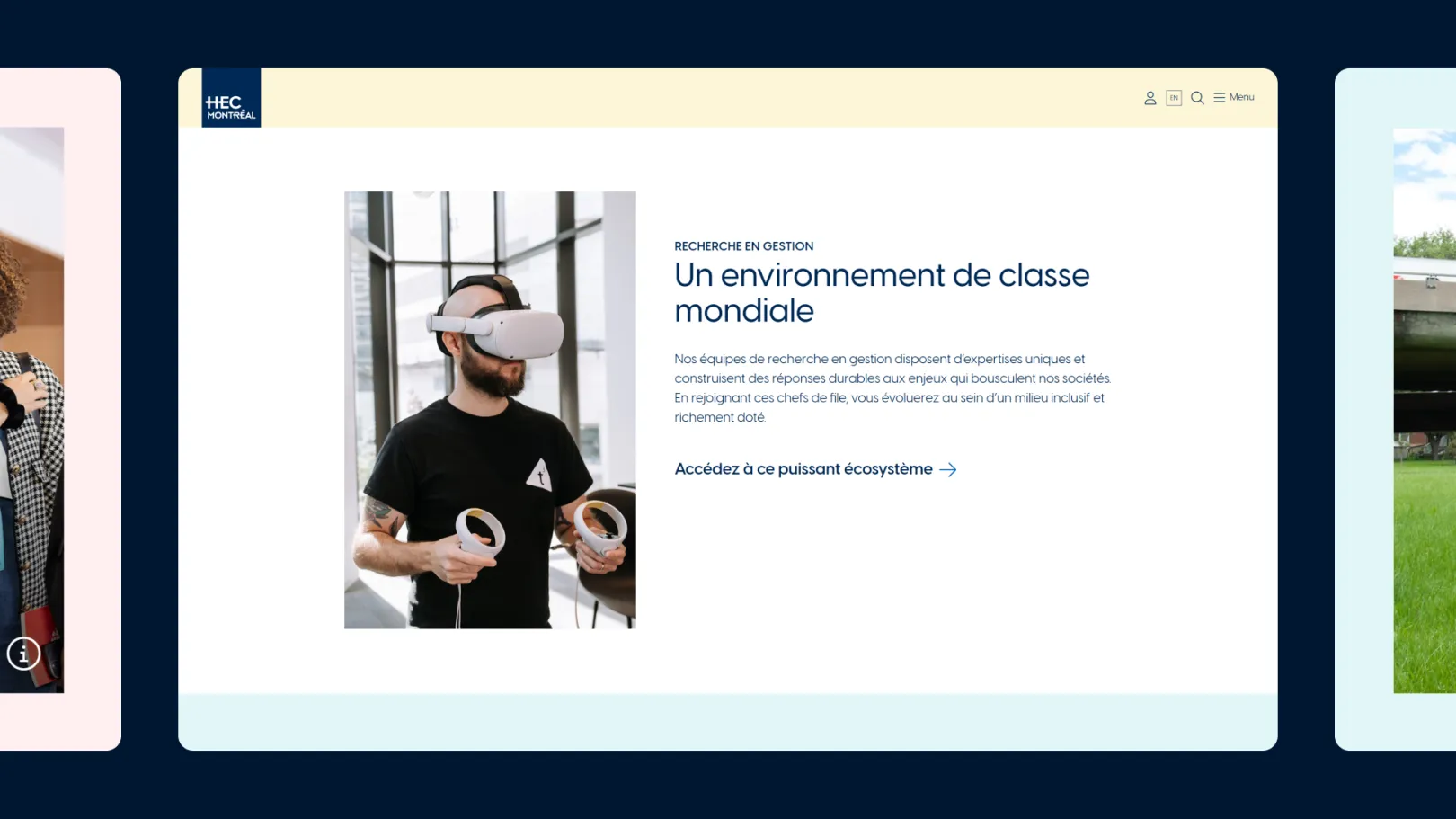
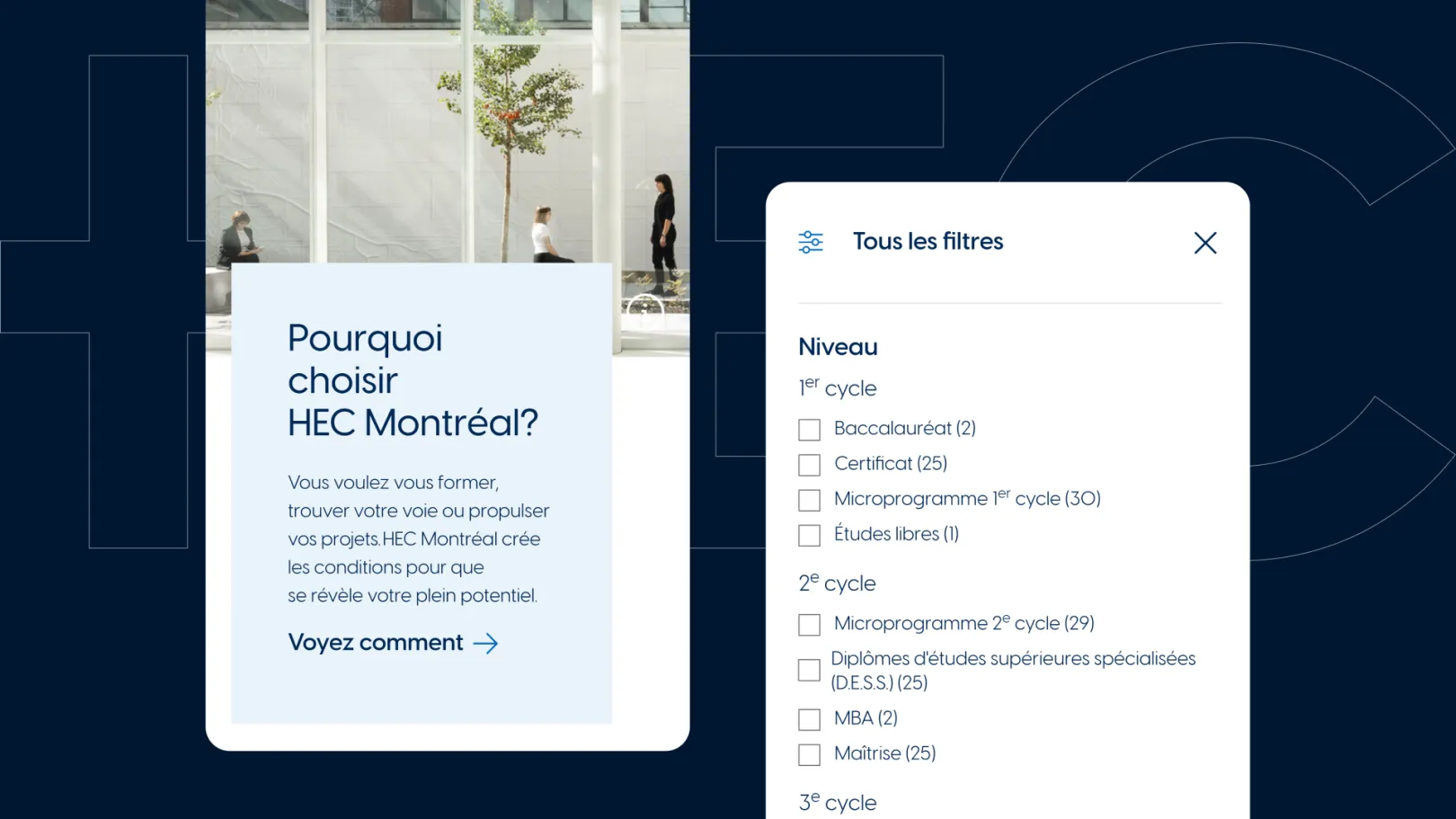
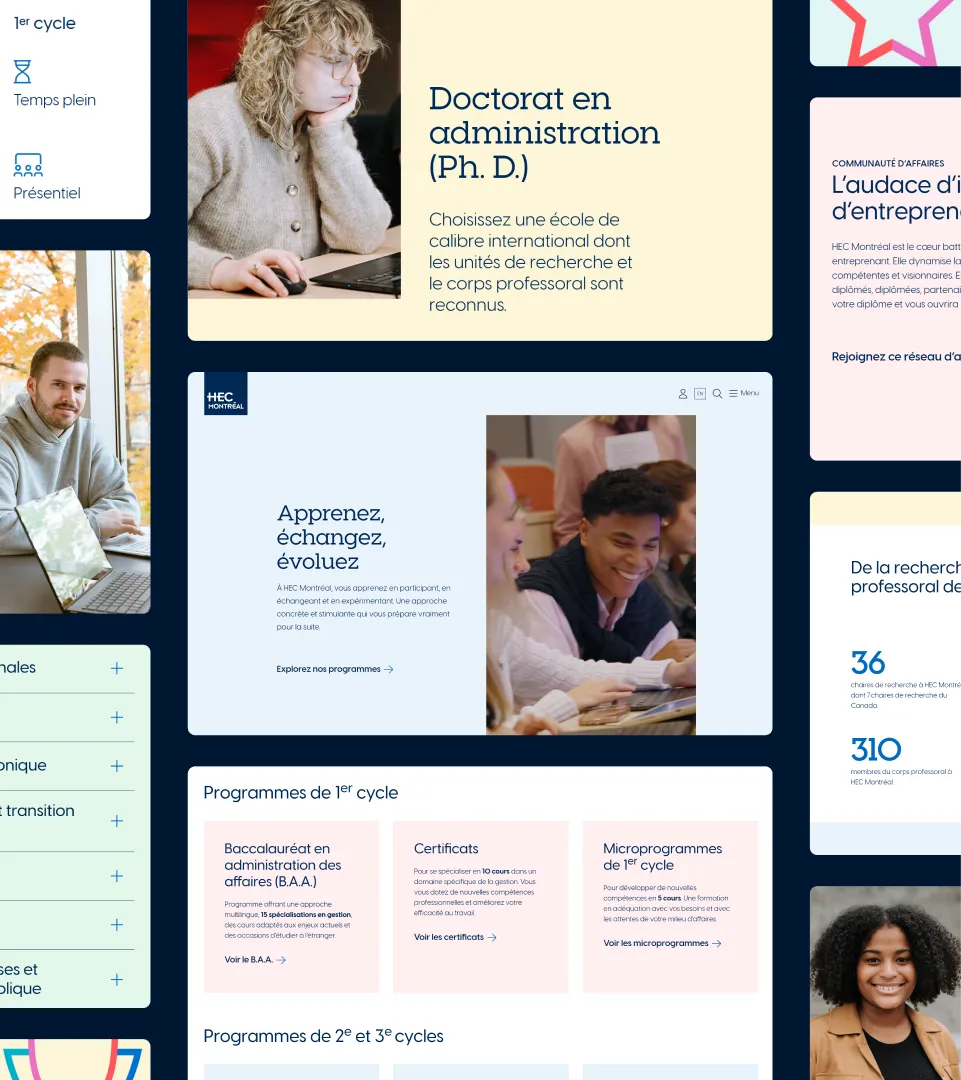
- A large reusable component library including hero banners, content cards, accordions, carousels, testimonial quotes, program selectors, search filters, and course lists, giving editors the flexibility to create engaging pages without custom development.
- Content reusability, with advanced features such as tokens, a paragraph library, and reusable program elements to reduce duplication and ensure consistency.
- Extreme content flexibility, including an enhanced CKEditor with embedded components, background management, and spacing controls to give editors fine-grained control over layout and presentation.
- Phased launch with Cloudflare, with a strategy to gradually transition traffic from the legacy CMS to Drupal, ensuring a smooth rollout while new sections of the site are released.
- Implementing measures to meet Quebec's web accessibility and language standards for parapublic organizations.
- A new content model and governance, with structured content types (programs, courses, news, events, landing pages) and taxonomies to support scalability and editorial governance.
Outcomes
HEC Montréal now operates a robust, user-friendly Drupal website that reflects the richness and vibrancy of academic life. The platform supports flexible content creation, multilingual publishing, and modern SEO practices.
HEC Montréal’s teams are no longer just users of the platform—they are active builders. The development team has gained hands-on experience to manage and extend the site, while the digital communications team confidently creates and optimizes content using a wide library of components. A QA training program is in place to further strengthen internal quality control processes.
From a technical perspective, HEC Montréal benefits from a highly flexible, component-driven CMS with strong reusability features, a phased launch strategy for minimal disruption, and compliance with all accessibility requirements. With these foundations, HEC Montréal is equipped not only with a powerful website but with the skills and systems to evolve it independently for years t
Why Drupal was chosen
HEC Montréal needed a platform to manage the complexity of academic content and remain flexible for future growth, while also giving staff full ownership and digital independence. Drupal was the natural choice because it provides:
- With more than 10,000 pages, multiple subsites, and interconnected content models, Drupal offers the architecture needed to handle a large academic ecosystem.
- As a bilingual institution, HEC Montréal required a CMS that could natively support French and English content while ensuring consistency across both languages.
- Drupal’s robust content types, taxonomies, and reusable components made it possible to structure programs, courses, events, and news in a way that reduces duplication and simplifies management.
- With enhanced CKEditor and a rich component library, content creators gained the flexibility to design engaging pages while maintaining brand and governance standards.
- Drupal enabled Evolving Web to ensure compliance with Quebec’s accessibility and language laws, meeting the institution’s legal and ethical requirements.
- By choosing Drupal, HEC Montréal gains a platform supported by a global community, ensuring continuous improvement and long-term sustainability without vendor lock-in.
Technical Specifications
Drupal version: