Sector(s)
Drupal is used across Princeton University digital presence, including the website for the School of Public and International Affairs (SPIA). The SPIA is a renowned institution with an impressive list of alumni, faculty and guest speakers, attracting an ambitious student body; the website serves as a primary point of contact for prospective students and faculty. Drupal enables SPIA to foster a modern digital identity and clear pathways to programs and admissions.
Evolving Web has been partnering with the Princeton School of Public and International Affairs (SPIA) for many years, supporting the evolution of its digital presence as the School continues to shape global policy leaders. Over the course of our collaboration, we have enhanced user experience, strengthened integrations with the Princeton University ecosystem, modernized the platform, and refined how SPIA tells its story online.
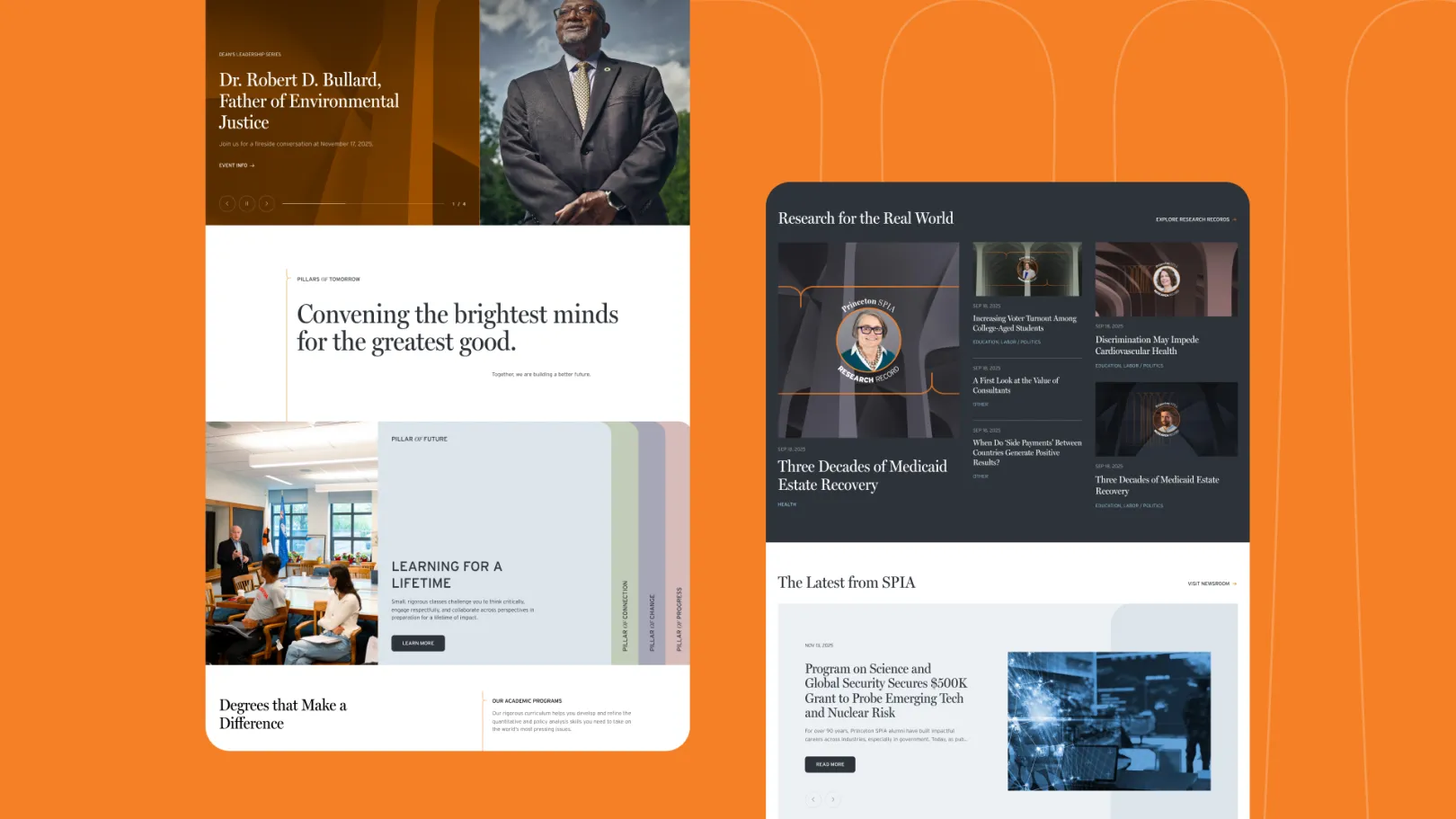
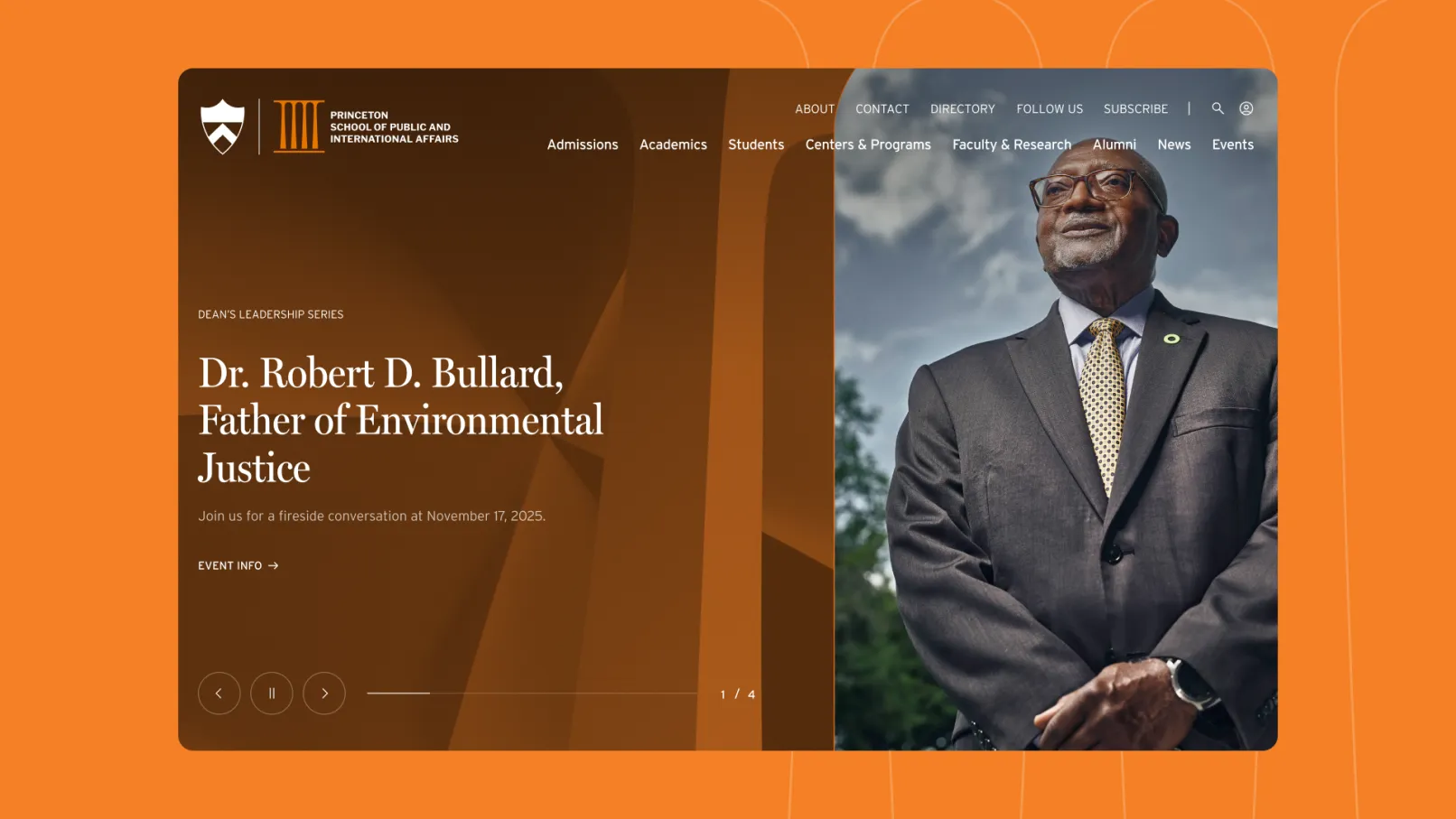
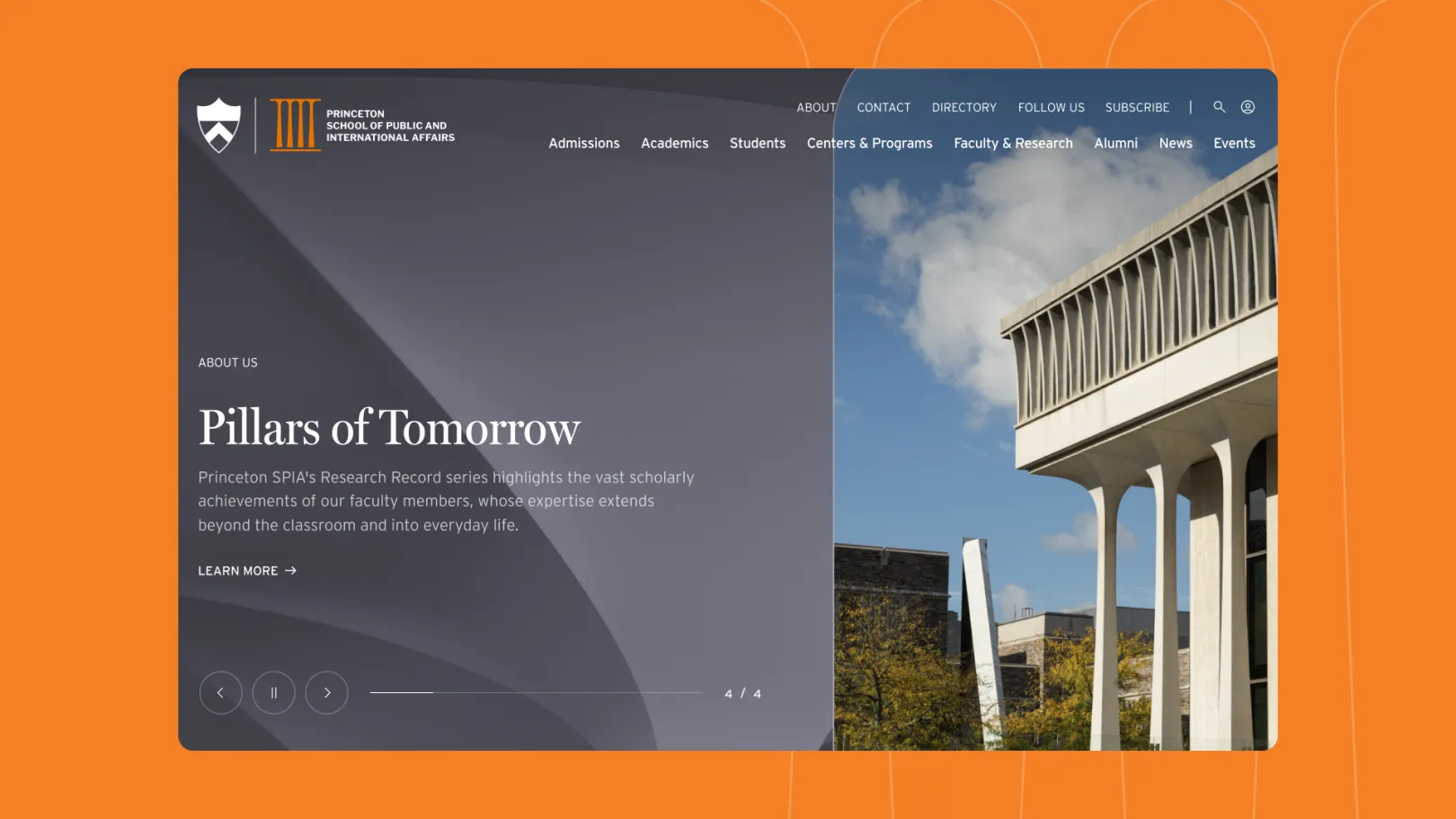
Most recently, our work included helping SPIA become one of the first public-facing websites to implement Princeton’s new institutional branding. As an early adopter, we helped SPIA set the standard for how the University’s updated brand elements translate to digital. The new design also incorporates elements specific to the School such as the pillars that are visible in the architecture of the building and now across all communication materials.
Our work has included creating clearer pathways to programs and admissions, showcasing the stories of students and faculty, highlighting the school's research, and clearly communicating the value of the institution’s work to policymakers. We’ve also kept the underlying Drupal platform up-to-date and completed a “lift and shift” to the Pantheon hosting environment.
About the project
Goals
The project's main goal was to revitalize the School's web platform and digital identity in a way that would bring the stories of students and faculty to life, highlight the research that comes out of the school, and emphasize the relevance of the institution's work for both policymakers and potential students. Specifically, Evolving Web was tasked with better prioritizing and contextualizing content to make the website more compelling while improving the overall experience.
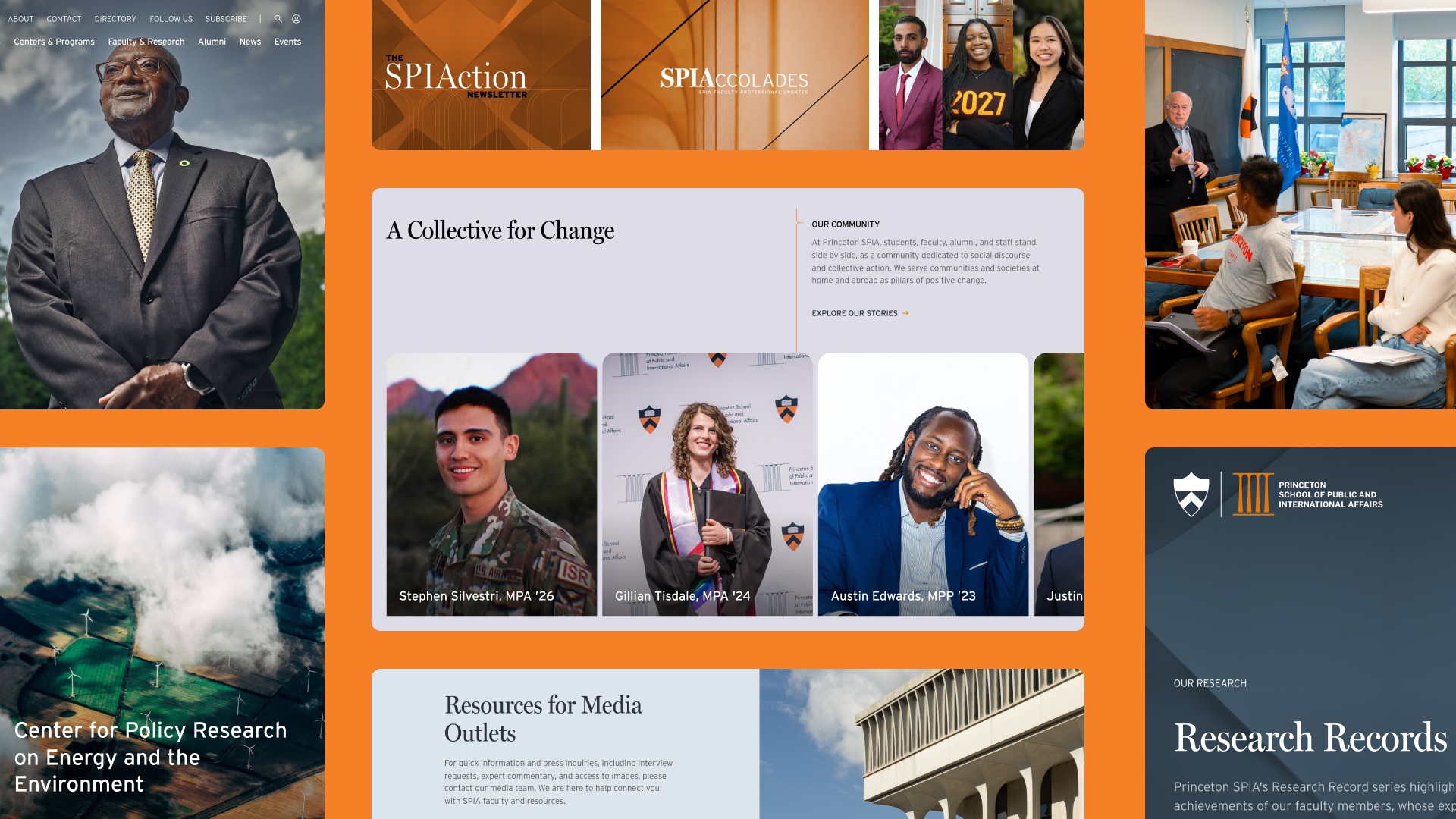
We sought to modernize the site's look and feel, balancing the School's individual character with the overarching Princeton identity. Our design process aimed to emphasize the international reach of thought leadership generated within SPIA in addition to communicating the institution's strong commitment to diversity and inclusion. To achieve this, we created a new web platform flexible enough to accommodate the broad range of messages the School might wish to share with its global community.
Solution
For most faculty members and potential students, the SPIA website is the first point of contact with the School. Our team prioritized these audiences to create a more engaging and externally focused design. The redesign implemented Princeton University's new university-wide branding, introducing a fresh visual identity with an updated colour palette that brings a modern and polished look while maintaining full accessibility
The website showcases the breadth of SPIA's research activity and internal expertise, putting forth information that can be used to generate new ideas and perspectives on policy making at the national and international level. It acts as a knowledge base with the power to inspire and challenge visitors in their thinking about public and international affairs.
The new information architecture is designed around two priority audiences, potential students and policymakers, with current students and staff as secondary audiences.
Key features of the completed site include:
- Redesign and re-platforming on the latest version of Drupal
- User-centric experience and content strategy
- Design patterns
- Managing input from multiple academic and administrative stakeholders
- Flexible landing page tools for content editors
- Hosting and deployment on Pantheon for improved scalability, performance, and streamlined Drupal development workflows
- Integration with Princeton's single sign-on
- Integration with Princeton's centralized events calendar (Timeline)
Results
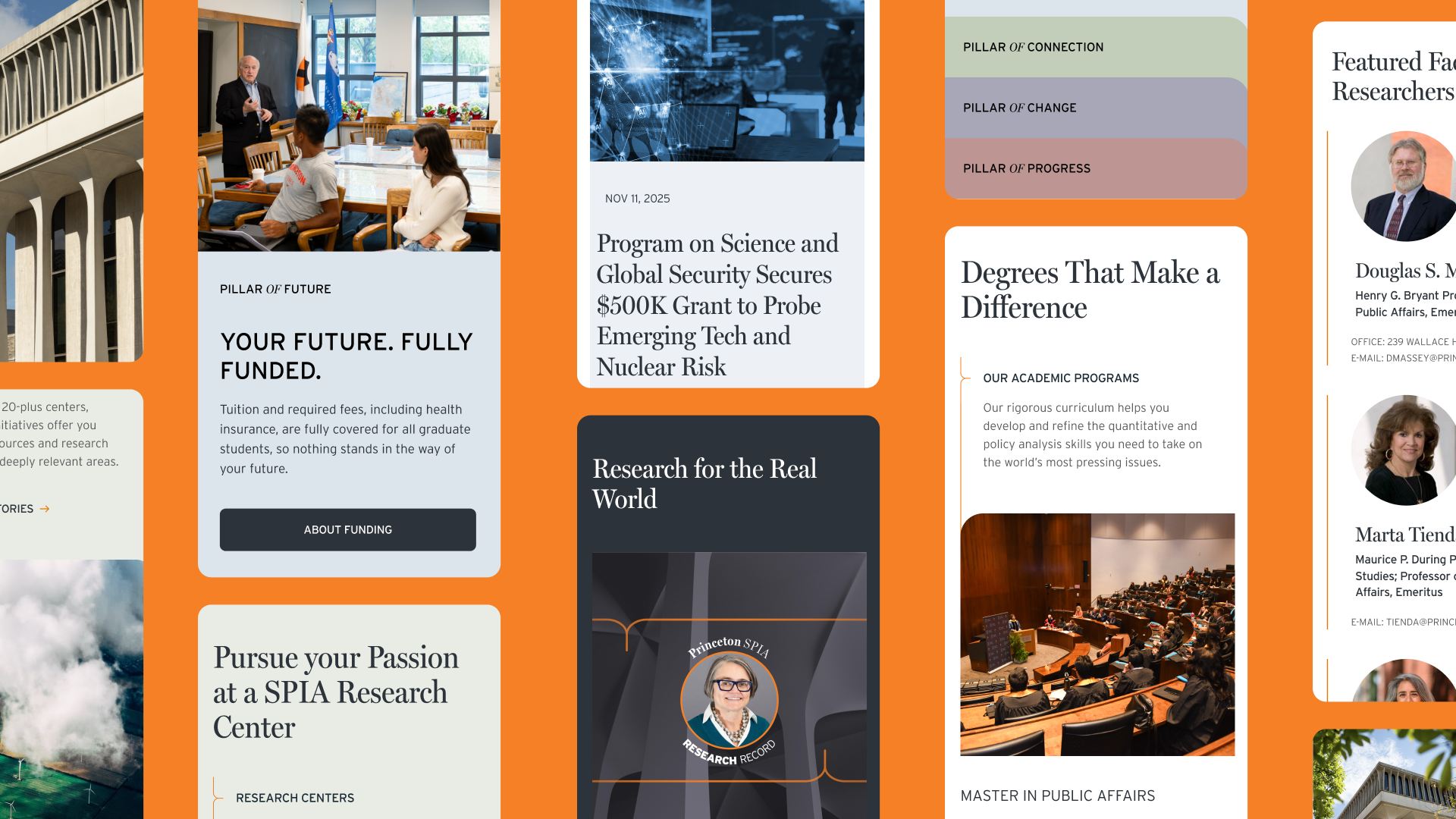
The new visual identity enables the application of consistent design patterns across the content of the entire website. Content editors now have the freedom and tools available to independently create much more engaging pages that integrate harmoniously with the site's overall design. They can also easily ensure that all published content meets WCAG AA accessibility standards.
Evolving Web migrated the content of the website to the latest version of Drupal and implemented a brand new information architecture, visual framework, and content strategy. The updated site is fully accessible according to WCAG AA standards, easier to use, and, crucially, easier for content editors to update. The new website now integrates with Princeton's single sign-on system and its event calendar, reducing duplicate logins and duplicate content entry.
Why Drupal was chosen
Drupal's capabilities as a Content Hub make it easy for content editors to create and manage data. Drupal's ability to display courses, news, events, member directories, and other external data minimize the need for content editors to manually update sites and ensure users always see the most relevant and practical information. Reusable UI patterns create a consistent experience across all pages, while modules like Paragraphs provide flexibility in design and layout.
Technical Specifications
Key modules/theme/distribution used:
The overall stack reflects the needs of a large, decentralised university web presence. Paragraphs was chosen to give structured, repeatable page templates that non-technical department editors can use consistently at scale. The Media and Responsive Image combination addresses both editorial simplicity and front-end performance. Linkpurpose was used to address WCAG accessibility obligations. Princeton University developed a fully custom Drupal theme named Hobbes rather than adopting a contrib base theme. With hundreds of sites sharing a single codebase, a contrib theme would have required too much overriding to reliably enforce Princeton's brand standards and accessibility requirements. Building custom gave the Web Development Services team full control while still allowing individual sites the flexibility they need.