Sector(s)
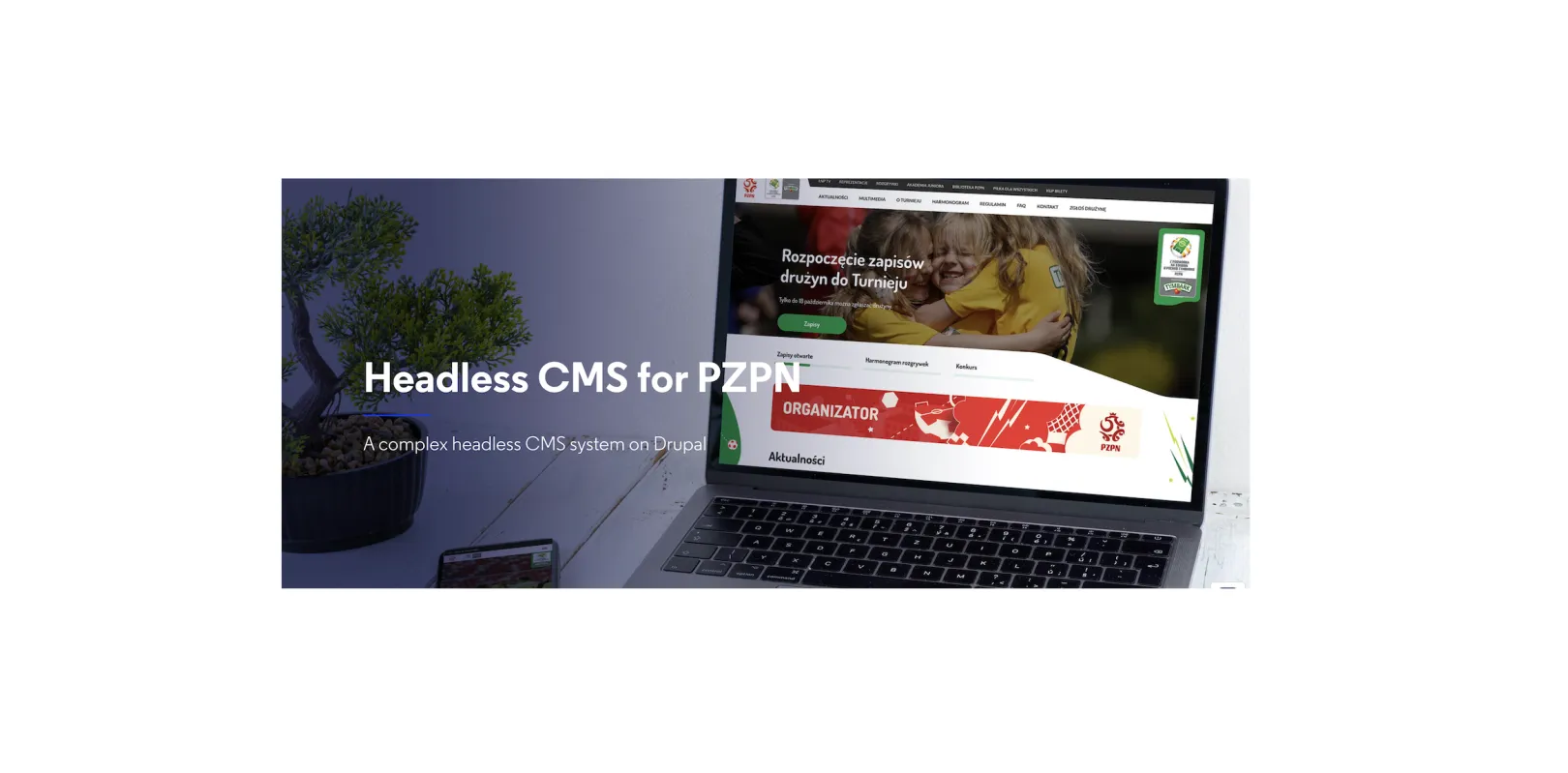
The Polish Football Association (PZPN) runs multiple public websites and internal systems for millions of football fans in Poland and abroad. Match data from weekend competitions flows through an Apache NiFi data bus to dedicated frontends, while editors enrich that data with photos, articles, and historical content. The organization needed a single headless CMS that could supply high-volume match metadata to the bus, support component-based editorial workflows across three distinct websites, and scale when thousands of matches add new records every week.
About the project
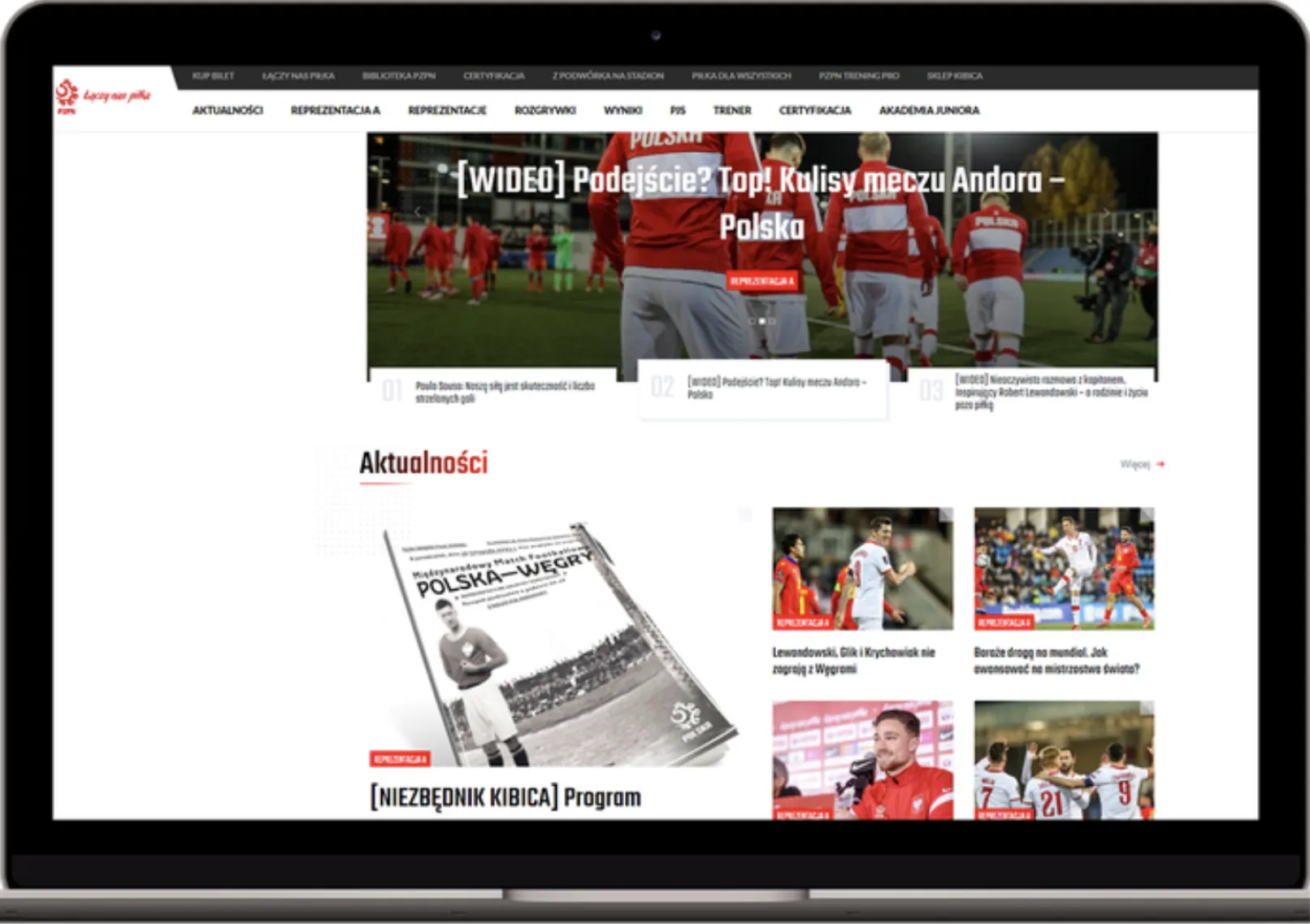
The Polish Football Association operates Football Connects Us, the PZPN Library, and From the Backyard to the Stadium for fans, journalists, and youth football audiences. Editors also enrich match records from the Extranet System, where coaches and referees log results, lineups, and events. All public sites query a shared Apache NiFi data bus rather than Drupal directly; a dedicated API layer routes bus data to each frontend.
The client
PZPN is Poland's largest sports association, coordinating elite and grassroots football nationwide. Its digital channels reach millions of fans worldwide through articles, videos, live streams, and a historical archive unique in global football. The digital team needed one editorial backend for multiple brands without duplicating match data entry.
Challenge
The platform faced several interconnected problems:
- Legacy CMS installations could not handle weekend spikes when thousands of matches generate twice as many new data records.
- Football Connects Us, the PZPN Library, and From the Backyard to the Stadium required distinct content models but shared match and player metadata.
- Editors needed to enrich Extranet System data with photos and long-form descriptions without re-entering statistics already stored on the data bus.
- The CMS had to push and pull data through the NiFi bus so frontends and internal systems stayed synchronized.
- Match article workflows required player lists filtered to athletes who actually participated in a given game, not the full national database.
Solutions
Discovery workshops and data architecture
Workshops with PZPN editors and IT teams mapped how match data flows from the Extranet System through NiFi to public websites. The headless CMS was planned as a bus supplier and consumer: editors read match entities from the bus, attach media and narrative content in Drupal, and publish structured payloads back for API consumers.
Headless Drupal backend with component-based content
The implementation separates Drupal from all public frontends. Editors log into one backend and see only the content types and websites assigned to their role. Most article types assemble from reusable Paragraph components tailored to each property, with order and configuration controlled from the admin UI.
Match-aware editorial components
Custom content types for match descriptions bind to bus-fed match entities. When editors describe lineups minute by minute, player reference fields filter to participants in that match, eliminating manual searches across thousands of athlete records.
API documentation and editor onboarding
The project delivered API documentation for frontend and integration teams connecting to NiFi endpoints. Hands-on editor training and ongoing support helped editorial staff adopt the component model across parallel Agile sprints.
Result
The headless CMS now feeds three public websites and internal PZPN systems from one Drupal installation. Editors enrich Extranet match data with photos and descriptions, publish standalone articles for Football Connects Us, and produce metadata consumed only by internal tools. The architecture supports adding new frontends without restructuring the content model.
Examples of implemented features:
- Headless Drupal CMS supplying Football Connects Us, PZPN Library, and From the Backyard to the Stadium through the NiFi data bus.
- Component-based paragraph types scoped per website and editor role.
- Match-linked player fields filtered to game participants only.
- Extranet data enrichment workflow with photos and long-form descriptions.
- API documentation for teams building frontends and integrations.
- Agile delivery with multi-team coordination during peak release periods.
Why Drupal was chosen
PZPN previously relied on several CMS platforms on different technologies. None could handle weekend spikes when thousands of matches generate twice as many new data records, or feed a centralized Apache NiFi data bus shared by multiple frontends.
Drupal offered a decoupled content model where editors manage structured entities in the backend while JSON:API and custom REST endpoints publish data to the bus and independent JavaScript frontends. Drupal Paragraphs mapped to the component library designers specified for Football Connects Us, the PZPN Library, and From the Backyard to the Stadium. Entity references, field validation, and role-based access let editors work only on assigned websites while developers extended match-specific content types without rebuilding frontends.
Technical Specifications
Drupal version: