Sector(s)
About the project
The Client
The IRONMAN Group is the world’s largest operator of mass participation sports, spanning triathlons, marathons, trail running, road cycling, and multi-sport events. Its portfolio includes IRONMAN and IRONMAN 70.3 Triathlon Series, Rock ‘n’ Roll Running Series, IRONKIDS, Epic Series mountain bike races, and the UTMB World Series.
Since its first triathlon in 1978, IRONMAN has grown into a global movement, delivering hundreds of events across 55+ countries under its “Anything Is Possible” ethos.
- 170+ annual events globally
- 200K+ athlete registrations annually
- 55+ countries covered
The Situation
IRONMAN needed a digital platform that could match the pace and scale of its global event portfolio. But the current estate was fractured: workflows weren’t dependable, integrations were unpredictable, and brand launches required too much reinvention.
The goal wasn’t “more sites.” It was a repeatable, composable, data-enabled DXP that could scale across brands and support continuous athlete engagement.
The Challenge
Operating dozens of brand sites on disconnected systems created operational inefficiency and diluted the athlete experience. Key challenges included:
Delayed brand launches
New rollouts required rebuilding components that should have been reusable. Engineering duplicated effort, slowing go-to-market readiness.
Editorial mistrust and workflow breakdown
Fragile integrations could overwrite live edits, forcing manual workarounds and creating friction between editorial and technical teams.
Unreliable integrations and data inconsistency
Fragmented systems triggered sync failures and duplication—eroding reporting accuracy and limiting real-time decision-making.
Race-day reliability risks
Peak traffic and live media demanded more than uptime. IRONMAN needed brand protection: accurate event experiences, consistent UX, and reliable content/forms during high-attendance events.
Scaling editorial operations
The organization was expanding from ~5–10 editors to 20–25 globally. The platform needed to shift specialist engineering tasks into governed low-code workflows.
Foundation for future growth
IRONMAN needed a reusable base to support personalization, pro-tier experiences, Coach Finder, and AI-assisted capabilities.
The Solution
Axelerant partnered with IRONMAN to re-architect the platform around one operating principle:
Governance First. Reuse Always. Experience Always.
Instead of shipping standalone sites, Axelerant built a governed product platform with:
- Reusable Acquia Site Studio components for consistent behavior
- Event skeletons for speed and quality
- Operational foundations for race-day reliability
Governance-first architecture
A structured audit framework classified assets for reuse, refactor, or rebuild—preserving value while keeping future builds maintainable. A centralized component library with Acquia Site Studio enabled consistent theming and race-specific customization, reducing engineering effort and accelerating launches.
Experience-led discovery and UX strategy
Discovery began with the athlete journey—not page lists. A map-first approach clarified what content belongs at brand/global vs event level, and how navigation and page models scale. The experience was designed around personas and “from sign-up to results” journeys.
Operational resilience for race-day protection
Reliability patterns aligned with Acquia architecture were implemented:
- Acquia Cloud Platform hosting
- Varnish caching
- Memcache
- Deployment validation practices
Event-driven integrations (replacing fragile automation)
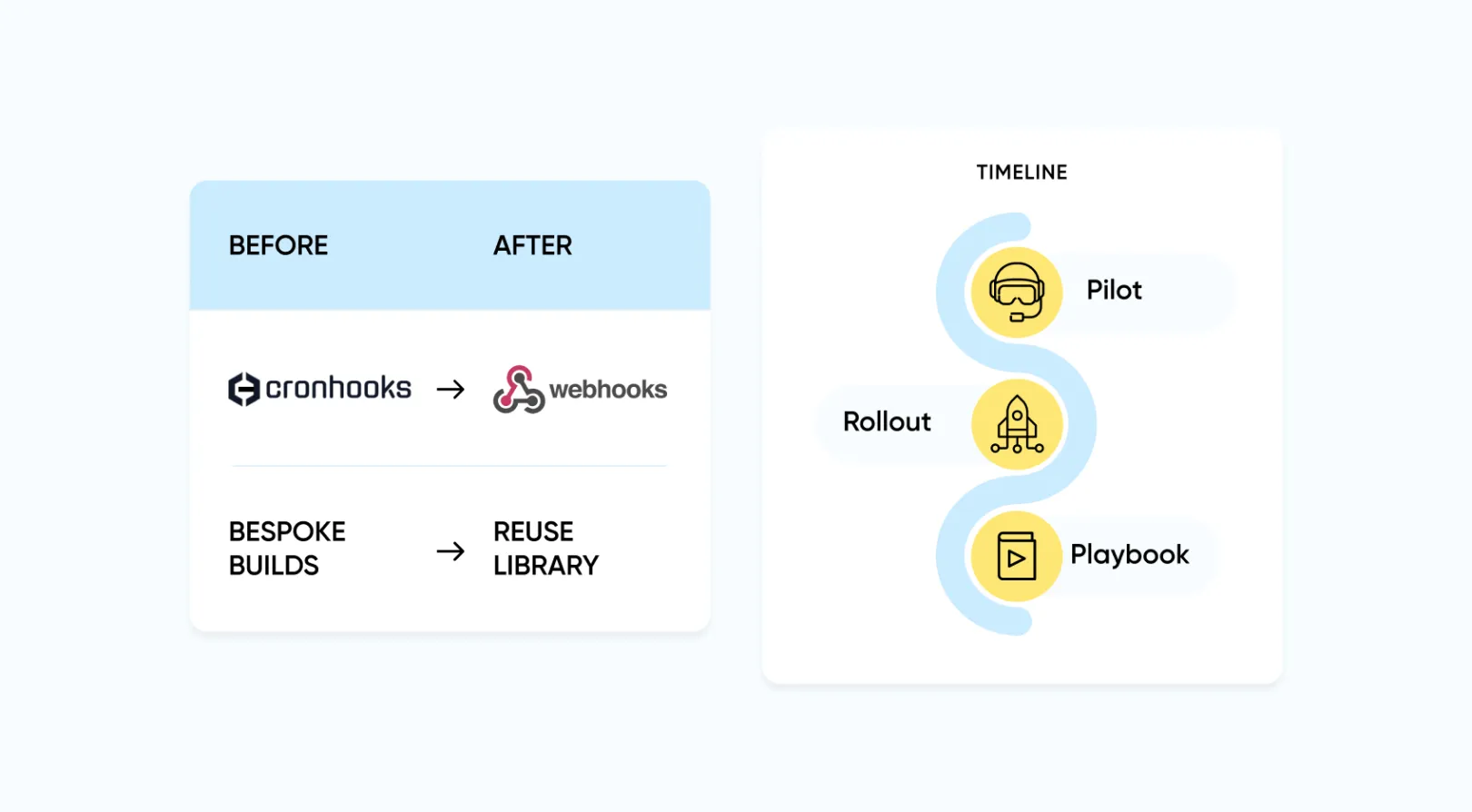
Fragile integrations were replaced with webhook pipelines triggered only when content is marked for publishing. Pipelines create drafts and revisions rather than overwriting live edits. Validation rules, secure key authentication, and error logging ensured predictable behavior.
Structured content models and editorial enablement
Content entities (athlete profiles, media, event metadata) were standardized with validation rules. Legacy content (Hall of Fame and Legends) was migrated into Drupal’s media library. Draft/revision workflows and Site Studio theming controls empowered editors to manage layouts and messaging independently.
CI/CD automation with shared visibility
A repeatable CI/CD process aligned with Acquia deployments was implemented, integrated with Slack for real-time build/test/deploy updates—enabling teams to respond quickly and maintain release confidence.
Key integrations
- Microsoft Dynamics 365 (IDs and modified dates stored on nodes via custom fields; not auto-populated in this codebase)
- TransPerfect localization/translation integrated into Acquia CMS workflows
- HubSpot Forms integrated with forms, modals, and landing pages
- SendGrid for transactional/notification email
- Google Tag (Analytics)
- Cookie Consent tool
Playbook for repeatable scale
All components, workflows, integration templates, and governance models were compiled into a playbook to speed future launches across global markets.
The Results
The platform overhaul delivered measurable improvements aligned with IRONMAN’s strategic objectives.
70% reduction in system load
Webhook-driven integrations reduced processing burden on API and database systems by 70%+, improving performance and freeing backend capacity for future scalability.
Faster brand launches
Rock ‘n’ Roll Running Series launched in record time using governed reusable components—saving months of engineering effort and raising the bar for delivery speed.
Complex merge delivered with zero downtime
The IRONMAN + ProSeries merge was executed without global service disruption. UI consistency was preserved through component validation and sequencing while handling major changes in Site Studio, search indexing, and global navigation.
Editorial control and confidence restored
Draft/revision workflows eliminated fear of overwritten edits, reducing time to publish by ~50–60% and improving editorial velocity.
Improved analytics and campaign planning
Centralized content and validation rules created a single source of truth for metadata and campaign content—improving reporting accuracy and planning.
Cost optimization through reuse
Selective refactors and disciplined component governance reduced technical debt and development cost while maintaining brand fidelity.
Hard proof:
Epic Series (post vs pre)
- Pageviews: +44.1% (327,177 vs 227,091)
- Total users: +52.7% (94,835 vs 62,126)
- Sessions: +72.0% (208,018 vs 120,919)
- Mobile pageviews: +88.9%
Rock ‘n’ Roll (post vs pre)
- Pageviews: +8.3% (917,817 vs 847,284)
- Sessions: +29.4% (424,182 vs 327,742)
- Avg session duration: 2m17s
Why Drupal was chosen
Drupal (with Acquia Site Studio) supported IRONMAN’s need for a governed, reusable platform: structured content models, revision workflows, and low-code page assembly that scales across brands, without brittle one-off builds. It also enabled centralized governance while supporting race-specific customization and integrations required for global operations.

Technical Specifications
Drupal version: