Sector(s)
Team Members
Visit the site
Visit the siteOrganizations Involved
Community contributions
Diff preview was developed as an extension to the popular Diff module that implements a token-based access system for anonymous users to view the difference between two revisions.
This can be useful for external content reviewers who do not have an account on the website to approve or reject certain content changes.
An expiry date can also be set on each preview links so access can be revoked once the date has passed.
Introduction
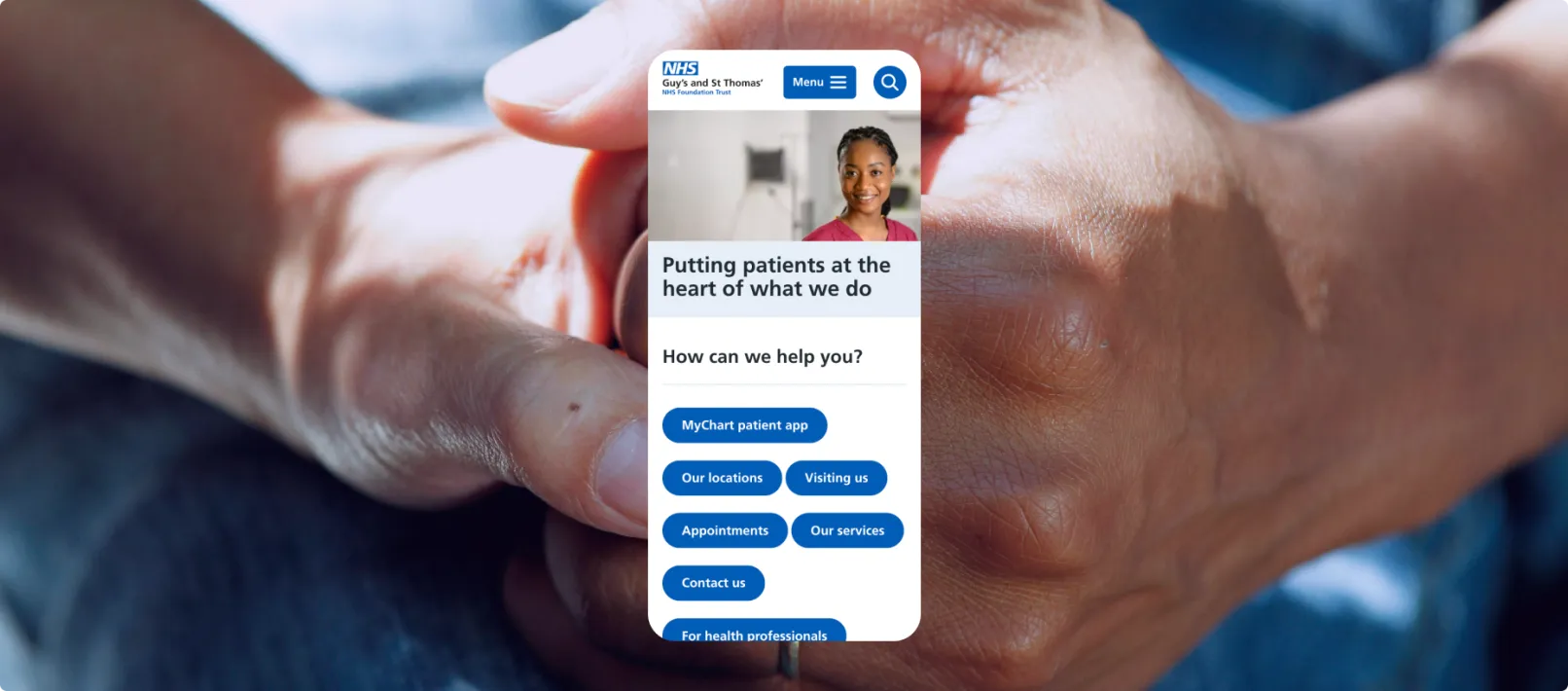
Guys & St Thomas NHS Foundation Trust (GSTT) is one of the UK's leading providers of hospital and community-based healthcare, medical research and education. The trust operates five main hospitals that have been at the forefront of medical innovation for hundreds of years. With over 2 million patients served across the UK, GSTT required a new platform that would:
- Provide patients and their families with important information about the hospitals and services
- Communicate the organisational structure, vision and activity as well as the rich histories of each of the hospitals
- Provide GPs with up-to-date referral information
- Engage with stakeholders and provide accountability to members
About the project
Discovery & Design
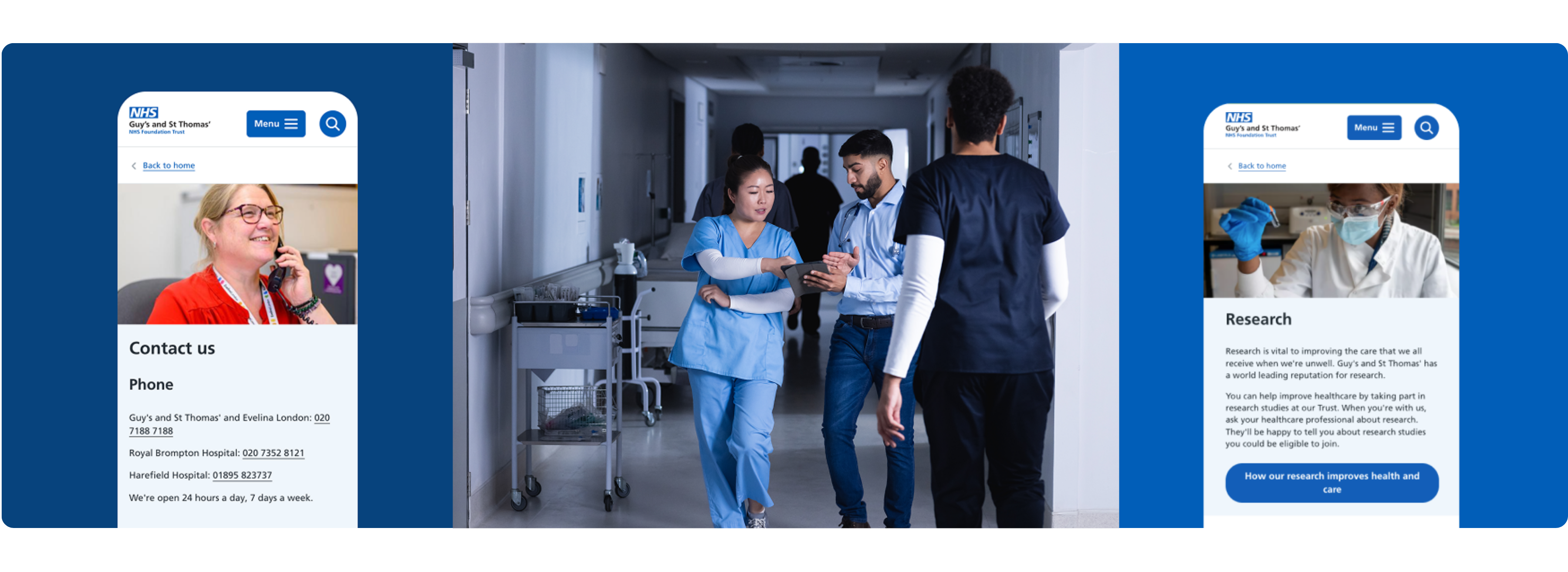
With a broad range of users across a variety of levels of digital confidence, and many often accessing the platform in times of distress, key goals that underpinned the redevelopment included:
- a clear and consistent user experience
- full accessibility compliance to WCAG requirements
- exceptional performance on different devices
- more effective use of centrally available content and tools provided via NHS Digital and the NHS website
- compliance with strict security standards as a high-profile NHS organisation
Throughout Discovery, our team engaged with over 770 users, including patients, their families and carers, the public and visitors, Foundation Trust members, job seekers, media, local stakeholders, and other health professionals.
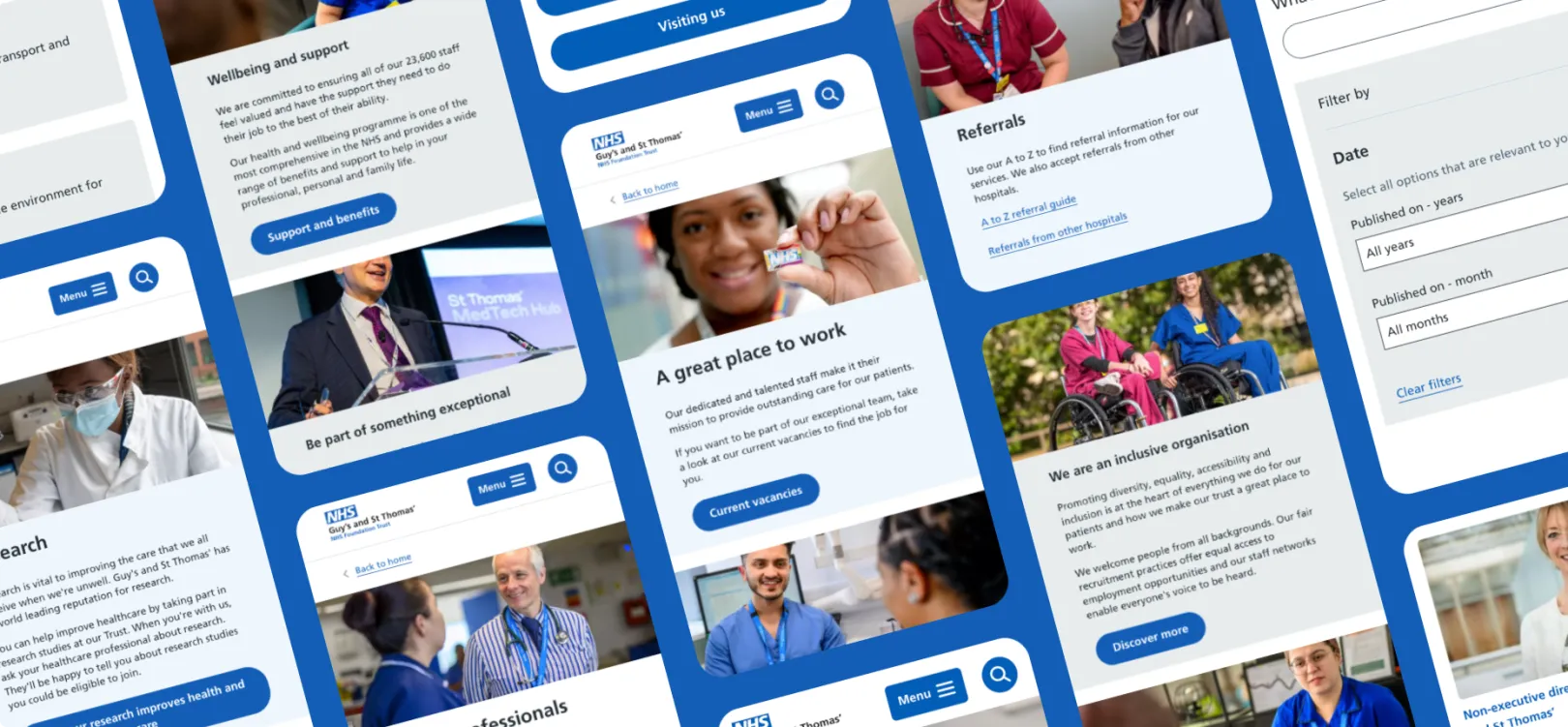
The new website needed to be simple to use and easy to navigate, featuring content which is easy to understand, informative and engaging, and be underpinned by an effective search function. It needed to be able to offer patients a single point of access to automated tools and services (for example access to appointment systems, health records, etc). This included a focus on users with assistive needs, including both cognitive and physical disabilities to ensure the content structure, visual design and information presented on the platform would be clear and easy to use for all users.
Building on the outputs of Discovery, the solution design phase continued our engagement with GSTT users. Through 1-2-1 user testing, each design prototype increased in fidelity with each iteration of feedback from users and GSTT stakeholders. This resulted in hi-fi clickable prototypes that would be easily translated into development through leveraging Storybook as our front end library of choice.
Throughout 1-2-1 testing, GSTT team members were invited to participate as passive observers in the testing process. This provided GSTT with a first hand experience of the user testing process, as well as direct insight into the user experience.
Development Highlights
Custom Functionality
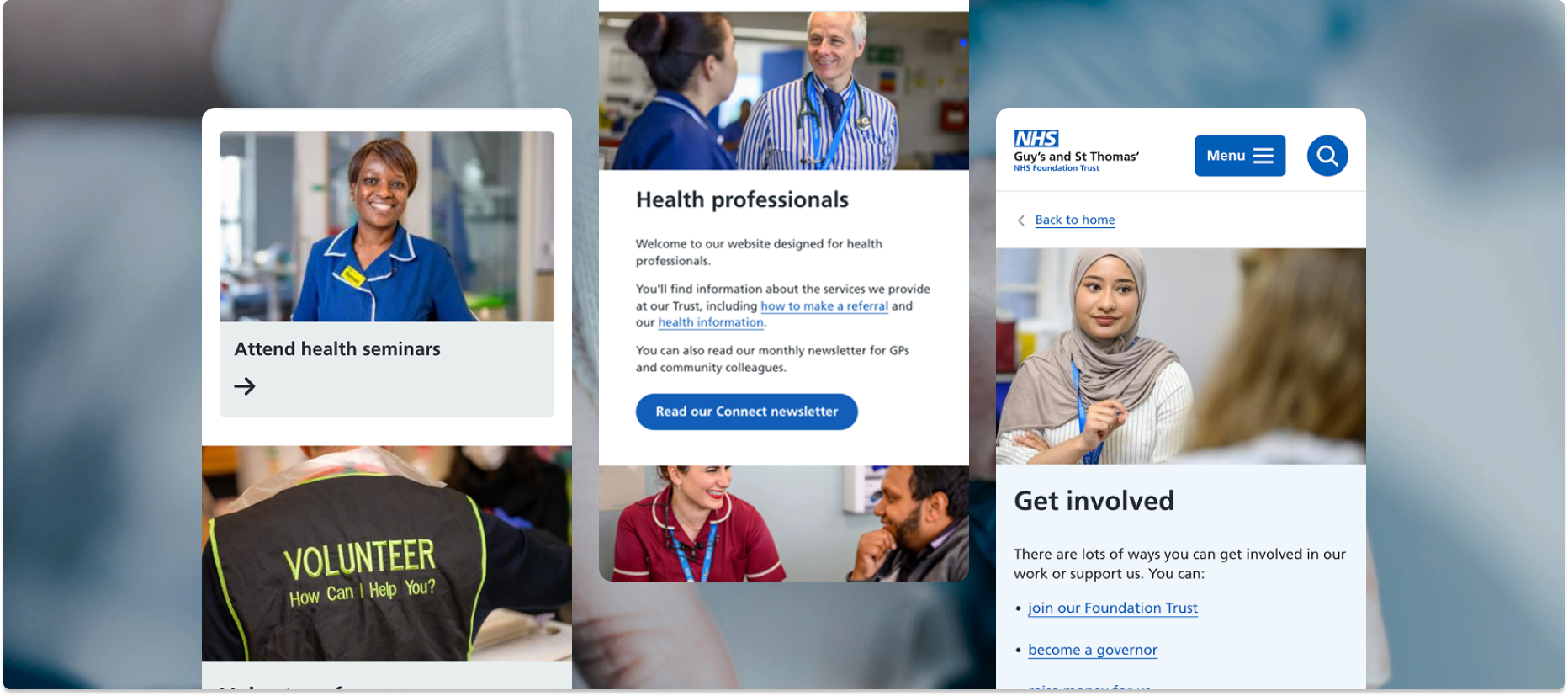
Custom functionality has also included the ability for GSTT users to print pages or resources in adaptive styles that are automatically optimised for print. This includes the ability to combine pages into a single document as a ‘print this resource’ functionality. Due to the large range of complex content available on the platform ‘search and replace’ has been developed for the GSTT editor team to easily update terminology that may be used on multiple pages, reducing the time spent in manually updating content.
Search
Leveraging Apache Solr, the GSTT search experience includes autocomplete and synonym support to support users when searching for complex medical terms, e.g. a search for ‘heart’ would yield ‘cardiology’ results. With several hospitals operating under one Trust, the GSTT team also have the ability to hide or exclude certain results under certain search terms, ensuring the user doesn’t see conflicting results for different hospitals. Furthermore, with a broad range of information on the GSTT site, allowing the search functionality to offer results within files has improved the speed and accuracy of results.
Accessibility
Ensuring WCAG2.1 (at the time, now 2.2) compliance was a core focus of development. All development was tested through a series of automated and manual testing techniques to validate compliance, with any issues flagged and remediated within the project delivery. Our team also considered practical accessibility and usability, going beyond compliance to ensure the site remained usable for all users, regardless of their level of digital proficiency.
This has resulted in an award winning platform, with GSTT placing 1st at the Web Excellence awards for Accessibility in Healthcare.
Why Drupal was chosen
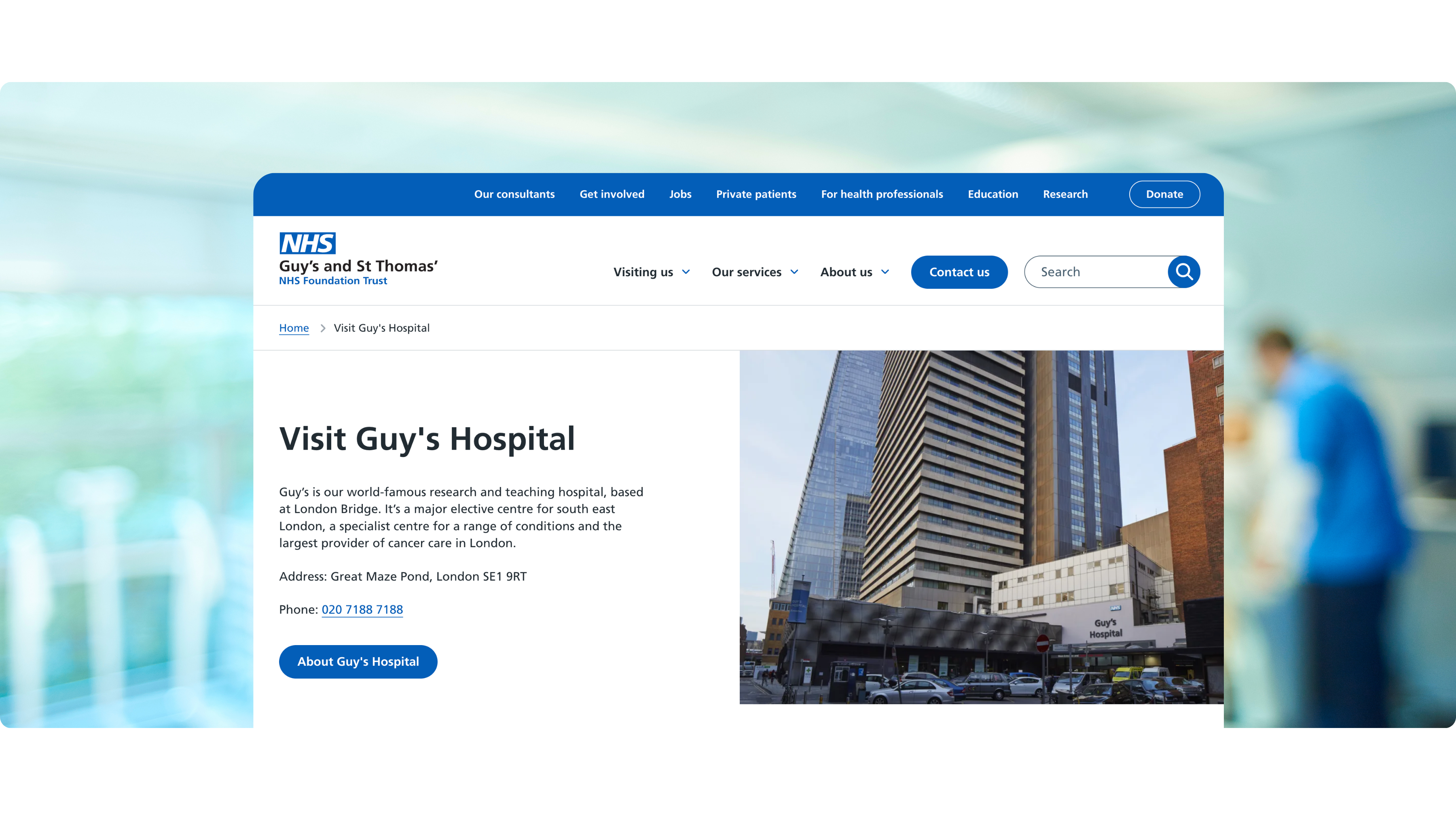
When commencing the procurement of a digital partner to deliver the new website, the trust had not decided on, or ruled out any CMS solutions. Drupal was ultimate chosen because:
- It is open source
- Can be easily integrated with other 3rd party systems
- Provides the granular roles and permissions and workflows for a large, complex organisation
- Is flexible and scalable for future functionality and growth of the organisation
- Has a rich ecosystem of developers and services providers
- Is a proven enterprise scale platform for delivery rich digital experiences
Technical Specifications
Drupal version:
Key modules/theme/distribution used:
Diff
As a content heavy site, editors frequently need to reference older revisions of the content when making updates. The diff module provides an elegant way of navigating through content history for content writers.
Zoocha also took advantage of this well documented module and implemented an additional layer of functionality on top of it, taking inspiration from another contrib module `preview_link`. Revisions on GSTT can now be privately shared to external stakeholders, who can review these unpublished content with a token link, without needing to have an account on the Drupal site.
Parent Node
A minimal (contrib) module (developed by Zoocha) that models the content architecture present in many content types in the LocalGov distro, where you can link pages together in a parent/children relationship. While conceptually simple, this relationship goes on to power many parts of the site, including a natural and semantic URL patterns, content mini hubs (such as services and health information pages)
Search API/Search API Solr
Zoocha’s go-to when we need to implement a powerful site-wide full text search. With thousands of pages spanning various content types, Search API allows users to quickly look up the most relevant content. From the content side, the client is also able to fine tune the ranking of different content types so that the most important pages will always reach its audience first.
Many other helper modules are also utilised to supercharge the on-site search, including search_api_autocomplete, search_api_spellcheck, search_api_synonym, providing users a natural way to browse even the most niche section of the website.
Paragraph
The paragraphs module embraces modularity and flexibility of building content with reusable components. This guarantees that components are always consistent across the sites, while granting editors the freedom to transition from one content section to another with ease.
Webform
Another staple contrib module, the webform module comes with an intuitive user interface for the digital team to create interactive forms with a multitude of question options. The team is also able to add customisable email triggers, such that they can receive form submissions like website feedbacks in a timely manner.