Sector(s)
The Georgia Department of Agriculture (GDA) is a state agency responsible for promoting and regulating agriculture and agribusiness in Georgia. Its mission is to foster a thriving agribusiness climate that benefits farmers, consumers and the economy across the state and region. GDA needed an updated website that was easier for users to navigate and find essential information about GDA’s programs and regulations.
Mediacurrent partnered with the Georgia Department of Agriculture to overhaul their web presence and introduce new features and functionality that improved the experience of interacting with the department online. After a comprehensive research and design phase, we created a new visual identity, streamlined the information architecture and content and transitioned them from a custom, legacy CMS to Drupal.
About the project
Creating an Approachable Government Brand
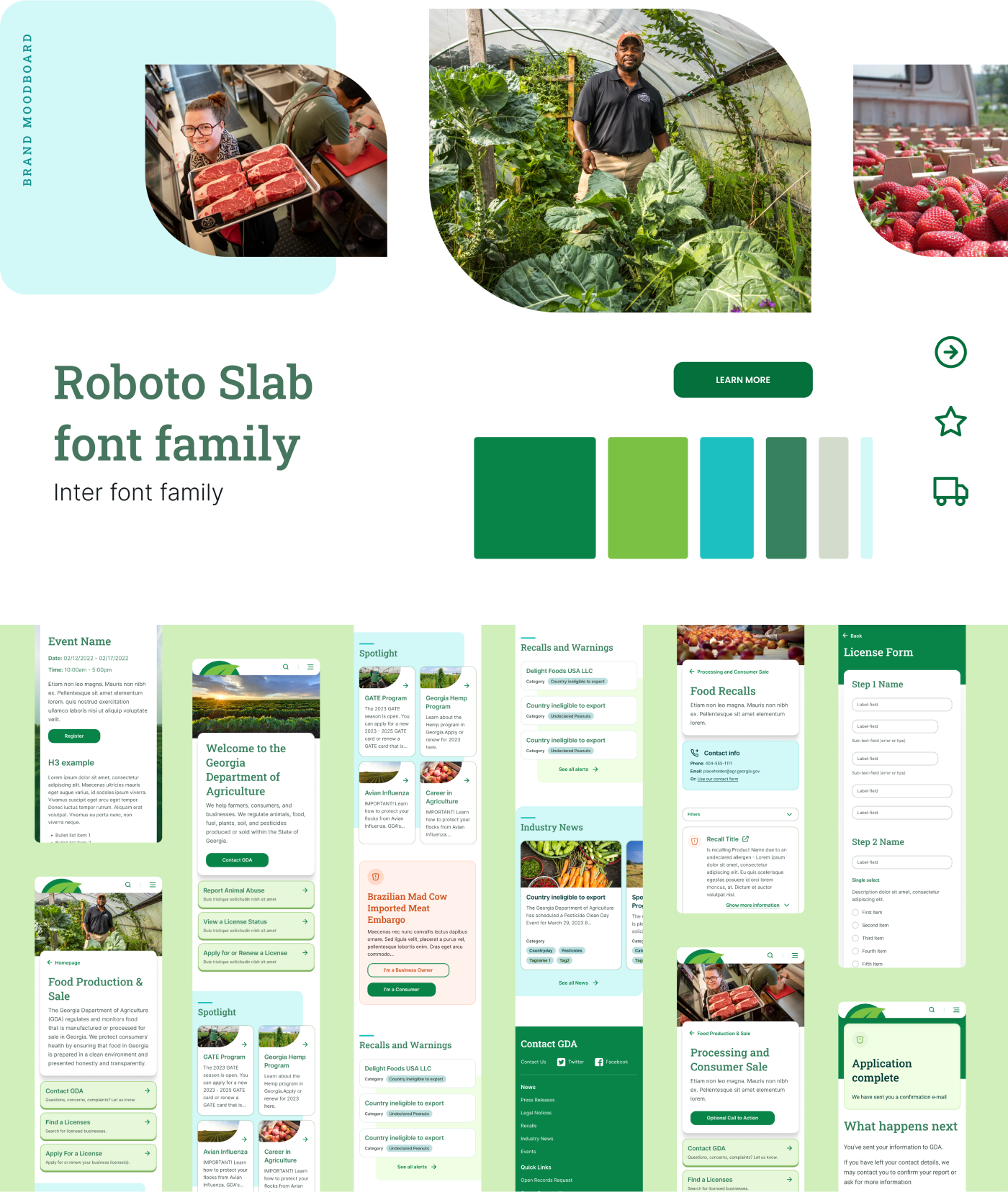
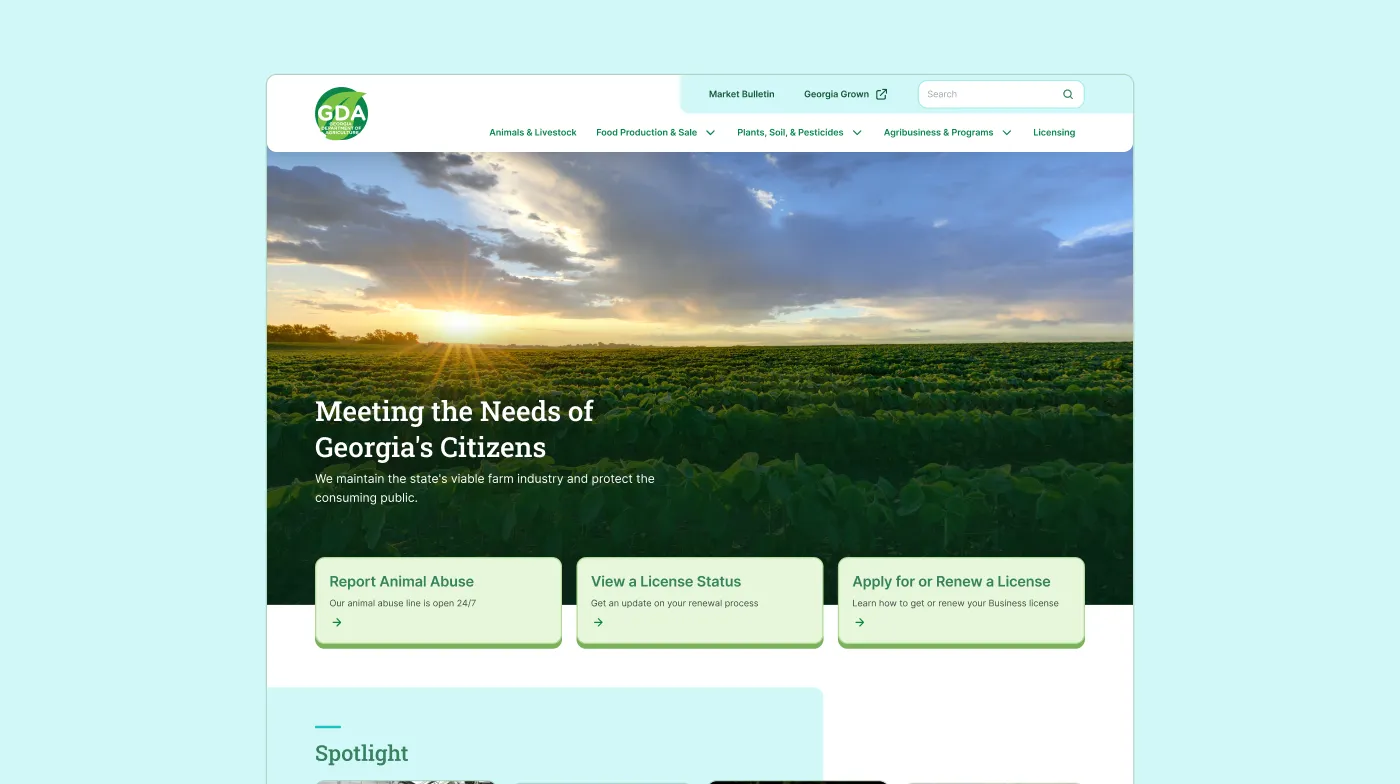
From the beginning, we recognized the importance of creating a visually engaging design that would allow GDA to stand out in a sea of often dreary government websites. We worked with the GDA marketing team to create a new look and feel that better represented what the Department of Agriculture provides for Georgia constituents.
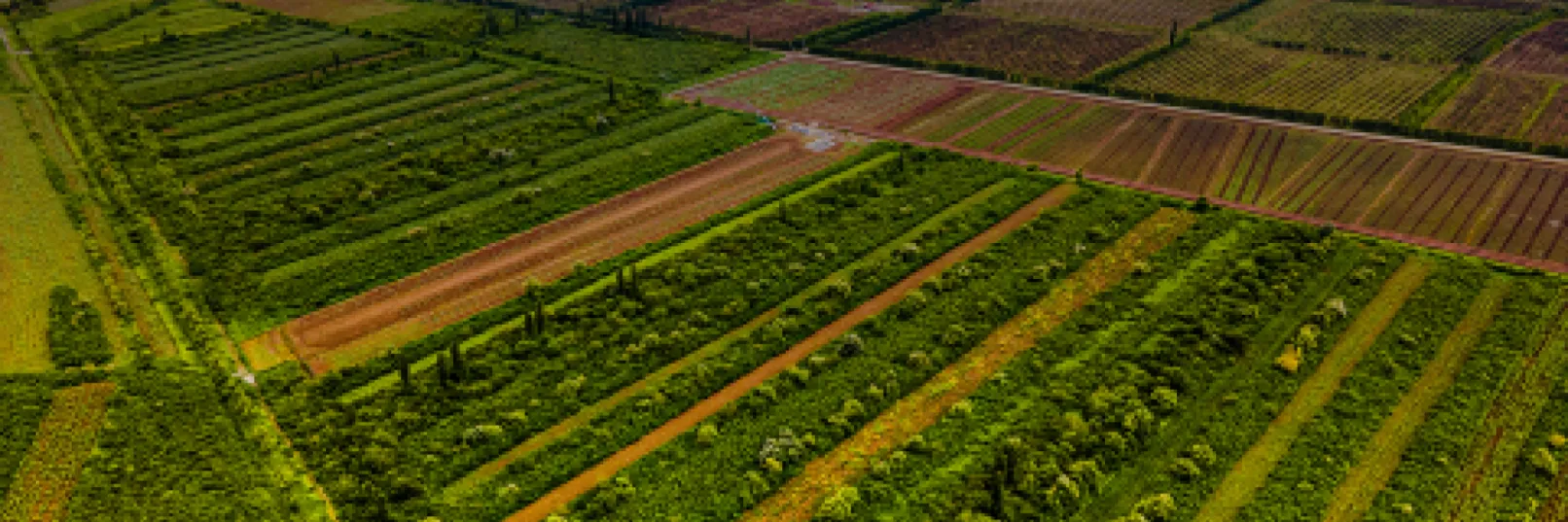
By introducing brighter colors, clear typography and an imagery style that captures the human presence behind agribusiness , we were able to create a site that doesn’t feel like the standard government experience and instead provided a more welcoming and happy-looking user interface. The result is a website that not only functions better but looks and feels more engaging, ultimately improving user engagement and elevating GDA's presence online.
Making Government User-Friendly
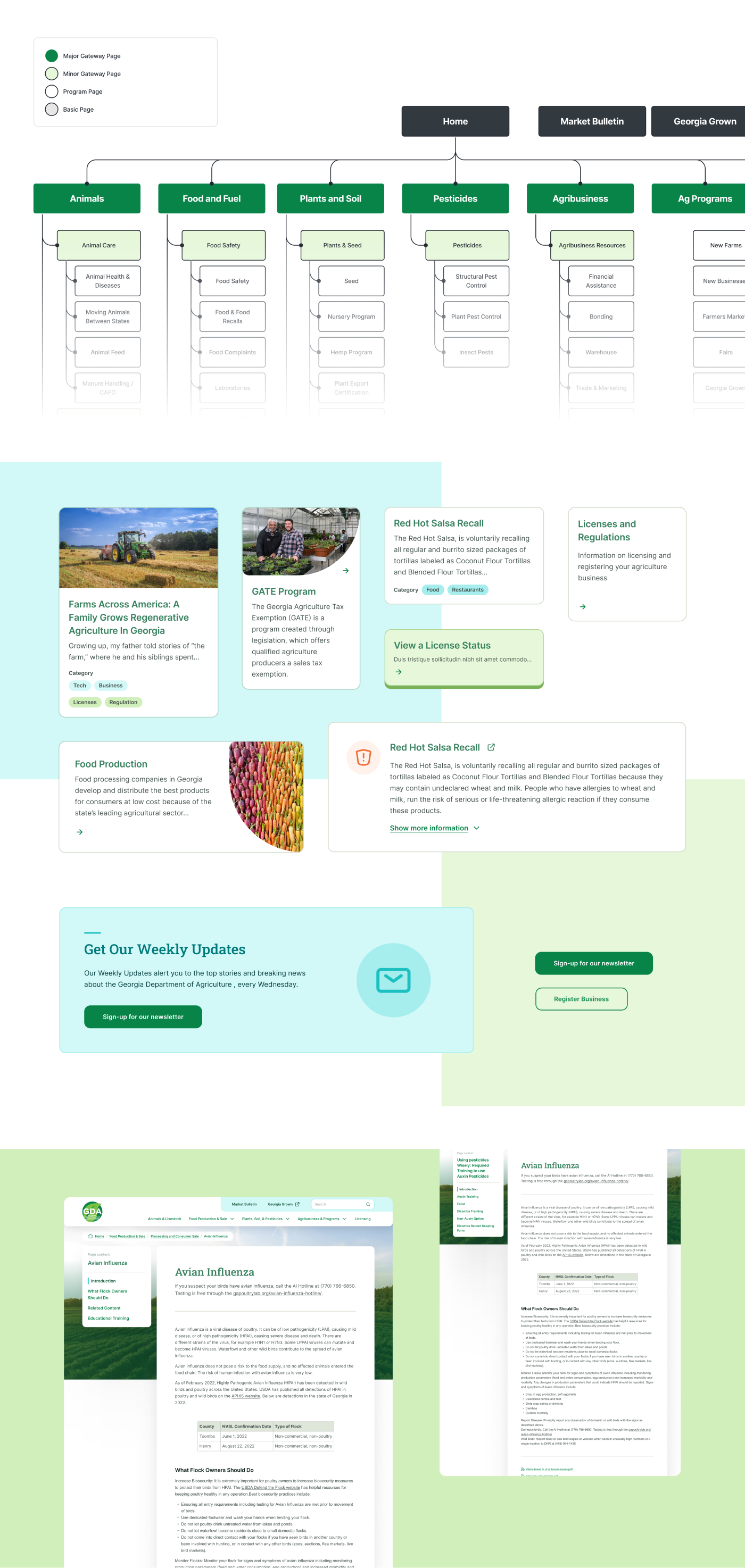
GDA regulates, monitors and assists with a wide range of agriculture-related products and services. The website needed to be a place where farmers, retailers and manufacturers could quickly find information relevant to their work, especially when their busy work days didn’t lend much time to sift through a sea of content. The content GDA needed on the site was, by nature, detail-heavy and spanned disparate categories — from animal health to soil amendments to state farmers markets.
The previous site navigation was structured around GDA’s divisions, but we learned through research that most users didn’t think that way. We refined the information architecture and navigation based on the top level focus areas for the GDA team, with clear and concise names. We created a component based system for pages that allowed content to be broken up into smaller, bite-size sections to avoid long-scrolling pages of information. We also worked with our partner agency, Rhythm, to improve the content quality, translate jargon-heavy sections and reduce the sprawl across the site so resources were centralized.
Solutions to Manual Processes
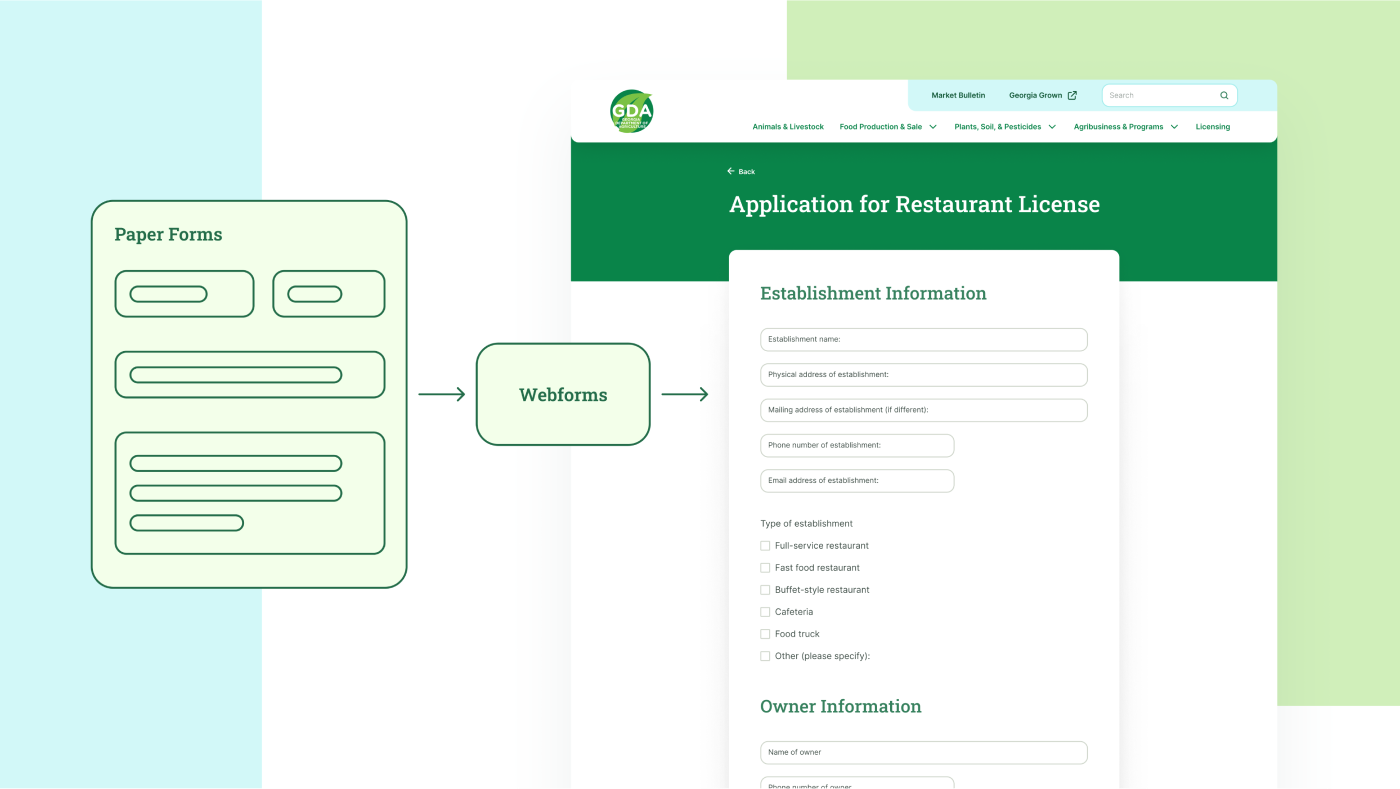
A major portion of GDA’s work is issuing licenses to regulate the production and sale of food, fuel, pesticides, animals and other agricultural products in Georgia. The old site had hundreds of forms for users to apply for licenses, but every form was a PDF that had to be downloaded, printed, filled out and mailed or physically delivered to a GDA office. There was no other way for users to apply for a license without this manual process.
We worked with GDA to start moving these PDFs to web forms so that users applying for licenses could do so from any internet connected device, even from the seat of a tractor. Since the site launched, the adoption of web forms has spread across many divisions within the department. This simple change from a manual process to a digital one has simplified the experience of both applicants and the GDA team members who process the forms.
Why Drupal was chosen
- Improved admin interface
- Customizable
- Open source software proven in government sector
Technical Specifications
Drupal version:
Key modules/theme/distribution used:
- Layout Builder - Provides the main content editing mechanism for the most important pages on the site
- Paragraphs - Helps to fill in the gaps for functionality that isn't provided by Layout Builder
- Webform - Provides alternatives to PDF forms
- Eck - Used for small pieces of reusable content like contact information
- File Field Paths - Allows for more control over where the files are uploaded
- Gin - Provides the main administration experience