Sector(s)
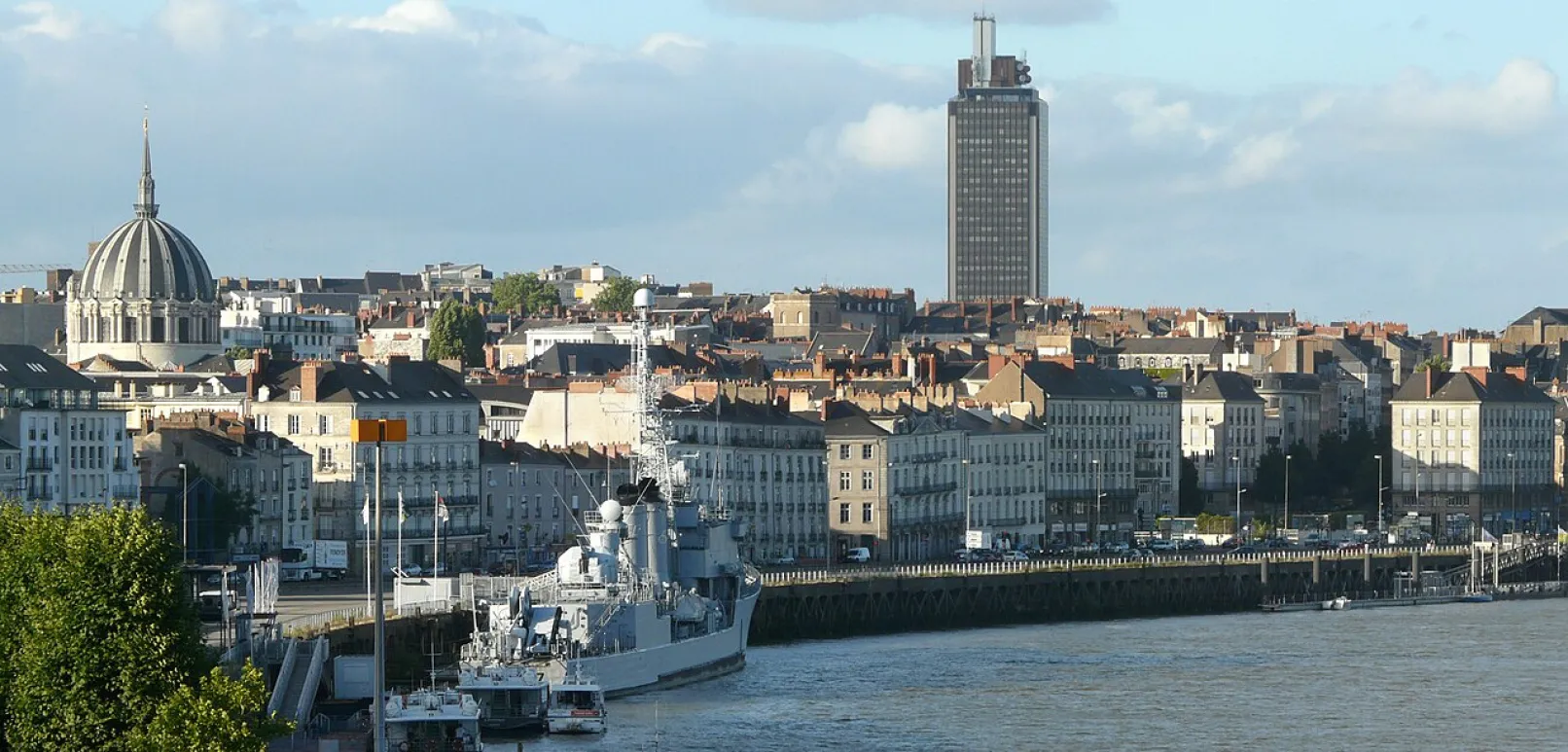
Nantes Métropole is a major inter-municipal authority bringing together the city of Nantes and 23 surrounding municipalities. It operates on behalf of these 24 local governments, managing a wide range of public services including economic development, environmental initiatives, water and waste management, and urban planning.
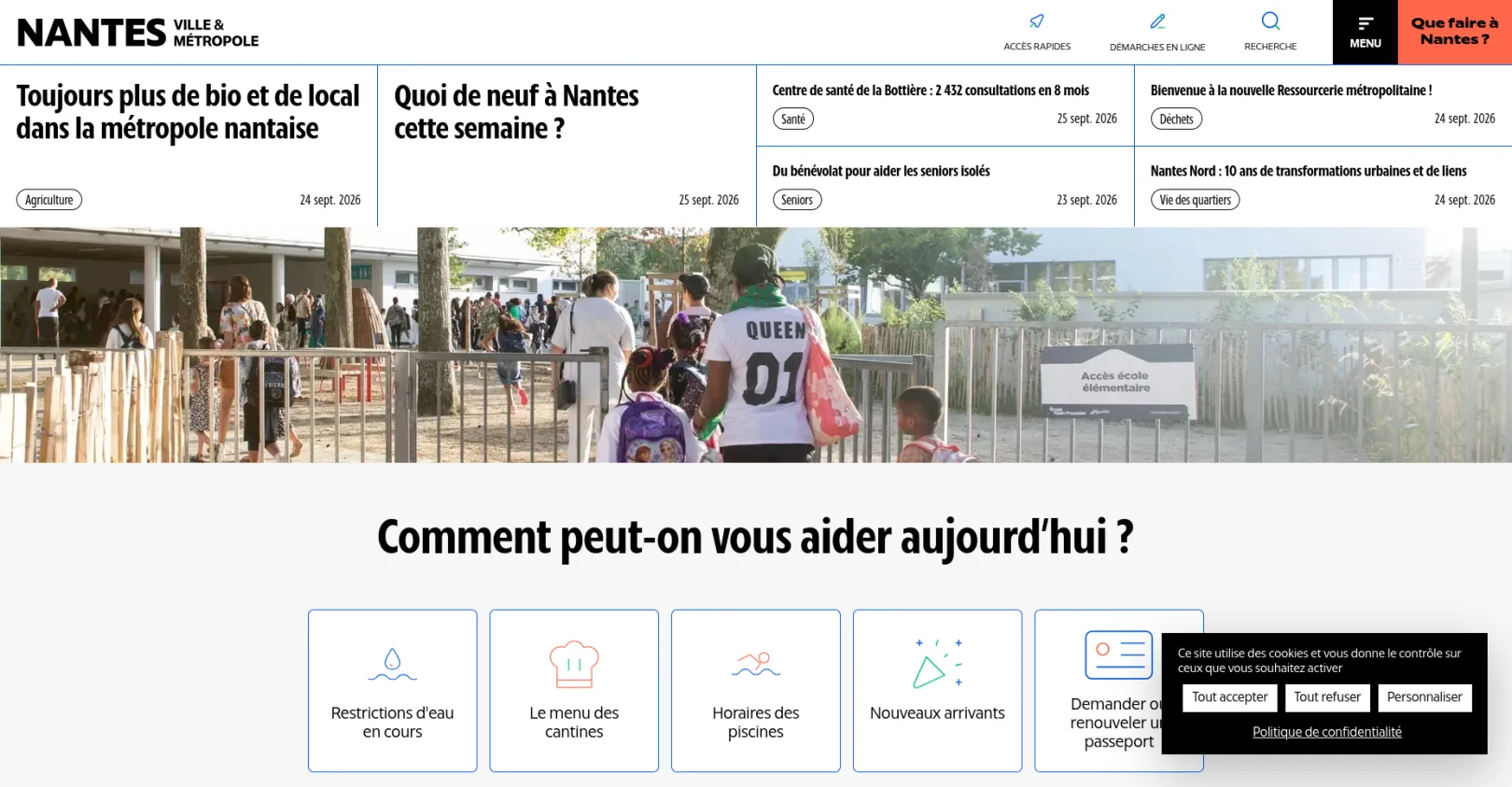
Serving a large and diverse population, the Metropolis must address the needs of citizens, local stakeholders, associations, and businesses. Its digital platforms play a central role in delivering public services and communicating policies, particularly around key priorities such as ecological transition.
To support its ambitions, Nantes Métropole sought to modernize its digital ecosystem and align it with both user expectations and its strategic vision.
About the project
The Situation
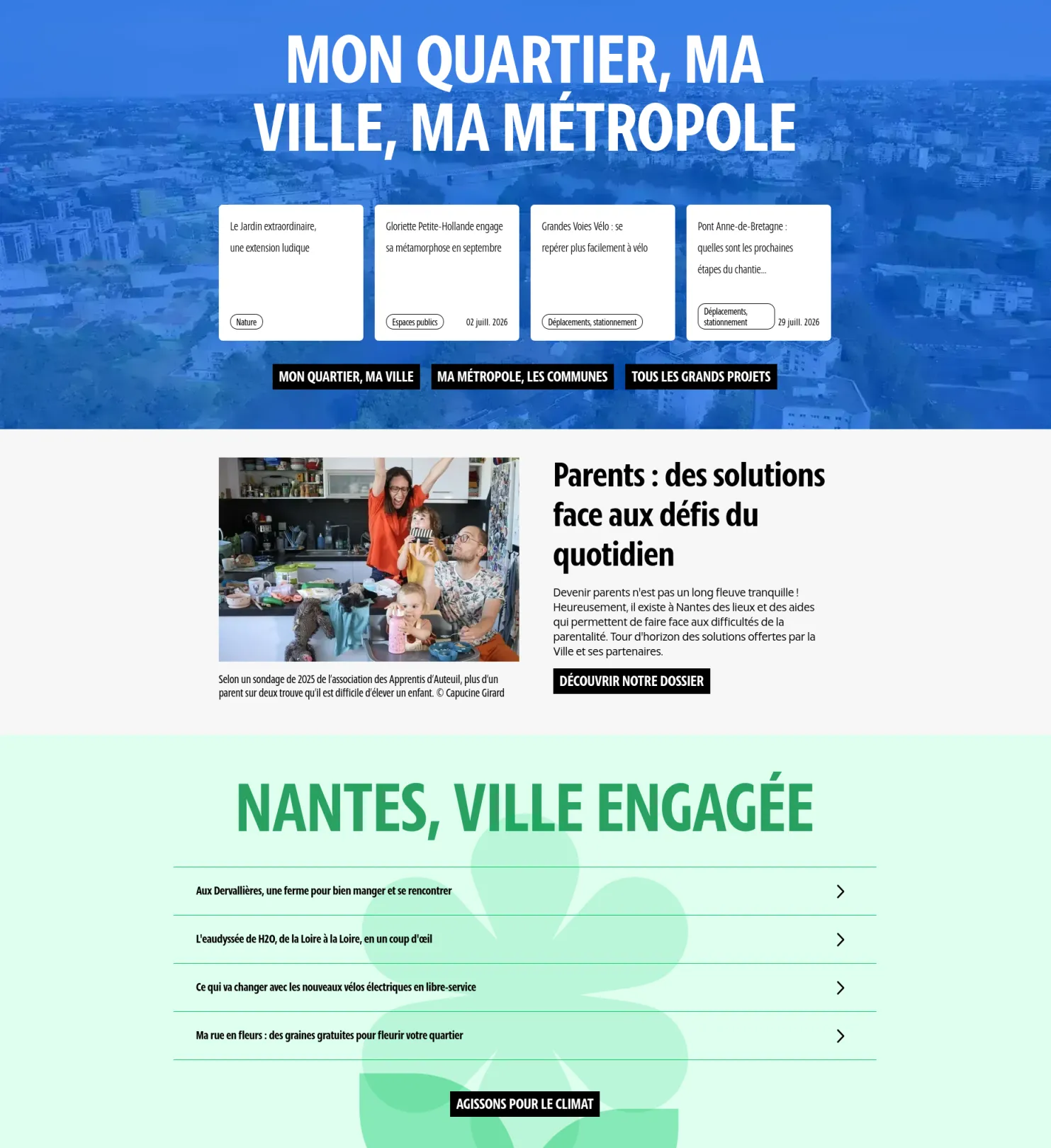
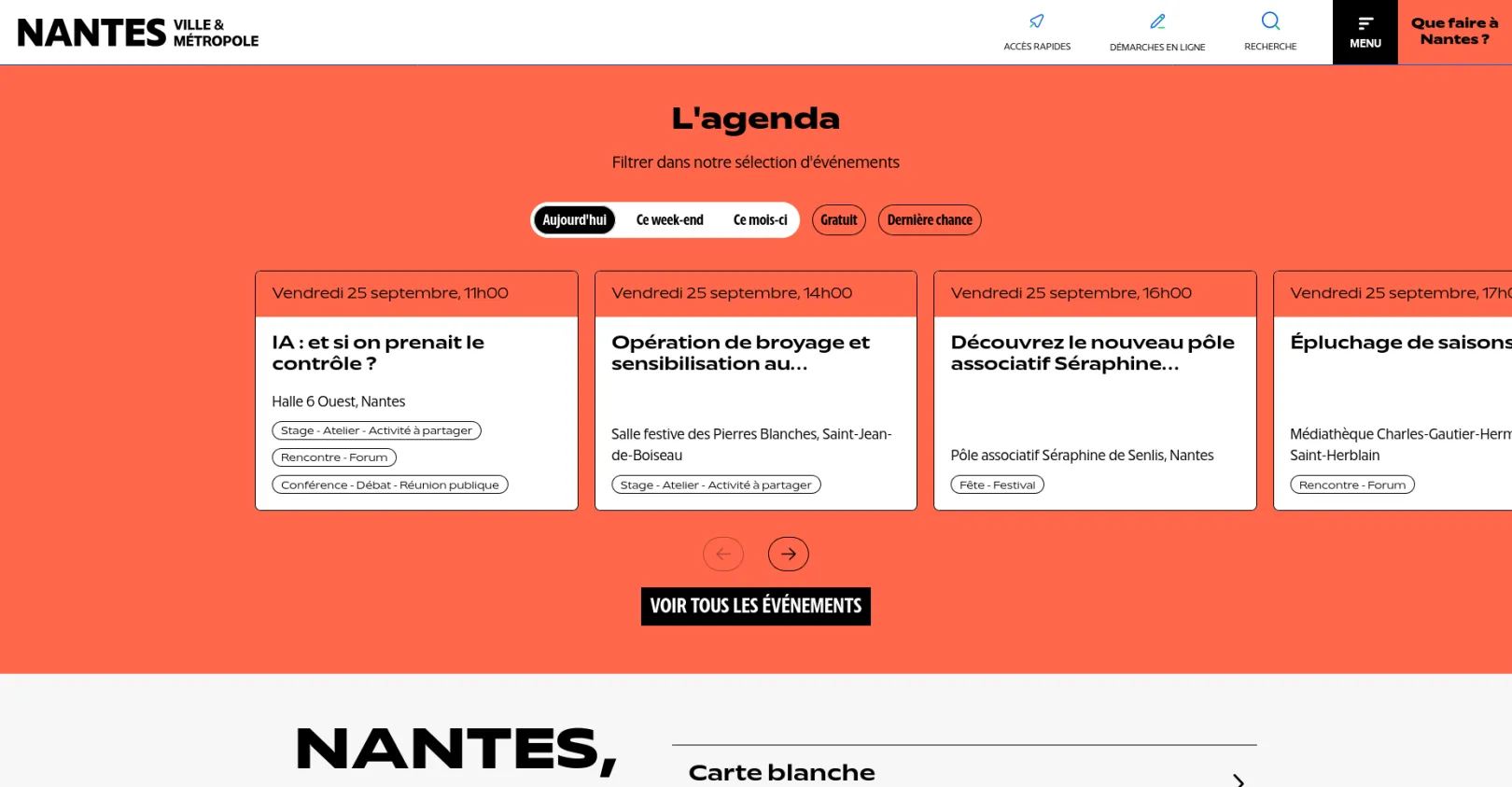
At the end of 2023, Nantes Métropole launched a major initiative to rethink its entire digital presence. The existing ecosystem lacked coherence, making it difficult for users to navigate and access relevant information.
With more than 5,000 content items, the platform suffered from complexity and limited editorial clarity. At the same time, the Metropolis aimed to better highlight its political commitment to ecological transition and increase overall audience reach.
The project required a complete overhaul of editorial strategy, content architecture, user journeys, and technical foundations, while embedding responsible digital practices at every level.
The Challenge
- Structuring and simplifying access to more than 5,000 content items
- Aligning digital platforms with ecological and public policy ambitions
- Connecting high-value content with user needs
- Improving accessibility and compliance across the platform
- Integrating digital sobriety principles into design and development
- Managing large-scale content and media integration
- Delivering strong technical performance and security
- Ensuring continuous improvement after launch
Outcome
Editorial strategy and content governance:
Adimeo redefined the editorial framework by structuring content into thematic clusters and semantic groupings around key topics such as ecological transition and public services. Content governance and publishing processes were clarified to ensure consistency and long-term scalability.
User experience and information architecture:
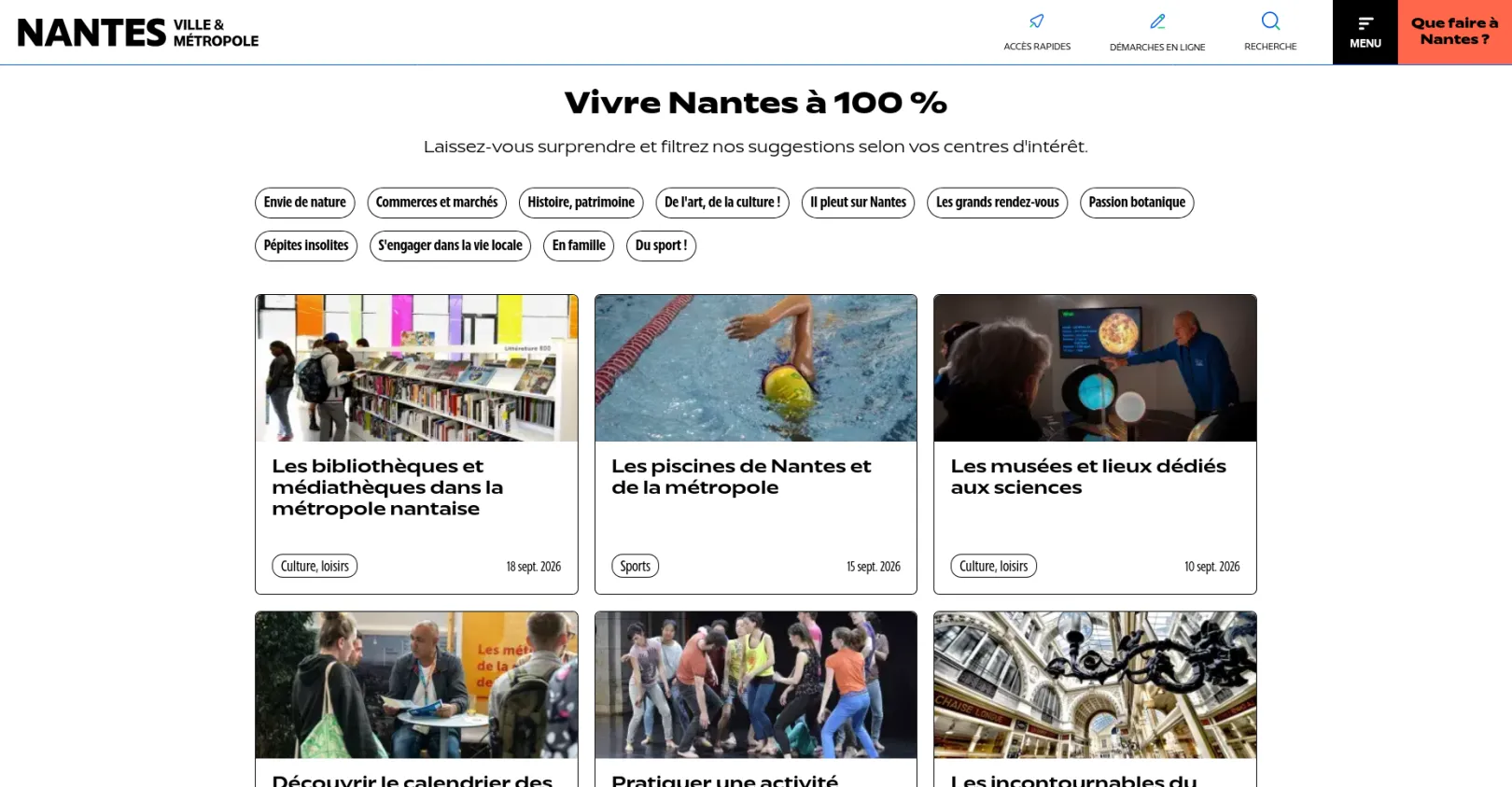
The site structure and user journeys were redesigned to improve accessibility and usability.
Creative direction and visual identity:
A new visual identity was developed, combining simplicity and engagement.
Digital sobriety and eco-design:
Sustainability was embedded at the core of the project. Optimized media usage, lightweight code, and streamlined design reduced the platform’s environmental impact while maintaining performance.
Robust technical architecture:
Initially built on Drupal 10 and then migrated to Drupal 11 after one year of existence, the platform ensures high performance, security, and scalability. Load times were optimized, and the system was designed to handle large volumes of content while remaining flexible for future developments.
Advanced search and data integration:
A federated search engine was implemented to enhance content discoverability. Integration with open data sources enriched the platform and improved access to public information.
The Results
Large-scale content integration:
Over 9,000 pages and 15,000 media files successfully migrated and structured.
Outstanding accessibility performance:
Achieved 93% RGAA compliance following audit.
Improved environmental performance:
Eco-design score increased by 27%, with ongoing improvements.
Enhanced user experience:
Simplified navigation and structured content significantly improved access to information.
Efficient platform management:
A unified and scalable system enables easier content management at scale.
Why Drupal was chosen
One of the key requirements of the project was for the new website to be able to manage effortlessly dozens of contributors with various user permissions and user roles. Drupal native handling of user management, associated with custom development using hook_node_access() seemed like a logical solution.
The previous website was not using Drupal and showed its limits regarding the back-office user experience. The customer desires to have a more organized content management, a more intuitive editorial workflow as well as an easily scalable back-office proved Drupal to be the appropriate solution.
Other requirements were to have an open-source, highly maintained, performant and secure CMS. Drupal was the perfect choice!
Technical Specifications
Drupal version:
Key modules/theme/distribution used:
- Keeping most of the content of the previous website was a mandatory step. The Drupal Migrate API and its scalability were crucial for processing the XML source and migrating it into Drupal contents. Being able to run “update only” migrations was very time-efficient and allowed to review processed content in several steps over the weeks.
- A flexible and smooth editorial experience had to be a major keystone: Gin Admin theme is considered more user-friendly than Claro while Paragraphs allows non-technical users to create and manage pages with reusable components while maintaining consistency in the page templates.
- Performance was one of the main goals of the new website: apart from Drupal good practices such as Dynamic Image Styles, Assets optimization and efficient cache management, external solutions for cache management (Memcache and Varnish), search index (Search API Solr) and media files management (S3 File System) were also easily plugged via their contributed modules.