Sector(s)
The Problem: Antiquated Systems & Manual Processes
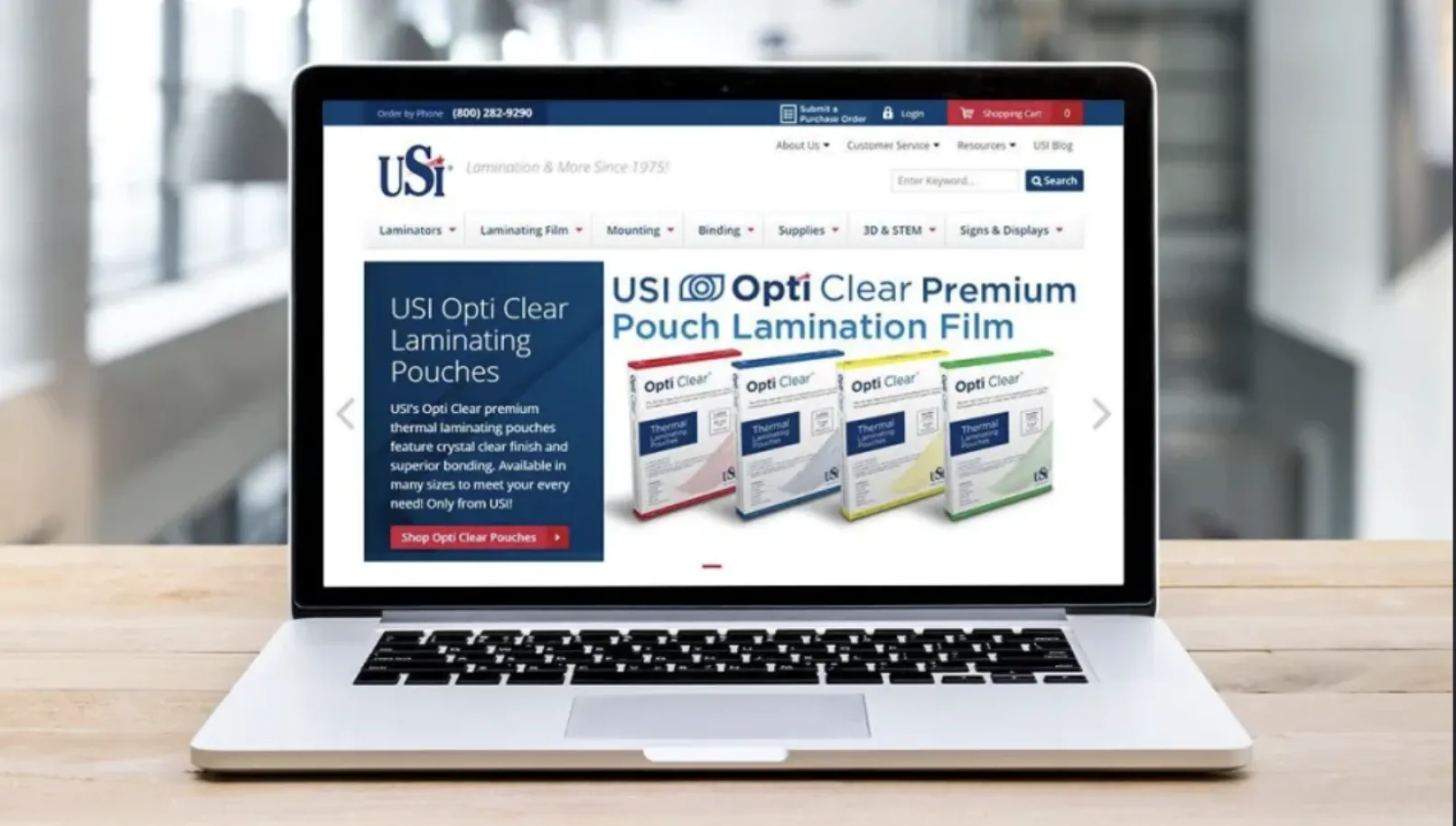
USI Laminate, a market leader in laminating and binding equipment, faced a common B2B challenge: its technical systems were disconnected and antiquated. The company needed to increase sales and improve the customer experience without abandoning its existing legacy ERP system. This led to several key business pain points:
- Manual Data Entry: Staff were plagued by the "swivel chair syndrome" of entering the same data into multiple programs, leading to inefficiencies and errors in inventory, fulfillment, accounting, and sales.
- Poor Customer Experience: The online experience was not responsive or real-time, failing to meet customer expectations for seamless product browsing, account management, and promotions.
- Lack of Integration: The disconnect between systems resulted in a lack of automation, making it difficult to manage stock, avoid penalties on platforms like Amazon, and integrate the entire sales process.
They needed an open-source solution that could integrate their operational systems and create a modern, scalable, and easy-to-navigate B2B platform.
The Solution: A Strategic, Headless Drupal Architecture
Acro Commerce provided a strategic and open-source solution by implementing a headless Drupal architecture. This approach enabled a responsive, real-time catalogue experience while fully supporting and integrating with USI's legacy ERP. The development followed an Agile methodology built on a strategic framework, including:
- Discovery: To uncover and accommodate the needs of all stakeholders, from accounting to IT.
- Strategy: To visually map the new digital workflow, server architecture, and data migration plan.
- Design: To create a detailed UX and technical blueprint.
- Development: To rebuild, replace, or connect software components.
This comprehensive process ensured a secure, flexible, and scalable platform that eliminated manual data entry and provided a user-friendly B2B customer experience.
Drupal was chosen for its performance, security, and flexibility, as well as its ability to integrate with existing systems and provide a robust CMS.
The Results: Increased Revenue, Efficiency, & User Experience
The new dynamic and integrated system delivered significant benefits for USI Laminate. While specific financial results are confidential, the project led to:
- Increased Sales & Revenue: The new platform enabled the integration of Amazon as a new revenue stream and led to an increase in sales, new customers, and average order size.
- Operational Efficiency: Stock, fulfillment, logistics, and sales management were streamlined and fully automated across all revenue streams, reducing operational commitments. This eliminated the time-consuming manual data entry that previously caused errors.
- Improved User Experience: The new platform resulted in a 25% reduction in bounce rate. It also provided customized user experiences and unlimited marketing opportunities.
By leveraging Drupal's flexibility and a strategic approach to development, Acro Commerce was able to address USI's complex business challenges, delivering a solution that drives revenue growth and operational evolution.
Are you looking to streamline your B2B operations and boost sales?
If your business is facing similar challenges with legacy systems or inefficient manual processes, contact us today to discuss a Drupal solution tailored to your needs.
You can also explore our other case studies, such as the B2B portal we built for Pacific Cove Property Management, to learn more about our expertise in creating scalable, integrated solutions.
About the project
Project highlights
Integrating existing operation systems into a new open source architecture for maximum data connectivity, automation and best-in-class CMS capabilities.
- Customer-centric user experience design.
- Legacy ERP integration for inventory management.
- New and increased revenue streams.
Digital solutions that drive revenue growth and company evolution are the way forward for B2B organizations.
A dynamic and integrated system that delivers a better customer experience, reduces operational commitments and increases sales.
The modern B2B buyer is young, digitally savvy and demands commerce solutions that don't require real human interaction. By digitizing and integrating operational systems, B2B companies can:
- Embrace the customers' need for digital-first buying with intuitive design & rich content journeys.
- Integrate their commerce platform with internal data sources to drive product and content personalization.
- Grow your company through technology and automation solutions that connect systems to allow for real-time customer creation and account access.
- Sell products across the globe into new channels and markets without needing a physical presence.
- Streamline manual sales processes and tasks, and give time back to your sales team to focus on more profitable activities.
- Empower sales teams to digitize the buyer’s journey.
Our work with USI Laminate demonstrates how finding the right digital solution can integrate systems, unlock fantastic growth opportunities, and deliver an exceptional customer experience.
Project statistics
*At the request of our client, these results will not be released. (But they’re really happy with the numbers!)
- Increased sales.*
- Increased new customers.*
- Increase average order size.*
- Reduced bounce rate by 25%.
Why Drupal was chosen
Many organizations continually choose Drupal for their websites. But why?
- Economical — While Drupal sites aren’t free to build, costs are easier to manage without the licence fees associated with SaaS platforms. Savings are compounded when applied across dozens, if not hundreds, of departments or sub-sites.
- Performant — Drupal significantly outperforms other open-source platforms such as WordPress. Drupal was created to be highly efficient and capable of managing heavy traffic loads, practically eliminating downtime.
- Secure — Drupal has thousands of contributors working behind the scenes to bolster the platform’s defences. Drupal beats SaaS regarding complex security requirements such as PCI compliance and handling of sensitive data.
- Flexible — Drupal’s open-source development community contributes to an expansive library of plug-and-play-ready modules (nearly 50,000 as of mid-February 2023), meaning there’s not much that Drupal can’t do.