Sector(s)
Team Members
Project Team
John Goldring - Project Manager
Stephen Mustgrave - Tech lead
Perry Brown - Frontend Developer
Mykhaylo Tretynyk - Quality assurance tester
Bishal KC - Enterprise Architect
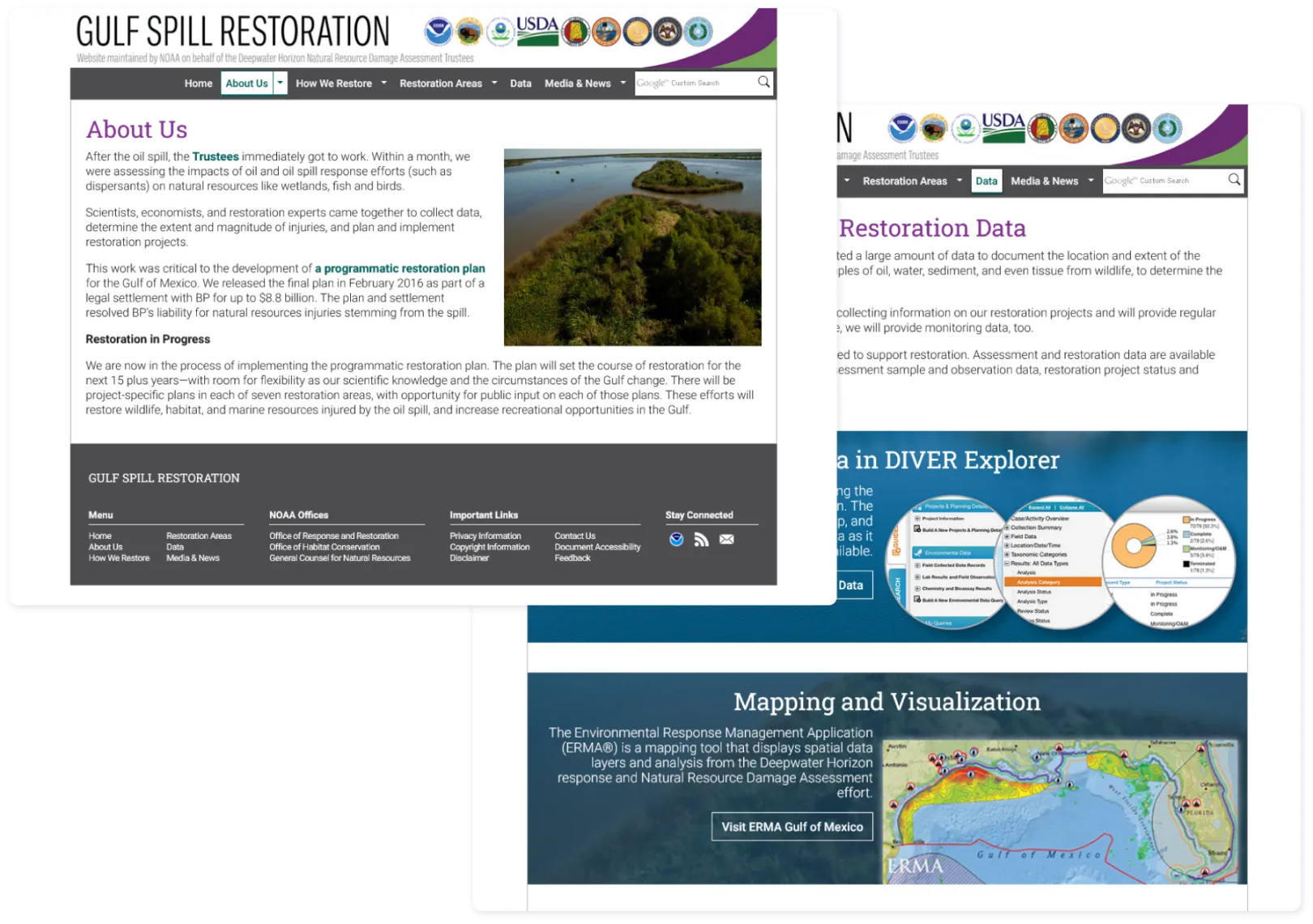
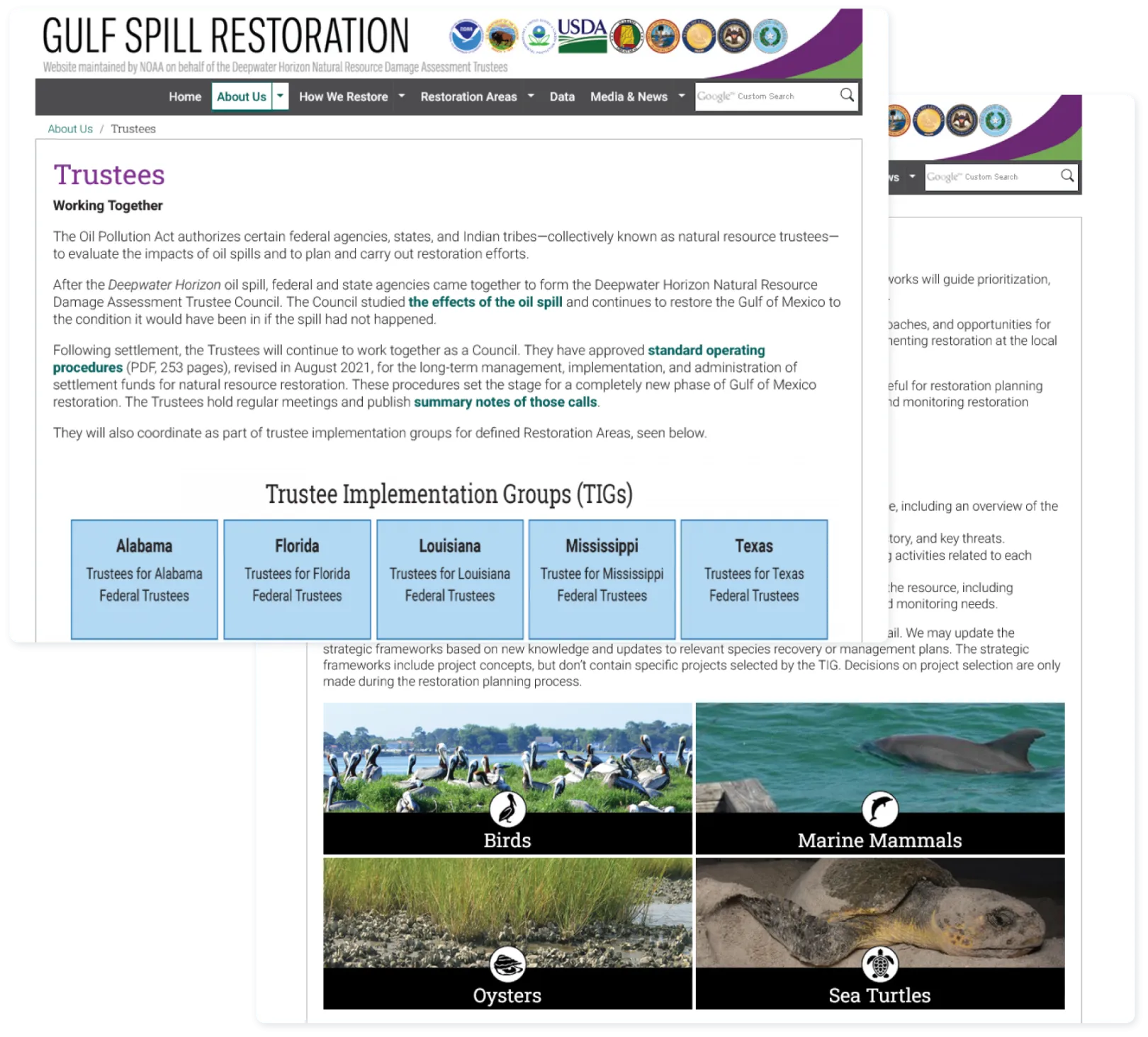
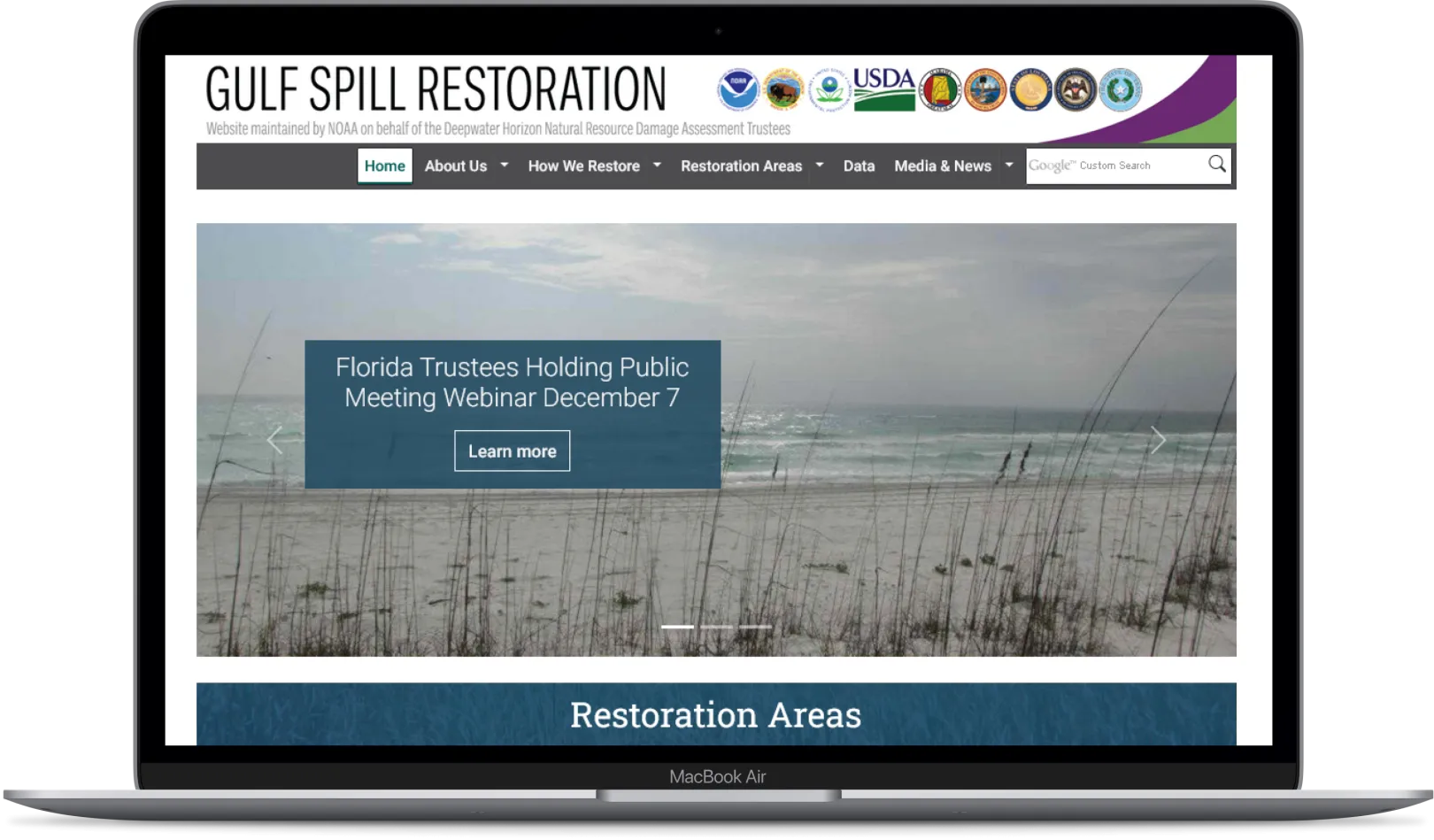
NOAA Fisheries’ Gulf Spill Restoration (GSR) site had been built on Drupal 7 and needed to upgrade. They asked Mobomo to assess the level of effort necessary to upgrade the site. Mobomo’s automated proprietary tool, Drupalleap, determined that the Gulf Spill Restoration site was very compliant and migration to Drupal 10 would take 16 weeks.
About the project
Goals
- Migrate all content and media assets from D7 to D10.
- Identify what documents/images were unused or untracked by Drupal.
- Update theme from Bootstrap3 to Bootstrap5 while keeping current look and feel.
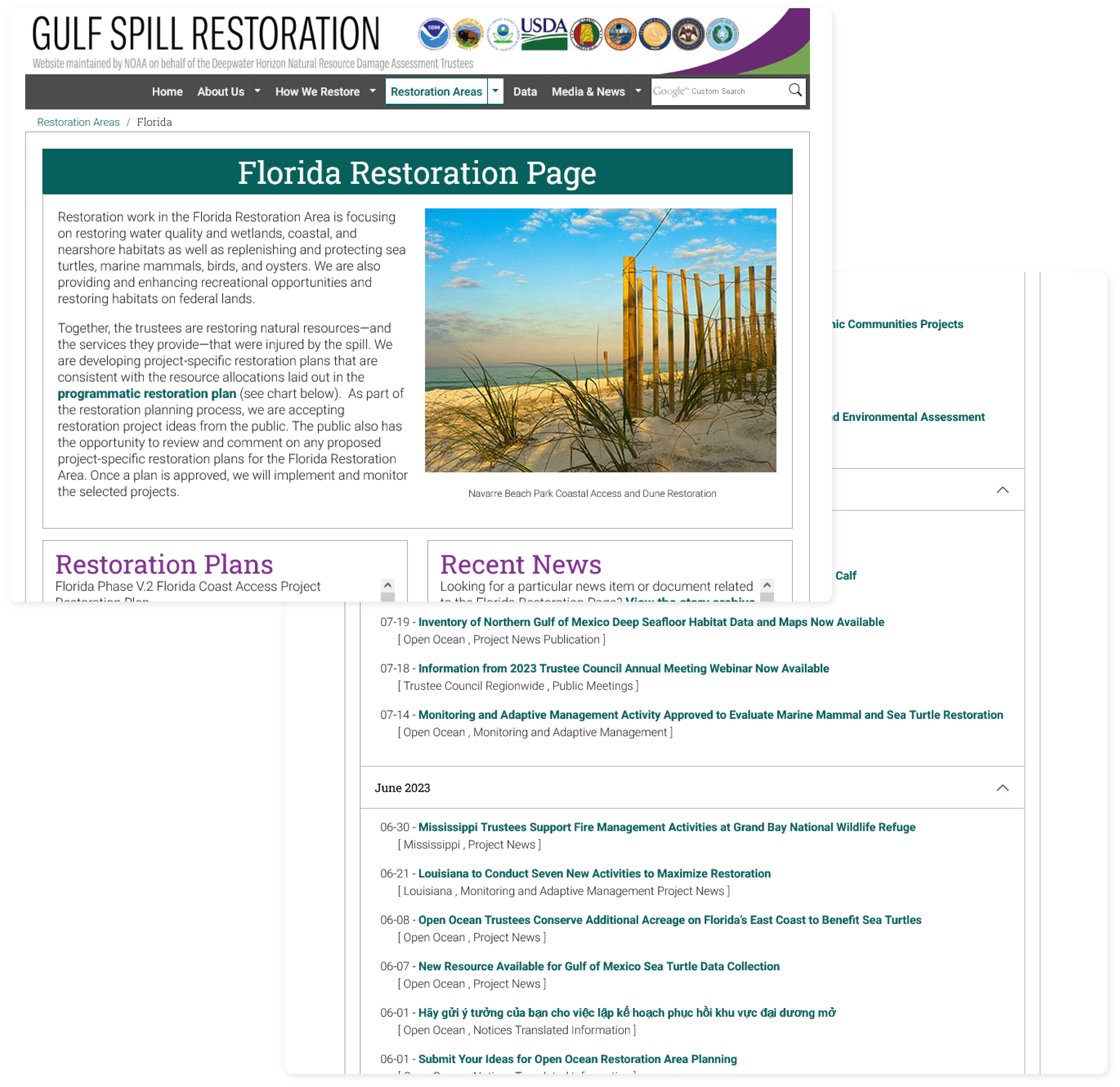
- Address performance issues on certain sections of the site, such as restoration areas.
- Address any 508 findings during the migration.
Outcome
Mobomo delivered NOAA GSR a stable D10.1 site, using the latest version of Bootstrap within 4 months. During the migration several files were found to be unused or untracked so we developed scripts that reviewed all files/images and organized them into a logical bucket. While updating theme libraries, we found several areas of improvement for 508 that could be made, and even though the project was supposed to look "as is" the client was very open to addressing these issues. Also on a few pages where performance was low we addressed the need to read an RSS feed by leveraging the Feeds module on the backend vs. reading/parsing on the front. Ultimately the site was fully migrated and the client was very happy with the Mobomo team.
Why Drupal was chosen
The previous site was a D7 implementation so we decided to stick with Drupal10. Some of the key features the client needed have only gotten better since D7 so sticking with Drupal was a no brainer.
Technical Specifications
Drupal version:
Key modules/theme/distribution used:
We chose the Bootstrap5 theme to get the client on the latest version of bootstrap. The Feeds module was chosen to circumvent a RSS feed that was being called and parsed on the client side, causing serious performance issues. Feeds allowed us to call on the backend and create controllable nodes.