Sector(s)
Visit the site
Visit the siteOrganizations Involved
Community contributions
Team members participated in the Replicate Field Collection and Replicate Paragraphs module issue queues and contributed some patches to fix issues we encountered on the project.
Clarion is one of the world’s leading events organisers, producing and delivering innovative and market-leading events since 1947.
Clarion has over 1,500 employees based in 15 offices worldwide specialising in the delivery of first class marketing, networking, and information solutions in high value sectors, both in mature and emerging geographies.
Clarion Site Factory
With the 180+ events that Clarion organise annually, attracting over 1 million visitors globally, Clarion required a platform to be created that would allow them to self-serve the creation of new event websites without the need for any developer involvement.
Members of the Clarion events teams required the ability to choose from a selection of pre-built components and website sections in order to allow them to rapidly build event focussed websites themselves, along with all the content loading that goes with this.
This project has be daubed the "Clarion Site Factory".
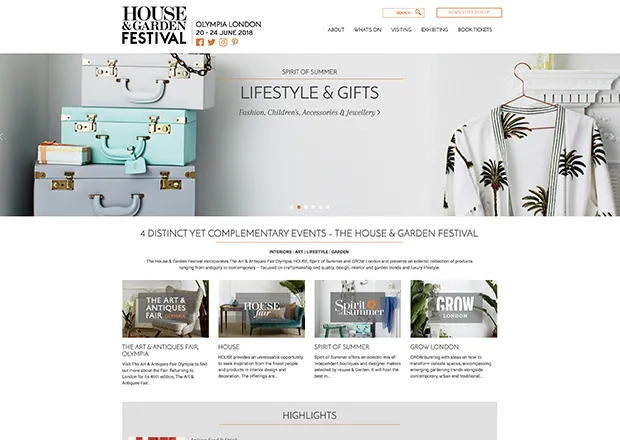
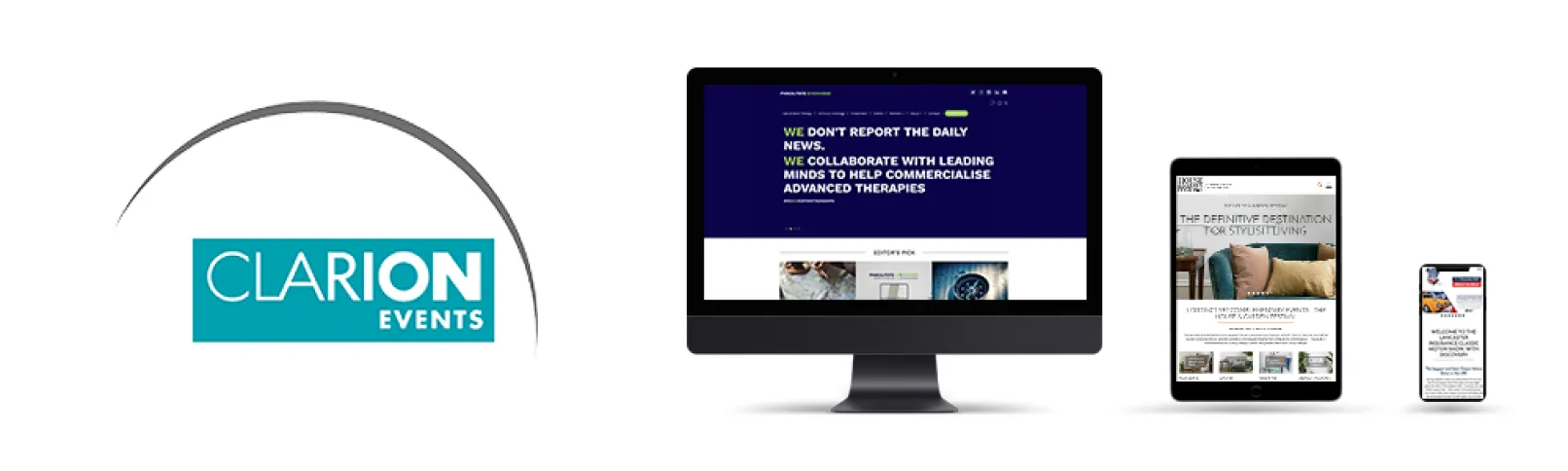
The URL and screen shot above is an example of one of Clarion's websites created using the Site Factory.
About the project
Goals
One core goal was to reduce the amount of spend on bespoke event websites by the organisation; this, whilst expensive at first to build the core Clarion Site Factory platform is now bringing them economies of scale as more sites come onboard to the platform.
Requirements
A key requirement centred around the creation of flexible and customisable pages using ‘cards’ which need to be suitable for use on many of the different event brands and subject matter within the Clarion group. Using the Drupal paragraphs module and introducing customisation options on elements such as fonts, core colours, the flexible layout ability inherent in Drupal paragraphs as well as compatibility with 3rd party providers (e.g. Map tools, interactive floorplan providers, advertising solutions etc.) more than meets this need.
Reducing the time from creation to site release, and dependencies on devops and systems administration roles was another key area that needed a solution. As part of the project a ‘site wizard’ was developed allowing Clarion to generate dev and live environments themselves and also dynamically provision SSL certificates, so once a site has been built with the existing components and client is happy, they can actually push a site live, without any / minimal involvement from Zoocha.
Providing Clarion a means to monetise the operation internally - with the platform developed, Clarion’s internal set up is allowing them to recoup some investment by recharging to their own sites the cost to set up and build out a website.
Outcomes
Better control their spend in having just one central team responsible for the functionality and prioritisation for the entire platform - this has been achieved, introducing greater visibility on a central backlog (rather than client trying to keep atop siloed development previously being fed into Zoocha from their multiple individual websites) this has removed any likelihood of repeating functional development and helps focus the client on briefing in functions that satisfy as many use cases as possible.
With currently 30 sites live and targeting over 100 by end of 2018 this project is well on the way to meeting its goals. A healthy backlog of functionality is also detailed and being scheduled around key functionality needed to migrate respective sites to the Clarion Site Factory.
Why Drupal was chosen
Clarion wanted an Open Source, enterprise grade CMS with a broad selection of robust modules to call upon. With content publishing, multiple “front-ends”, content management, and site administration being amongst the most important requirements the amount of solution options available was limited.
Drupal was chosen primarily because it matched the high level CMS requirements, and Clarion had experience of using Drupal with success on various projects within their event teams already.
Another important feature that Drupal scored highly on in the selection process is multilingual capability.
Technical Specifications
Drupal version:
Key modules/theme/distribution used:
Domain Access
The project made extensive use of the Domain module, along with its suite of bolt-on modules to handle the customisations per site on the Platform.
Using the suite of Domain modules each site is able to have it's own taxonomy terms and menus, content, branding, images, sitemap xml, web analytics and all the other things that you would expect a standalone site to have.
Given that all of the sites are on the same platform, it also allows centralised figures within Clarion to have broad control over multiple sites within a single administrative interface. This allows for some support related tasks to be handled internally, along with optimisations to be carried out by digital specialists within Clarion.
Paragraphs
The Paragraphs module facilitated the creation of pre-defined ‘cards’ which can be placed onto any page. These predefined cards are a mixture of event centric cards, and generic web cards such as galleries, pre-formatted layouts, contact forms and such.
The created cards often comprise of Views, and so modules such as Views Reference played an important part in bringing everything together.
Features
With the card based approach mentioned previously, being able to release new card functionality which involved the creation of potentially new content types, views, fields and such, as part of a single click deploy is made possible through use of the Features module.
The Features module allows us to wrap up all the functionality that a card required into a single module which can then simply be enabled on the platform as part of the deploy process.
This approach has also given a ‘clean’ easy to maintain structure to the Features modules that have been created, where Feature actions such as reverts and enables can be carried out without overly impacting performance on what is a very database intensive platform.
Metatag
One of the key platform requirements was that each of the sites created on the platform needed to have a strong baseline set of SEO and Social optimisations.
The Metatag module was used to underpin this requirement in conjunction with the likes of the Token module, so that each page on the site had a relevant predefined, pattern driven, set of meta tags created. These included the title tag, meta description, open graph tags and twitter cards.
This approach is working well, with sites on the platform featuring well on search engines and looking good when pages are shared on social media.
Inline Entity Form
With the site creation process being of paramount importance to the success of the project, every effort was taken to make the user journeys are content management tasks of the event management teams as easy as possible.
One of the modules that was particularly useful to the project in this area was the Inline Entity Form module which provided an invaluable widget for inline management (creation, modification, removal) of referenced entities.
This module was used in a number of places across the platform to reduce the content management burden of Clarion team members.