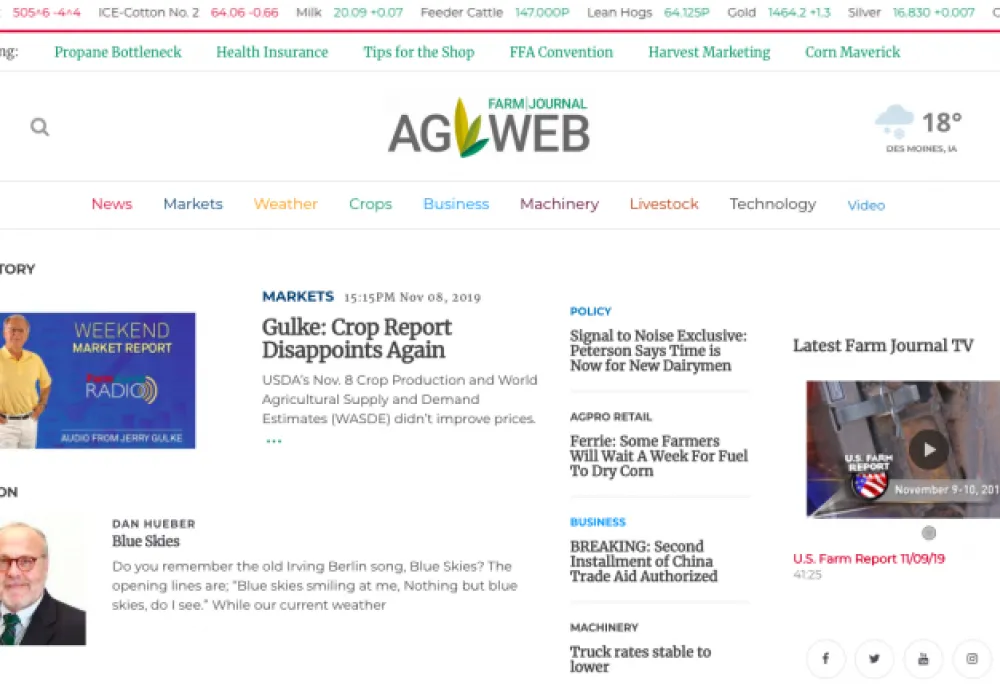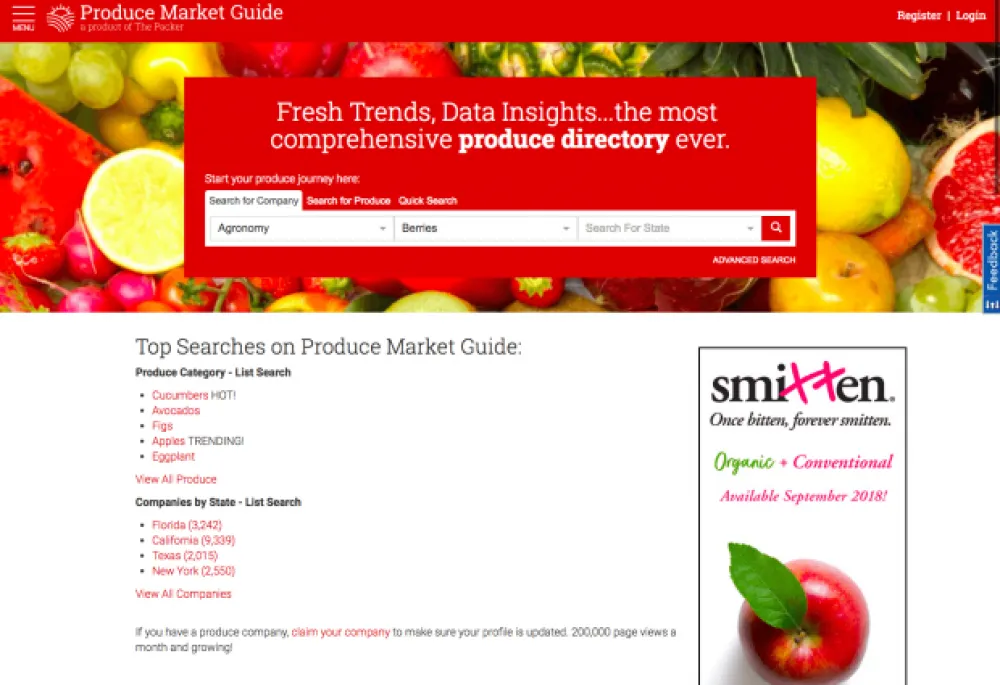
Farm Journal, which started out as U.S. farm magazine in 1877, has now grown into a mammoth company having an astounding presence through print publications, broadcast, websites and mobile outreach. Today, Farm Journal has a family of brands and organisations serving the row crop, livestock, produce and retail sectors. AgWeb, The Packer, Milk Magazine, Drovers, Doane Advisory Services are some of the biggest brands of Farm Journal.
As a prominent media and publishing company, content dissemination is an integral part of Farm Journal. It uses a central content repository called Centralised Content Management System (CCMS), powered by Drupal, to push content changes across its different websites.
But the increasing amount of content to be governed proved to be challenging eventually. The slow performance of CCMS and inefficacy towards meeting the growing demands ultimately paved the way for rethinking. OpenSense Labs helped revamp the CCMS using Drupal’s improved features and functionalities thereby streamlining the content management. With the new improved CCMS, the content editors no longer have to log in to each and every site for adding and managing the content.
About the project
Goals:
- Develop a content syndication and dissemination system which will act as a central content repository to manage content for various websites.
- Publish the same content on multiple websites
- Easy setup of new websites with previously generated content
- Enhance the admin experience of all the websites by providing tracking logs
Requirements:
- Tech stack: Node.js, React, MongoDB, DAM integrations, Express.js, Redis
- Developing a microservices-based system for improved scalability and high performance
- Cross-publishing articles on the network of FarmJournal sites
- Enhancing the centralised editorial reporting dashboard
- Real-time syndication of articles
Outcome:
- An increase in consumer sites, update count and pull request don’t inversely affect the load on revamped Drupal-powered CCMS. A special fail handler was developed for the sanity check between CCMS, MongoDB and consumer sites. This helped in making sure that there was no duplicity and assisted in maintaining an error log for missing articles by reporting the precise failure points.
- The overall content journey, once the editor hits save, to reach consumer site was at max 3-5 seconds.
- The architectural layout was designed in such a way that the Express app worked independently of the other systems. The real-time syndication made sure that the articles were published for the categories for which the respective websites were subscribed to.
- CCMS 2.0’s architecture is inherently scalable. As the number of sites connected to it increases and the corresponding number of authors increases, the CCMS 2.0 platform can be easily scaled to accommodate them.
- Also, the architecture is modular in nature. This will allow changing certain aspects for the MongoDB database with other available options without disrupting the business logic.
Why Drupal was chosen
- Streamlined content management of Drupal 8 and its powerful capabilities for media and publishing industries.
- Easy integration with third-party applications.
- Tagging system to manage a wide set of categories.
- Easy connection with various content synchronisation solutions.
- Roles and access management like content editors, administrators, etc.

Technical Specifications
Drupal version:
Key modules/theme/distribution used:
- JSON API: To generate the JSON API specification
- REST UI: To manage content sharing rest endpoints easily
- Blazy: The user will have faster page load times and save data usage
- Chaos Tool Suite (ctools): A suite of modules which provide a Page Manager whose job is to manage pages
- Content Moderation: This module allowed to have a published version that is live. Concurrently, you could have its copy that is undergoing review.
- Workflow: To provide a different editing phase to the editor
- Bynder: To provide seamless access to Bynder's asset bank to the website. The Drupal integration allowed users to import, upload and display assets from Bynder