Sector(s)
AGILE DEVELOPMENT FOR HEALTHCARE
Provincial Health Services Authority
When the Provincial Health Services Authority (PHSA) needed to quickly deliver massive amounts of healthcare information to British Columbia residents, they faced a tight deadline and the challenge of managing multiple, complex projects. Previous development agencies had failed to meet their needs, so PHSA sought a partner that could accelerate the development process and provide a repeatable solution. Their goal was to demonstrate the value of their digital initiatives in securing government funding and establishing an industry-leading model for virtual health.
The Challenge: Integrating Complex Healthcare Information Systems
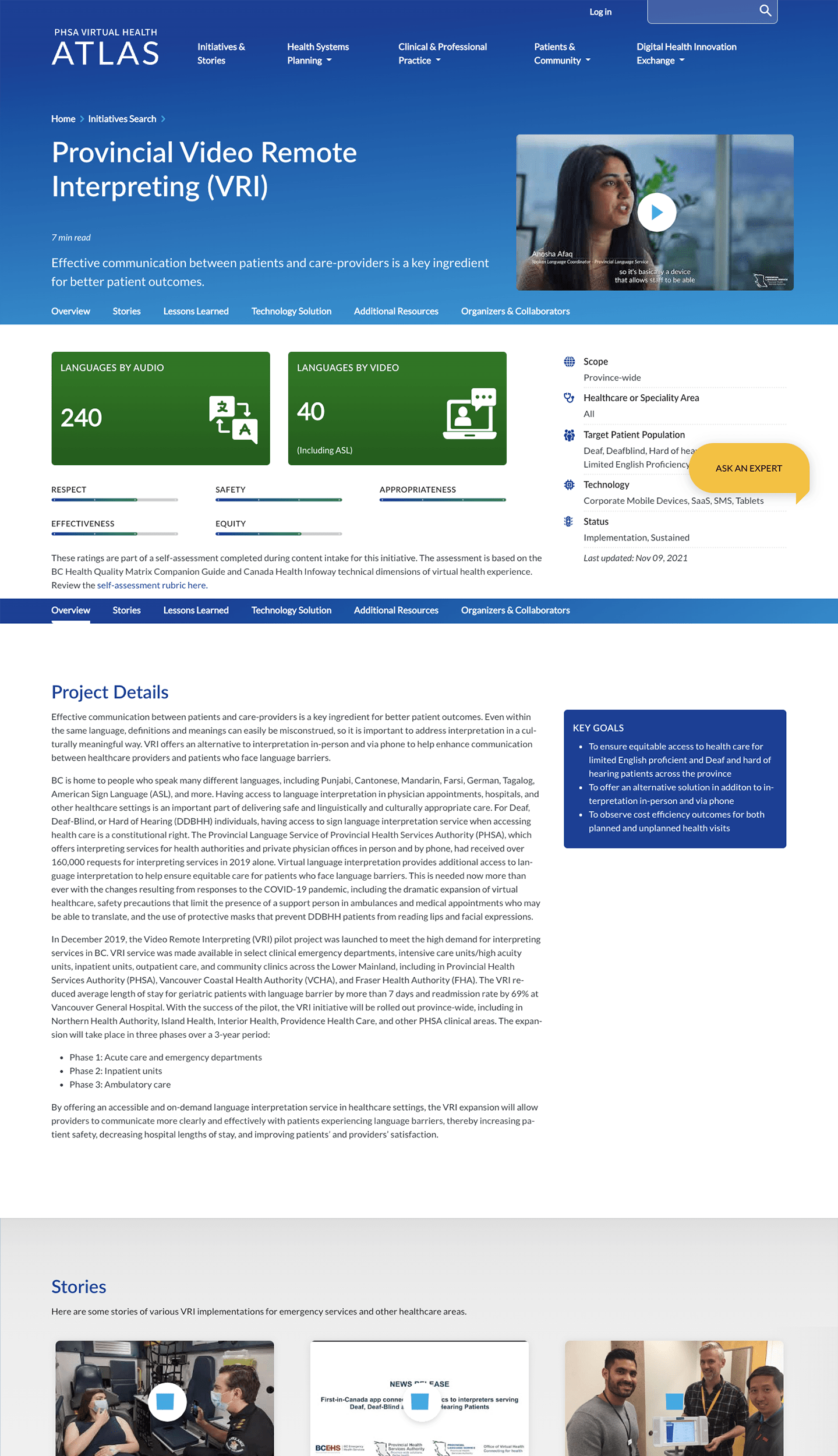
PHSA's ambitious project involved creating two distinct digital platforms: The Atlas and The Hub.
Both were designed as central "sources of truth" for patients and healthcare professionals, providing access to practices, education, and treatment information. The projects had specific, complex requirements:
- The Atlas: An online compendium of virtual care initiatives in British Columbia that required a new resources section, an improved map display, and a faceted search function.
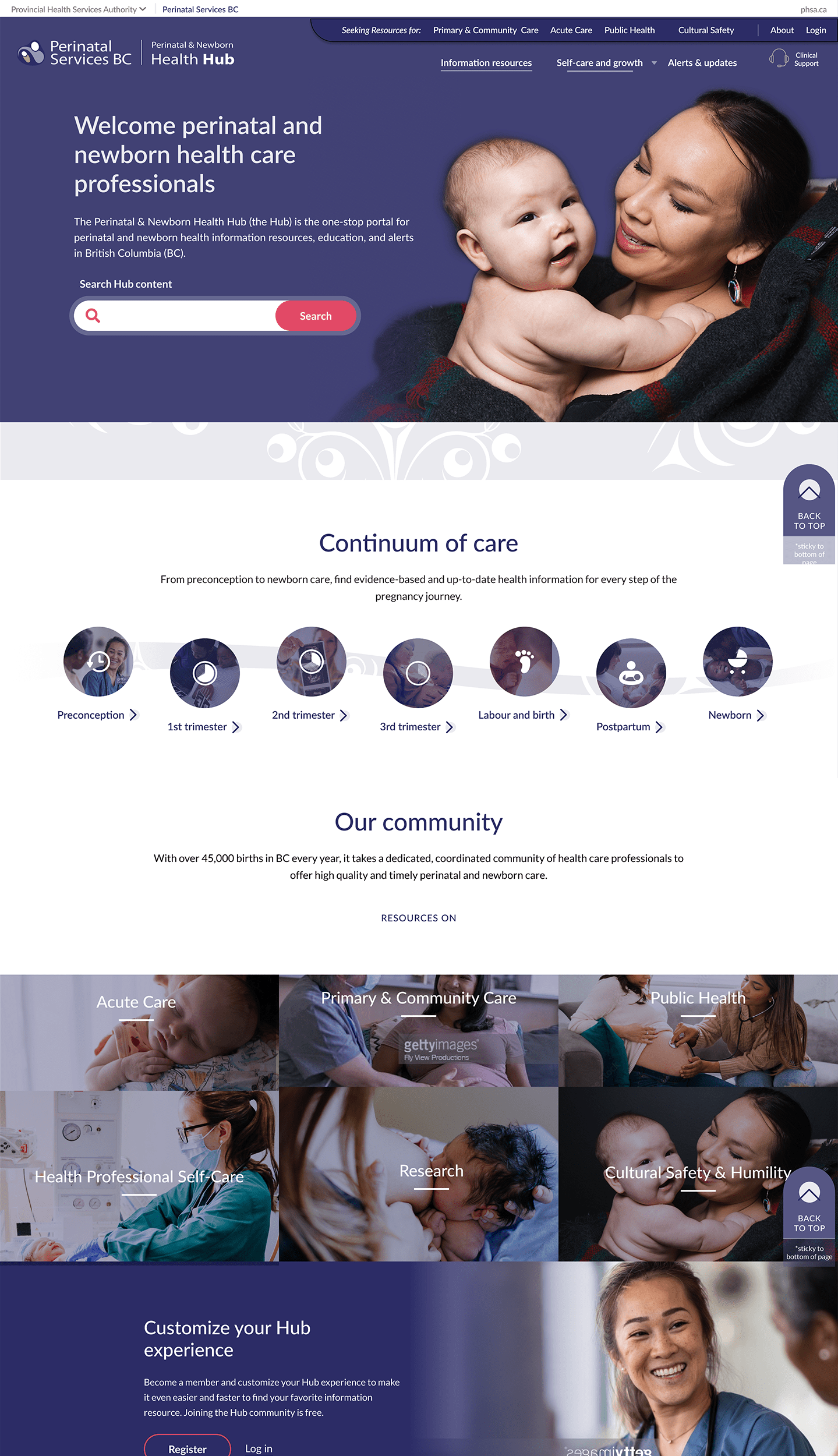
- The Hub: An online resource for perinatal and newborn health professionals that needed features like a timeline function, faceted search, user accounts for favourited articles, and offline access.
The biggest hurdle was the need to launch a minimum viable product (MVP) for both platforms within a strict 120-day deadline to meet government funding requirements.
To make this happen, PHSA needs a development partner to manage many individual projects/products while working closely with PHSA’s various internal teams.
Atlas — Partially built
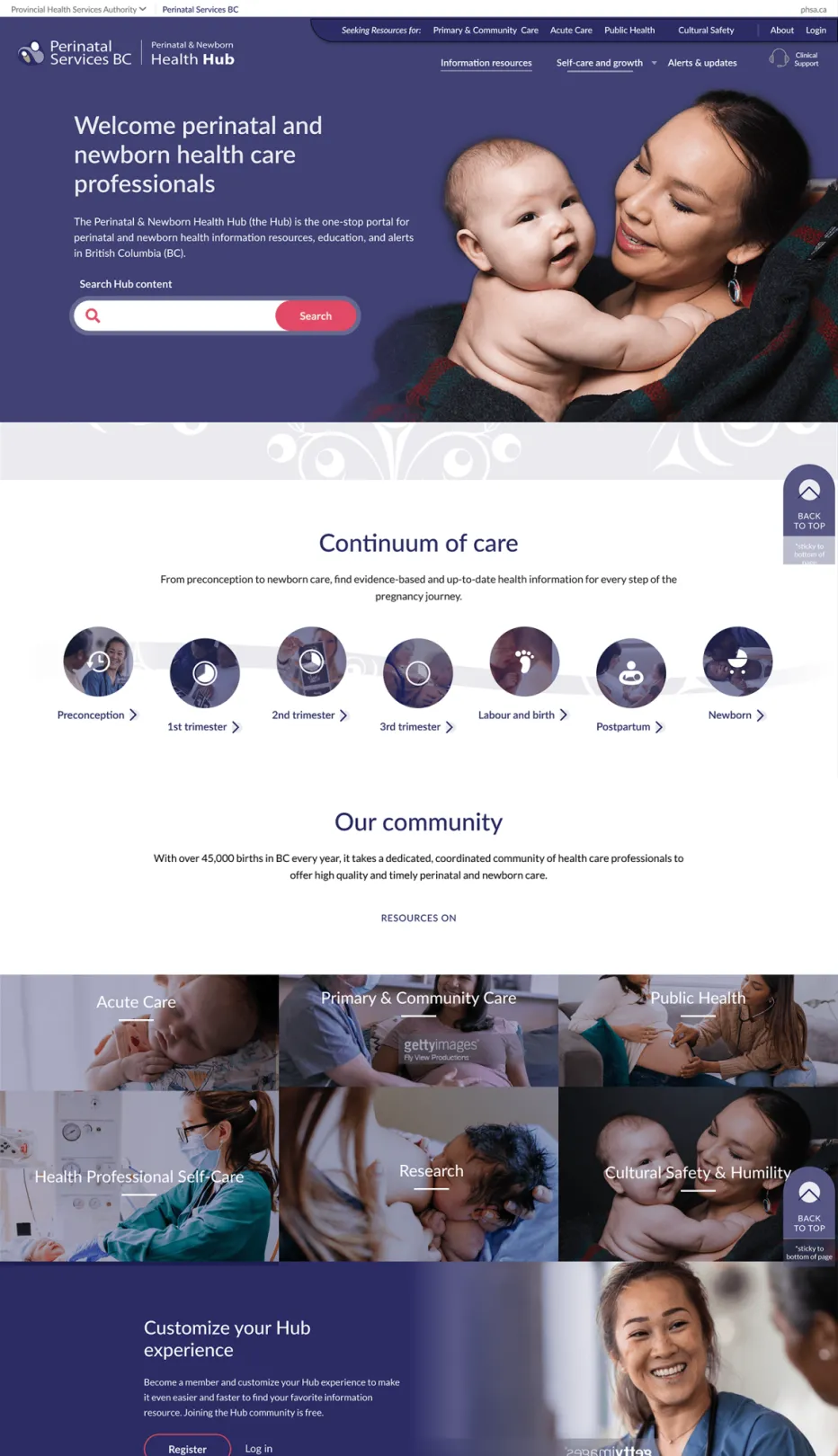
PSBC - The Hub — New build
The Solution: A Decoupled Drupal Accelerator
PHSA chose to partner with Acro Commerce, leveraging their expertise in Drupal and their proprietary decoupled development accelerator, Gesso.
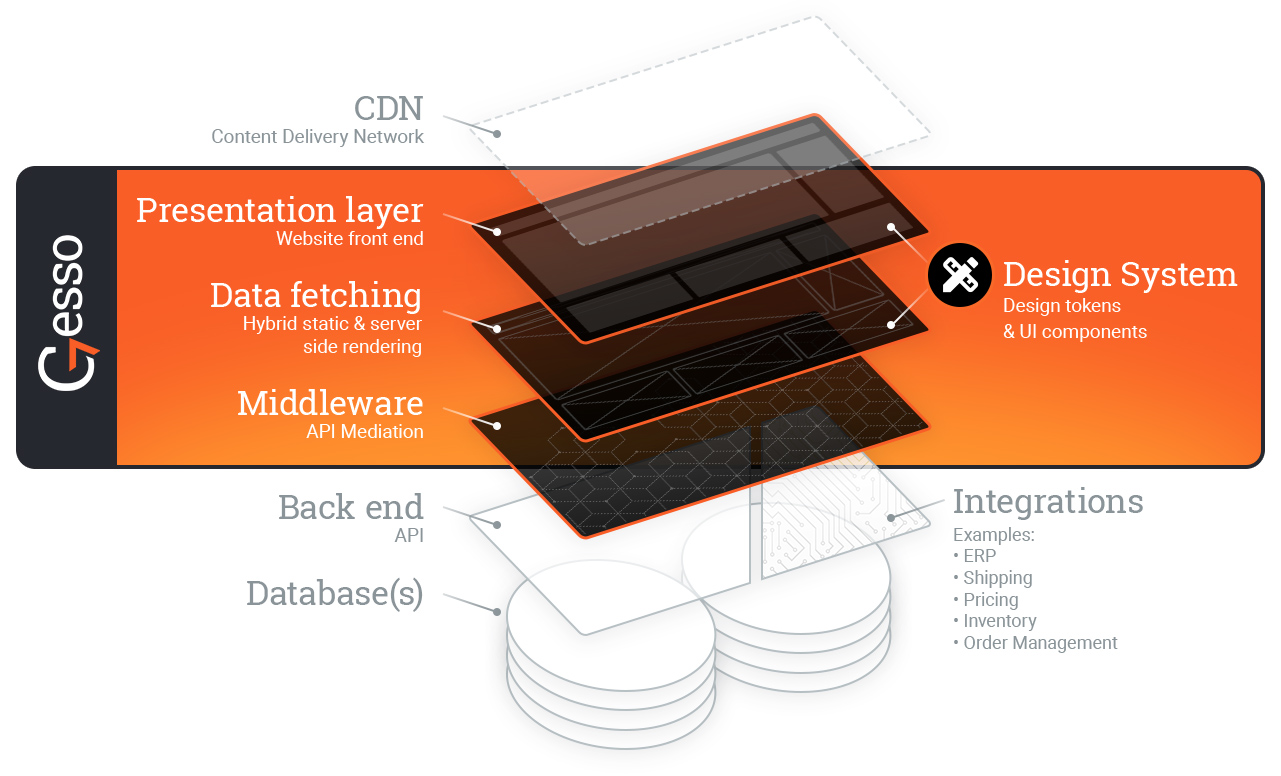
Drupal was selected for its cost-effectiveness, performance, security, and flexibility, making it a reliable choice for government and healthcare organizations. Gesso’s decoupled architecture was key to the project's success, allowing Acro Commerce to:
- Accelerate time-to-launch: Gesso enabled user experience design, frontend, and backend work to be done in parallel, significantly reducing development time.
- Ensure a repeatable process: Gesso's design system served as a reusable library for all PHSA projects, making future-proofing and scaling easy through an agile, iterative process.
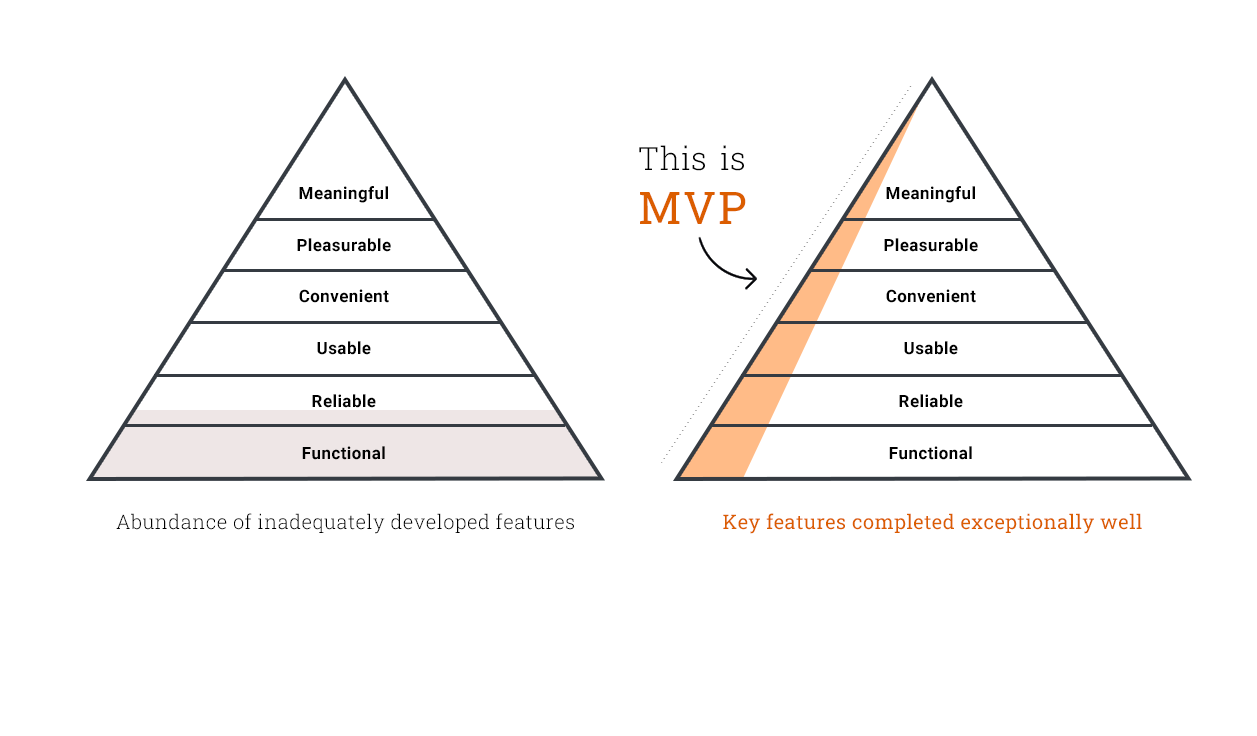
- Deliver a functional MVP quickly: Acro Commerce successfully launched an MVP for both platforms in just 85 days, well ahead of the 120-day deadline. An MVP delivers all critical functionality and a good portion of "nice-to-have" features, allowing for continued feature improvements in agile two-week sprints post-launch.
What do we mean by MVP?
The Result: Measurable Success and a Blueprint for Future Projects
Acro Commerce not only met the tight deadlines but also established a scalable and repeatable development process for PHSA's future virtual health initiatives.
By using a proven iterative and repeatable process, they delivered a proof of concept that demonstrated the value of the digital platforms and secured the necessary government funding.
The successful launch of The Atlas and The Hub provided PHSA with an agile blueprint for handling multiple ongoing projects and creating a leading user experience.
To learn more about how a repeatable, agile development process can accelerate your digital initiatives, visit acrocommerce.com or book a call with our team today.
About the project
Project highlights
- Accelerated time-to-launch
- Industry-leading user experience
- Agile development process
- Project rescue
The Goal
Deliver massive amounts of healthcare information to the province and create a leading-class user experience. FAST.
Virtual health is complex and new; it takes time to demonstrate its value. PHSA’s Office of Virtual Health (OVH) and its partners across the sector recognize there is an opportunity for better coordination and collaboration across the province. Such an approach would support leaders with a better understanding of how various virtual health initiatives can be integrated and benefit care delivery.
To make this happen, PHSA needs a development partner to manage many individual projects/products while working closely with PHSA’s various internal teams.
Tight deadlines and massive amounts of planning and development had proven too much for other agencies, so PHSA was searching for a company that could match their exhaustive needs. Their window for proof of concept was running out, and they were under much pressure. They needed a partner that could prove an accelerated development process and be able to repeat it.
When PHSA reached out to Acro Media, they had two websites mapped, with one already partially built.
Ultimate desires and deliverables for both projects
- Create and optimize shared development, hosting, and maintenance strategies for both initiatives;
- Create and execute product development plans;
- Deliver the next Atlas and Hub MVP iteration, built on the digital and virtual health content management platform, within 120 days.
Why Drupal was chosen
Many Government, Health Care and Public Health organizations continually choose Drupal for their websites. But why?
- Economical — While Drupal sites aren’t free to build, costs are easier to manage without the licence fees associated with SaaS platforms. Savings are compounded when applied across dozens, if not hundreds, of departments or sub-sites.
- Performant — Drupal significantly outperforms other open-source platforms such as WordPress. Drupal was created to be highly efficient and capable of managing heavy traffic loads, practically eliminating downtime.
- Secure — Drupal has thousands of contributors working behind the scenes to bolster the platform’s defences. Drupal beats SaaS regarding complex security requirements such as PCI compliance and handling of sensitive data.
- Flexible — Drupal’s open-source development community contributes to an expansive library of plug-and-play-ready modules (nearly 50,000 as of mid-February 2023), meaning there’s not much that Drupal can’t do.
Technical Specifications
Drupal version: