Sector(s)
Team Members
Project Team
- Rachel Karas (Digital Manager/Web Editor, SHC)
- Bob Cable (Communications Manager, SHC)
- Andrea Rees Davies (SHC)
- Roland Greene (Director, SHC)
Visit the site
Visit the siteOrganizations Involved
Community contributions
Kalamuna contributed to several Drupal modules as part of this project, enhancing functionality and improving overall performance for other Drupal users. Additionally, the agency actively participated in the Drupal community by sharing insights from the SHC project at Stanford WebCamp and offering patches for accessibility and media management issues.
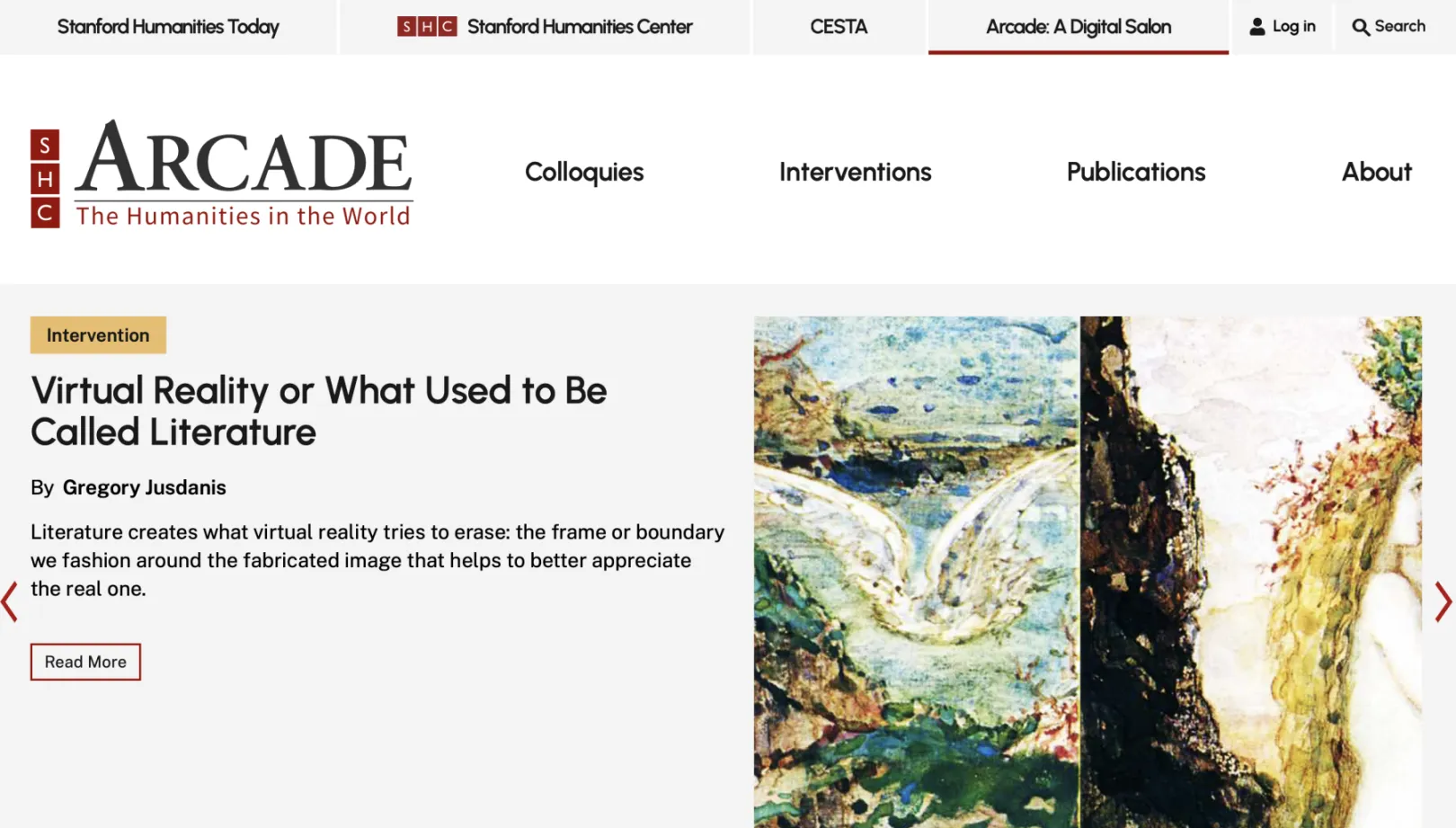
Stanford Humanities Center (SHC) is an internationally renowned research institution at Stanford University, dedicated to fostering interdisciplinary humanities scholarship. As the digital era reshapes how research is conducted and shared, SHC sought to develop an overarching online platform to showcase its wide-ranging projects.
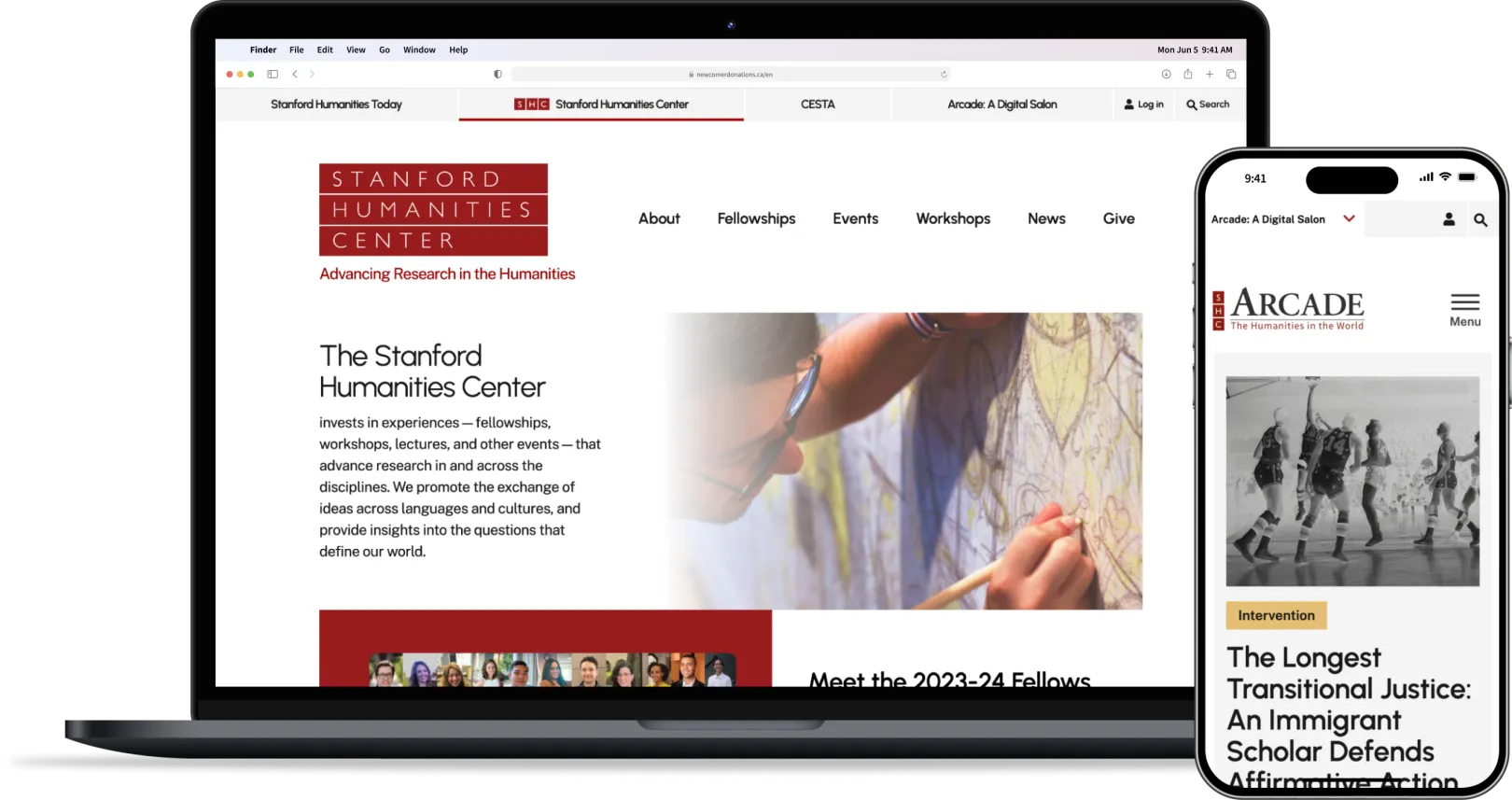
Specifically, the center needed an interactive digital hub that would integrate their primary site with Arcade—a large-scale publication platform—and create SHC Today, a third subsite aggregating content across the entire platform. To achieve these goals, Stanford partnered with Kalamuna to design a user-friendly platform that would advance digital humanities research, engage diverse audiences, and provide a future-proof foundation for the center’s digital presence.
About the project
The primary goal of this project was to create a new digital hub that would unify SHC's diverse digital initiatives. This included redesigning the main SHC site, merging it with Arcade, and introducing the new SHC Today platform to highlight real-time humanities research. The website needed to serve various stakeholders, from scholars and students to the general public, all while making the vast array of academic content easily accessible.
The project began with an extensive discovery phase, during which Kalamuna conducted interviews, surveys, and usability testing with SHC stakeholders. Key requirements included improved accessibility, streamlined navigation, and a more intuitive content management system. A comprehensive audit revealed numerous accessibility issues, such as missing alt text, which the redesign addressed.
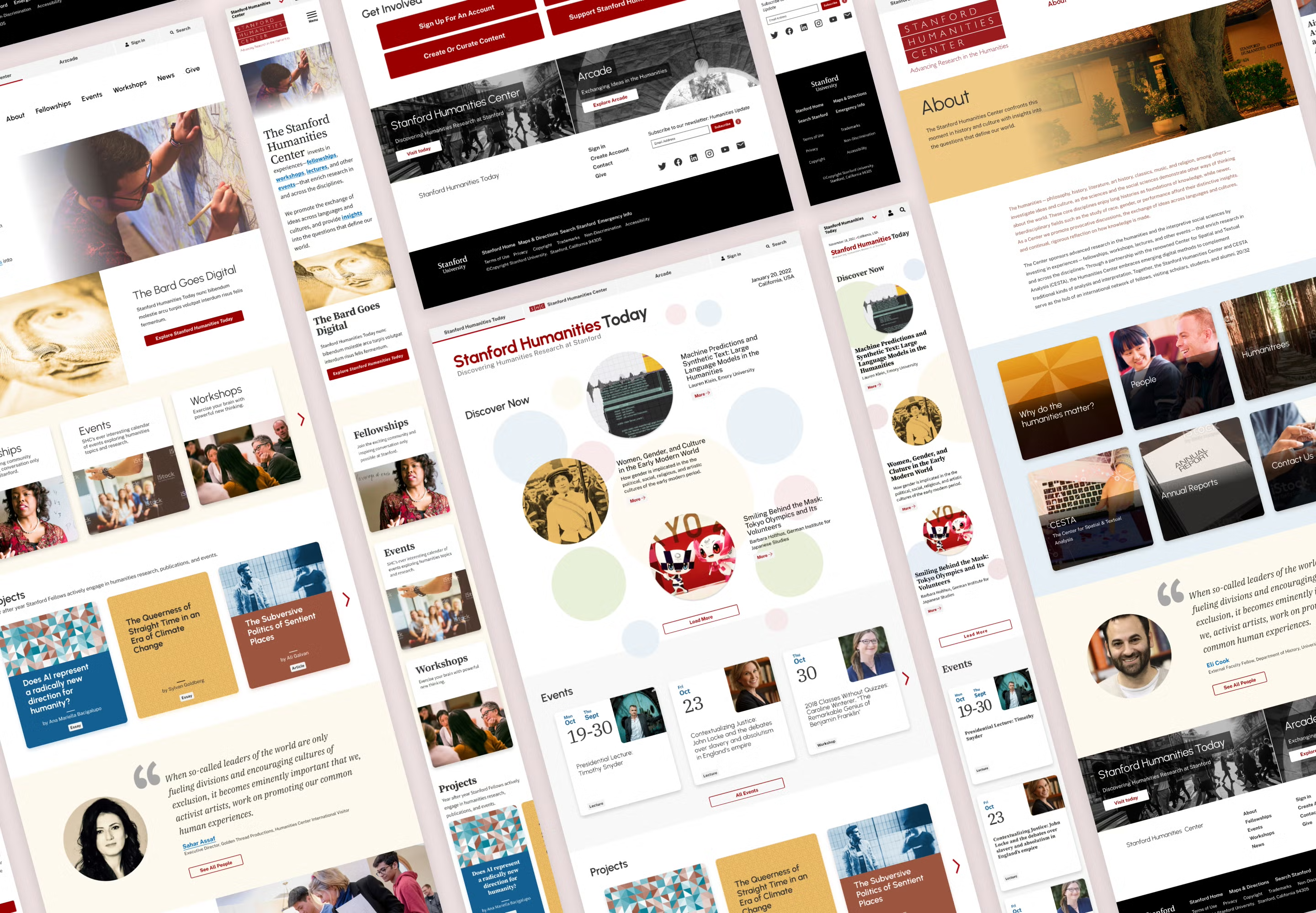
To support the open-access movement in publishing, Kalamuna created subsites that featured a distinct look and feel but shared a common database and content architecture. This innovative approach ensured brand consistency while reducing development and maintenance costs.
The final product was a highly interactive platform that allowed users to participate in humanities research in real-time, greatly enhancing engagement and collaboration across the Stanford community and beyond. Feedback from SHC has been overwhelmingly positive, with particular praise for the improved user experience, streamlined content management, and enhanced accessibility.
The team is extremely communicative and professional. They have come up with some very creative solutions. The discovery findings have been particularly valuable.
Robert Cable, Communications Manager at SHC
Why Drupal was chosen
SHC’s complex digital environment, which encompasses multiple subsites and distinct user needs, demanded a flexible yet robust content management system. While evaluating various CMS options, Drupal emerged as the clear choice due to its open-source nature, its capacity for handling complex subsites, and its ability to seamlessly integrate disparate content within a unified brand identity.
SHC's commitment to open access in humanities publishing aligned with Drupal's open-source philosophy, further reinforcing this decision. Additionally, SHC had previous experience with Drupal, reducing the learning curve and ensuring long-term maintainability. Drupal also offered essential customization features, allowing SHC and Arcade to maintain distinct looks while sharing a common codebase. Its modular structure enabled Kalamuna to build a platform that can evolve as SHC's needs grow without sacrificing usability or performance.
Technical Specifications
Drupal version:
Key modules/theme/distribution used:
Context allowed for content entered in a unified administrative interface to appear within distinct contexts in the site depending on the subsite it was assigned to. The Layout Builder module was chosen for its flexibility in creating reusable content components, a necessity given SHC’s varied content requirements. Views enabled the project to easily aggregate content across the subsites, providing a seamless experience for users navigating between the main SHC site, Arcade, and SHC Today. Media ensured that multimedia assets were handled efficiently, essential for the platform’s multimedia-heavy content. Lastly, Webform facilitated audience engagement by allowing SHC to gather feedback, and facilitate the submission of audience-generated material.