Sector(s)
The Detroit Historical Society oversees both the Detroit Historical Museum and the Dossin Great Lakes Museum, preserving Detroit’s heritage through exhibits, programs, oral histories, and a vast collection of artifacts. They partnered with Zengenuity to streamline and modernize their online presence, consolidating five separate content systems into a single, unified Drupal 10 website.
About the project
Goals:
- Replace a fragmented technology stack with a single, modern CMS platform.
- Streamline content management and editorial workflows.
- Improve content discoverability and public engagement.
- Ensure future sustainability with long-term support and scalability.
Requirements & Delivered Features:
- Custom Design & Drag-and-Drop Page Building: A modern, mobile-responsive redesign implemented with Mercury Editor for flexible layout creation.
- Complex Content Migrations: Thousands of pages—including oral histories, exhibitions, and program materials—migrated from Drupal 7, WordPress, and Omeka using custom migration plugins tailored for Paragraphs and Mercury Editor.
- Collections Integration: A custom importer brought over 50,000 artifact records from PastPerfect into Drupal and enabled ongoing updates by staff.
- Advanced Search: Implemented Search API to support both global site search and sophisticated, metadata-driven filtering for the online collection.
- Media Management: Centralized handling of media assets using Drupal’s Media Library for reuse across various content types like artifacts, exhibits, events, and blogs.
Outcomes:
- A unified, modern website—cleanly presenting exhibits, collections, and stories in one accessible place.
- Editors are empowered with intuitive, creative tools using flexible templates and visual content building.
- Consolidating artifact records under the main domain dramatically improved search engine visibility and introduced new audiences to the museum’s resources.
- Building on Drupal 10 ensures long-term maintainability, security, and adaptability.
The Finished Product
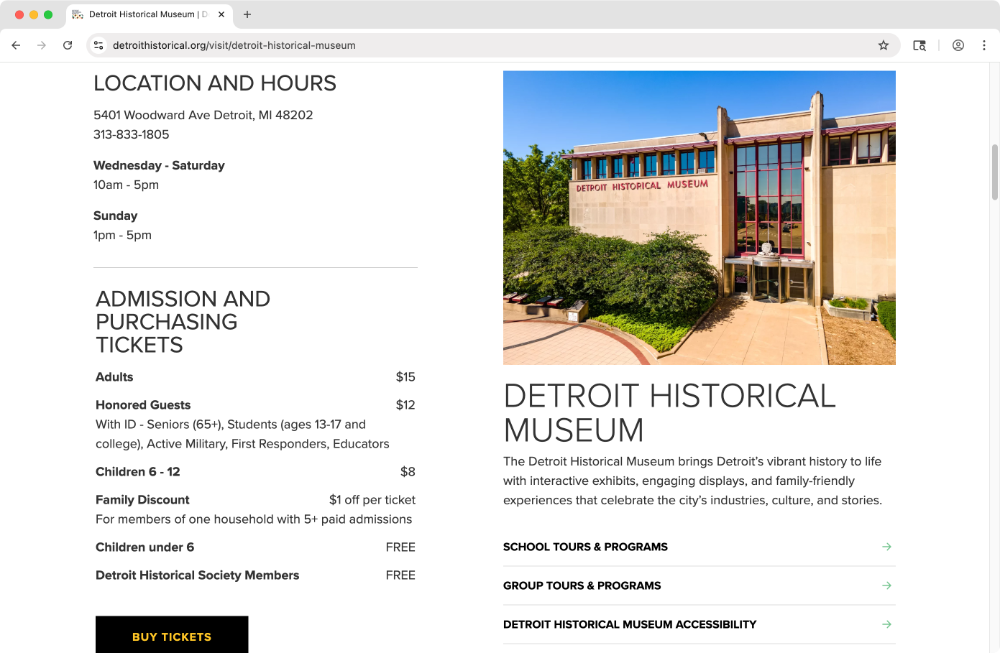 Museum hours (including holiday hours and other exceptions) are easily configurable by content editors using the Office Hours module.
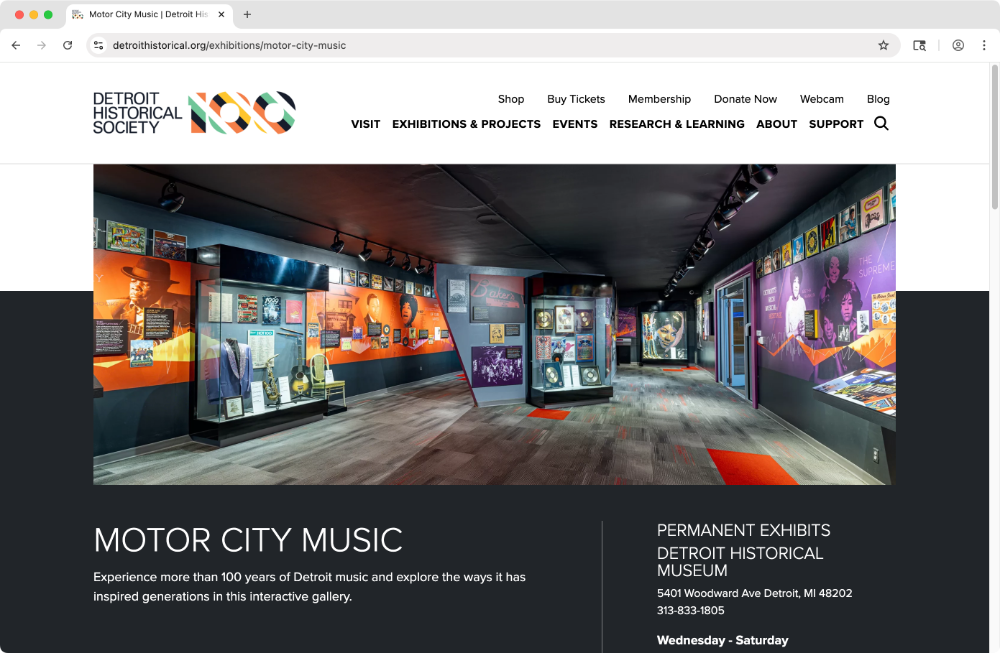 The Mercury Editor's drag-and-drop page builder enables the creation of beautiful, media-rich pages using reusable templates and components.
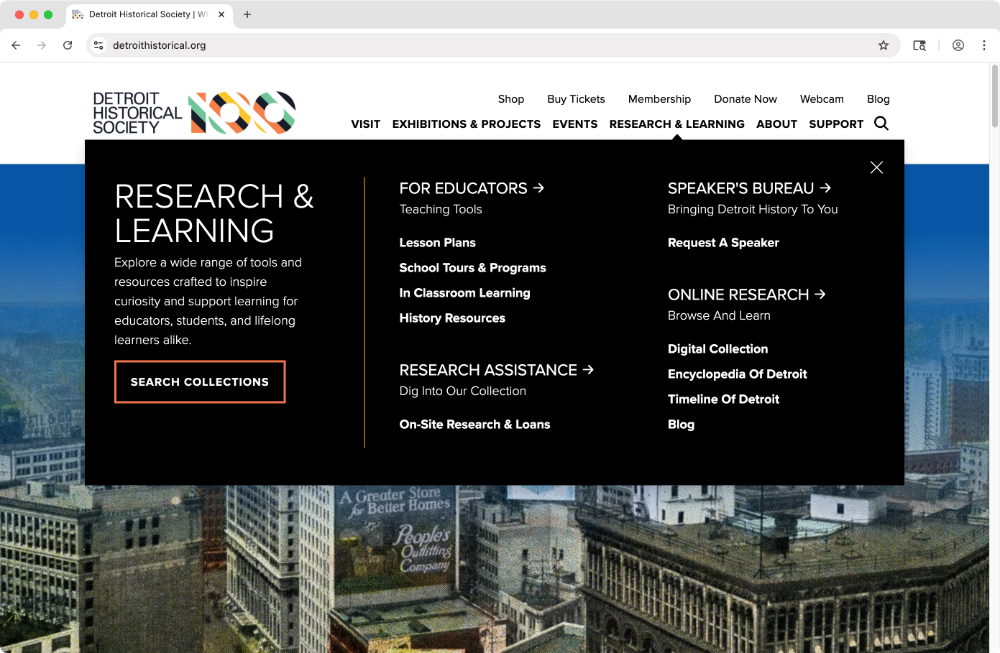 Combining the Society's multiple websites into one makes finding content easy for the public and improves search engine optimization.
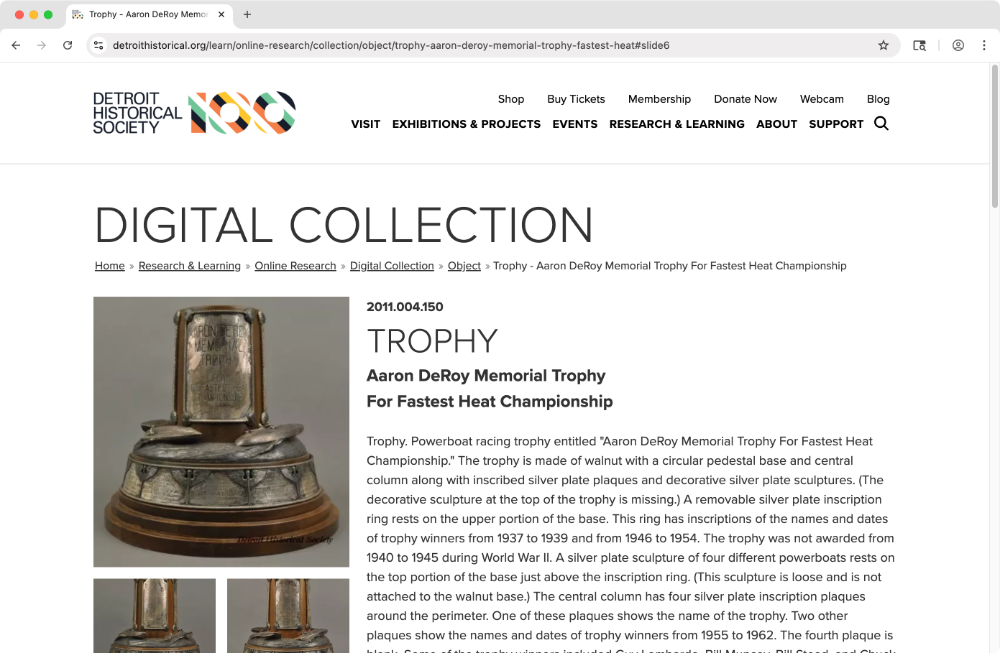 Drupal's content modeling makes it simple to create complex database applications like the Digital Collection, containing over 50,000 artifacts in the Society's collection.
Why Drupal was chosen
Previously, the organization’s digital presence was split across five platforms, a combination of Drupal 7, WordPress, Omeka, and PastPerfect sites, making content updates fragmented and challenging to manage. 
Drupal was selected for its ability to unify disparate systems under one flexible, scalable CMS. The project leveraged Drupal’s strong migration tools, modular architecture, structured content handling, and robust media management capabilities. This made it possible to consolidate exhibits, oral histories, programs, and collections into a coherent, maintainable system built for creative storytelling and long-term content growth.
Technical Specifications
Drupal version:
Key modules/theme/distribution used:
- Mercury Editor: Drag-and-drop layout building based on Paragraphs.
- Paragraphs: For structured, reusable content components in pages.
- Search API: Powering both global and metadata-rich collection search.
- Office Hours: Allows museum hours to be easily updated by content editors, including holiday schedule changes and other exceptions.